Celebration of the Life and Legacy of Roy J. Kurtz to be Held at Tohono Chul on March 25, 2025

Honoring the Legacy of Roy J. Kurtz

The Tohono Chul community will come together to honor the life and legacy of Roy J. Kurtz, a devoted patron of the arts and dedicated social worker whose passion for culture, creativity, and service— especially his work supporting veterans—left a lasting imprint on Tohono Chul and southern Arizona. Born on January 27, 1933, in Greensburg, Pennsylvania, to Roy F. and Dorothy V. Kurtz, Roy’s life was defined by curiosity, generosity, and an unwavering dedication to the arts. A Tucson resident for more than 50 years, he passed away in Tucson on August 21, 2024, leaving behind a legacy that will continue to inspire.

“While Roy may no longer walk the paths of the gardens he loved, his spirit will forever be woven into the baskets he collected, the plants he nurtured, and the lives he touched. Not only did Roy donate his remarkable basket collection to Tohono Chul, but he provided a generous gift to care for the collection and to support Tohono Chul’s future growth,” said Jamie Maslyn Larson, Tohono Chul President/CEO.

James Schaub, Tohono Chul’s Director of Arts, said, “Apart from Tohono Chul founders Dick and Jean Wilson’s original gift, no gift has been as significant in representing the arts and traditions of our region as Roy’s donation. His contributions to Tohono Chul and the wider community will be honored for generations to come.”

A Life of Service, Dedication, and Collecting

Roy J. Kurtz’s legacy is one of supreme generosity, kindness, and an enduring appreciation for the cultural and natural heritage of the Southwest. Roy’s story began in the coal-mining country of Westmoreland County, where his family had settled after emigrating from Germany in the 1870s. Stationed in Stuttgart, Germany, Roy developed an admiration and appreciation for other cultures and began to see serious collecting as a way to honor and preserve them. Coming home to Pennsylvania, Roy took a position with the Westmoreland County Child Welfare Department that intensified his interest in social work. Backed by a scholarship and the G.I. Bill, Roy moved to Morgantown, West Virginia, to attend West Virginia University, where he earned a Master of Social Work degree that launched his 42-year career in social work. For the next decade, he devoted himself to child welfare. In 1972, ready for a change, Roy moved to Tucson to work with the U.S. Department of Veterans Affairs. He spent over 30 years at the Tucson V.A., retiring in 2003.

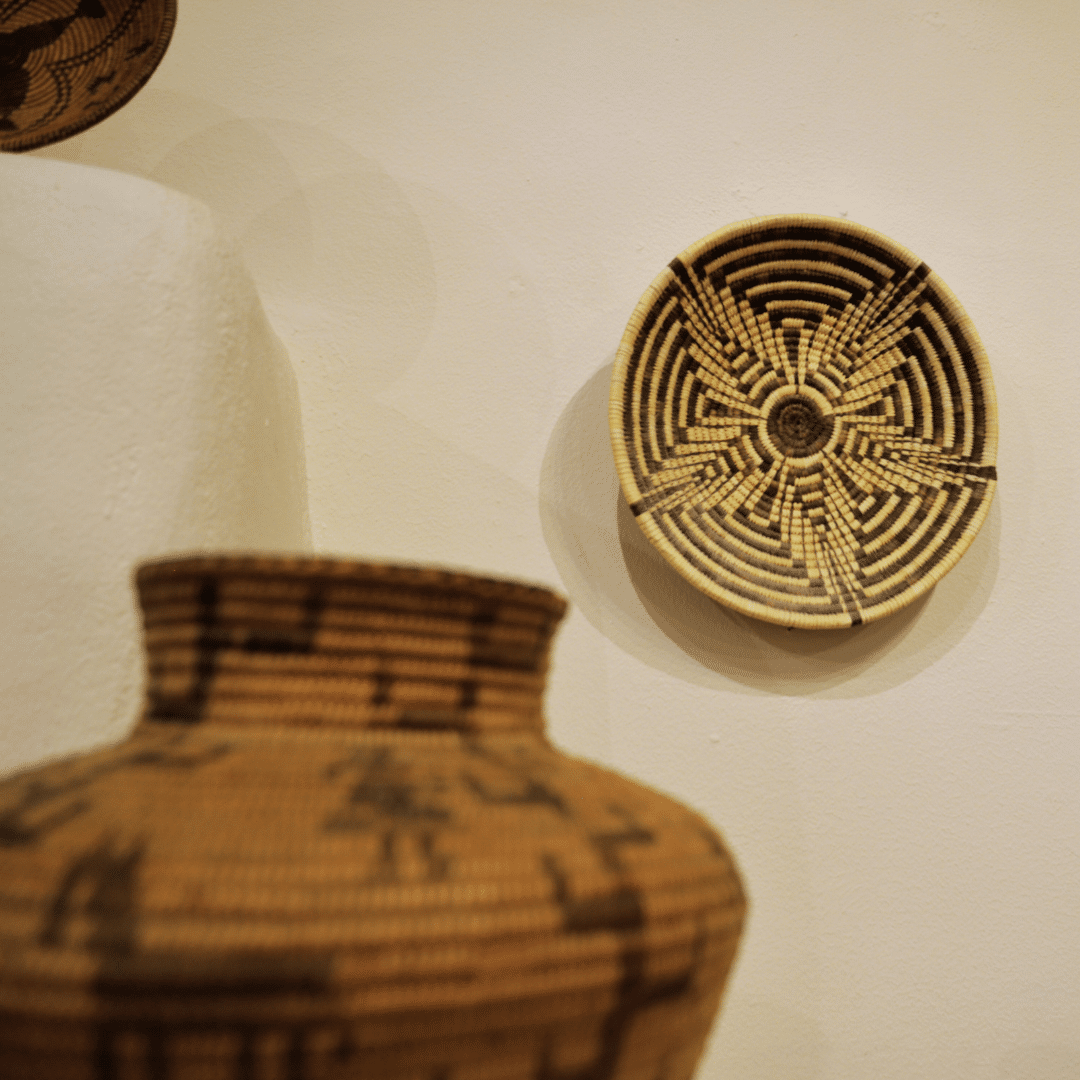
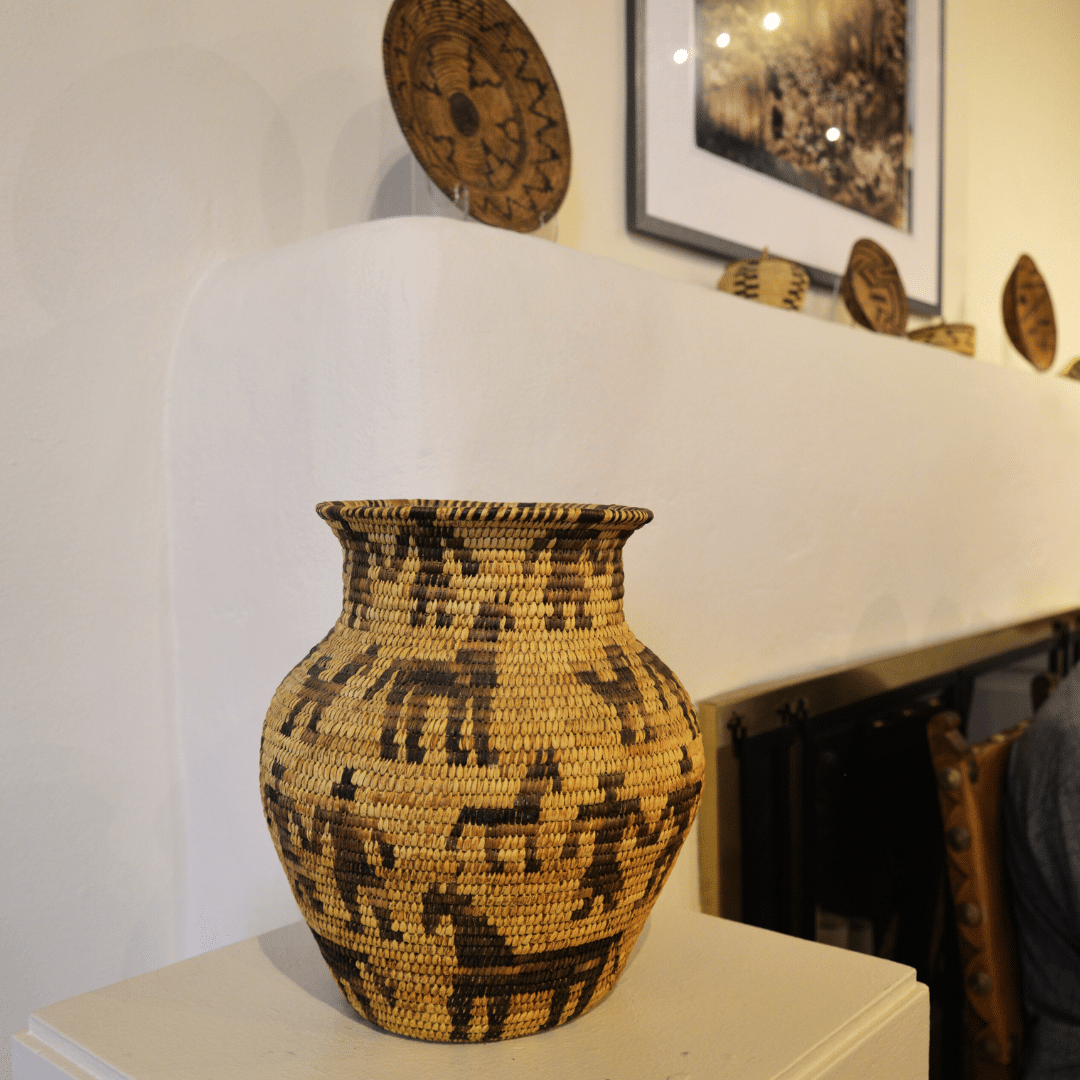
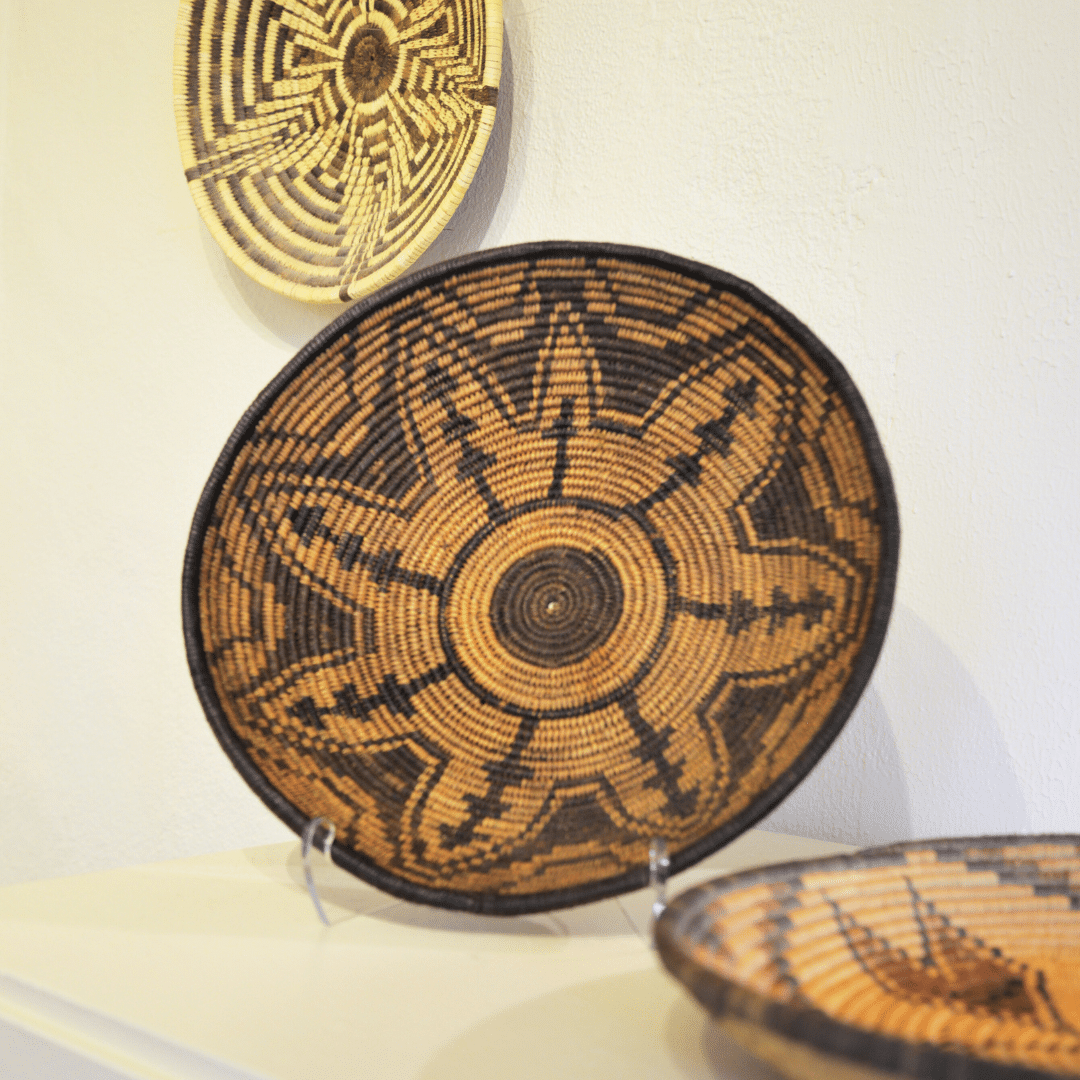
Roy called Tucson home for 52 years. From the start, he collected objects of American Indian art with a keen eye and enthusiasm, amassing a diverse collection of over 1,000 objects from all over the Desert Southwest. Above all the art forms in his collection, Roy loved basketry the most. Originally drawn to their designs, shapes, and motifs, he became increasingly fascinated by the engineering of each piece. Intrigued by the idea that basketry signaled the birth of civilization and may have been one of the earliest forms of counting, Roy was drawn to the interplay of design, structure, and the mystery of time, which guided his connoisseurship. The Roy J. Kurtz Collection of American Indian Art, housed at Tohono Chul, features an extensive selection of baskets that celebrate the traditions of the Tohono O’odham, Akimel O’odham, Apache, Hopi, and Diné cultures.
A Lasting Gift to Tohono Chul

In 2021, Roy began searching for a home for his treasured collection, and Tohono Chul came to mind. He recalled the early days when he could reach the gardens from Ina Road and held fond memories of the Haunted Bookshop and the Desert Corner Nursery. Roy was impressed by how the park had evolved over the years into the incredible place it is today. “Tohono Chul is a place to be proud of,” he said. “I sincerely believe the collection will reach its true potential at Tohono Chul.” After all, the very plants used to create his cherished baskets continue to thrive throughout the gardens.

A Living Legacy in the Gardens

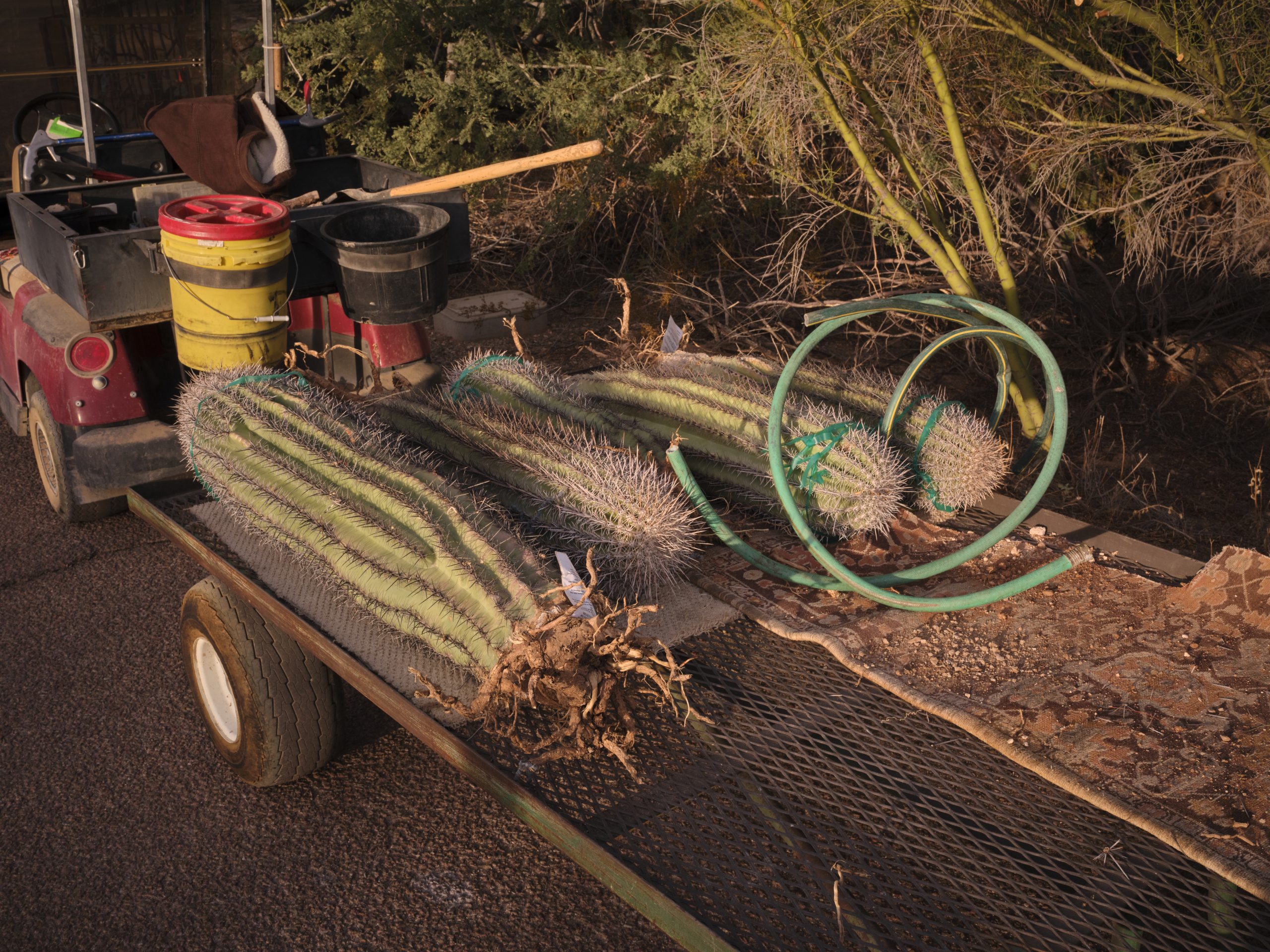
Beyond his love of basketry, Roy was also an avid gardener, planting numerous native species throughout his property. As proud of his plant collection as he was of his art collection, he offered Tohono Chul the opportunity to select and transplant specimens from his landscape to the gardens. The first grouping from the Kurtz Plant Collection became a defining feature of Sami’s Courtyard in 2023. Just recently, mature saguaros have been relocated to the Monument Wall at the corner of Ina Road and Paseo del Norte, with dozens more plants set to enhance the gardens in the coming months.
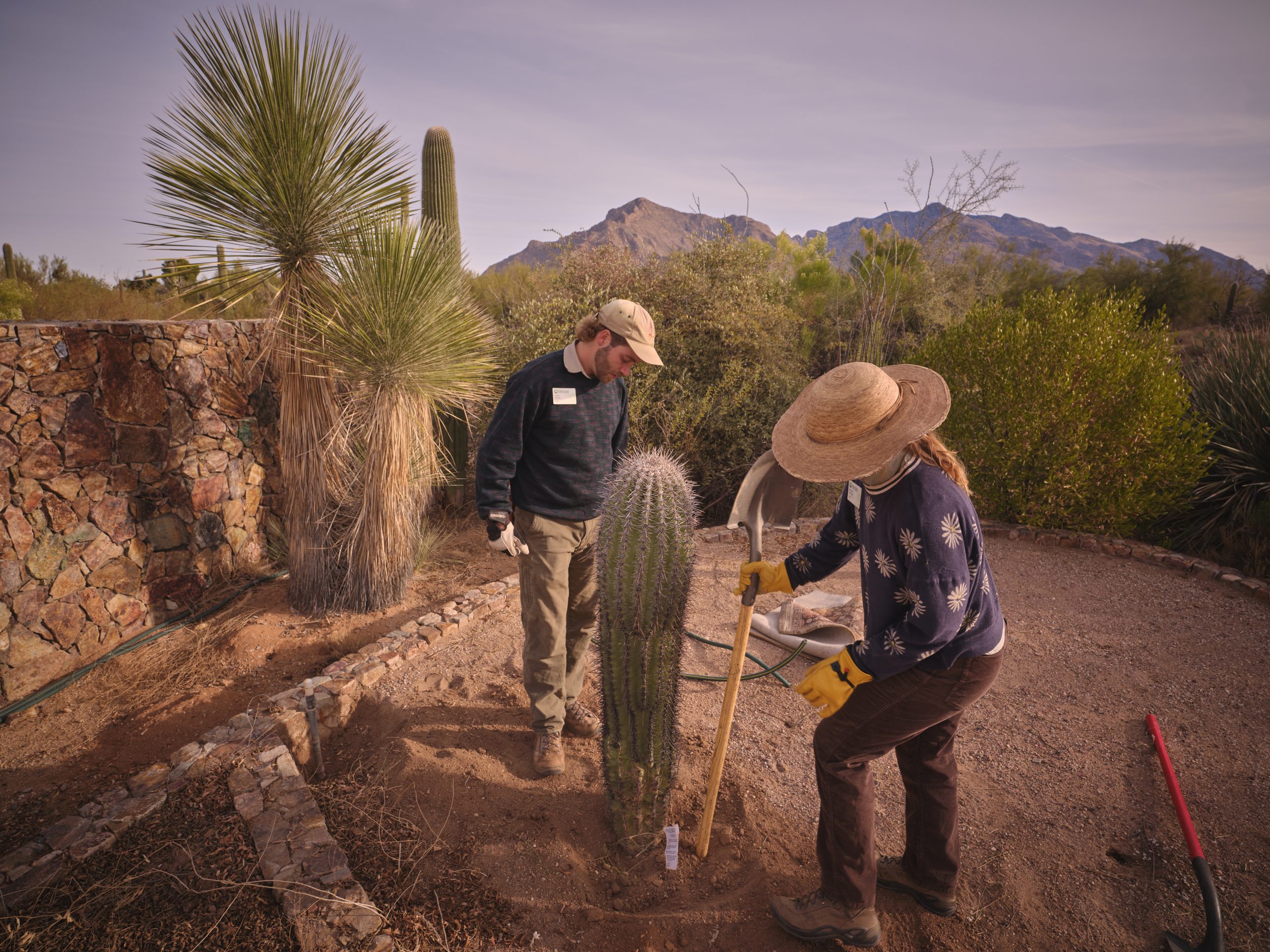
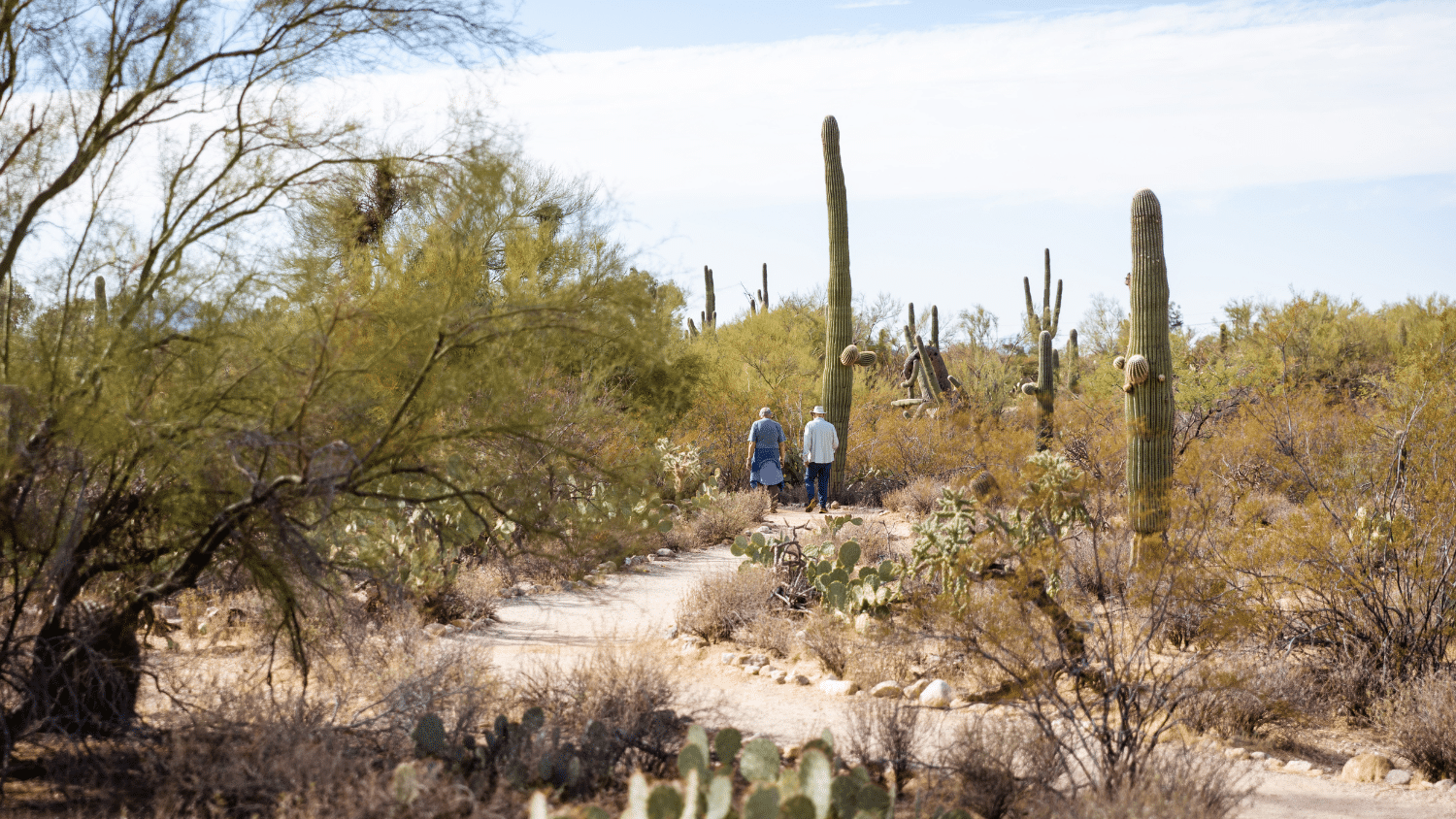
Tohono Chul gardeners welcome a new generation of saguaros, planting donated cacti from the estate of Roy J. Kurtz at Ina and Paseo del Norte. (Image: Luke Takata)
A selection of saguaros from the estate of Roy J. Kurtz, generously donated to Tohono Chul to continue thriving in the Sonoran Desert. (Image: Luke Takata)

Join Us in Celebration

Roy’s celebration of life will be held at Tohono Chul on Tuesday, March 25, at 10:30 am in Sami’s Courtyard. Friends, family, and those inspired by his generosity are invited to join in remembering and honoring a truly remarkable man. Admission is free for all attendees.


A Note from President/CEO, Jamie Maslyn Larson

Central Park in New York City may seem a world away from Tucson, but it shares a powerful connection with Tohono Chul.

In the mid-1800’s, lower Manhattan had some of the highest density of development in the western hemisphere. Civic leaders and philanthropists had a grand idea to set aside a massive amount of land to create a haven for people to escape the crowded, unhealthy conditions.  They decided on a name—Central Park—when it was far from any development or people. In fact, at that time, the 843-acre site and its surroundings were rural, with small settlements, farms, marshes, and rocky outcrops.

The leaders who envisioned a need for a large park were prescient about the future needs of a growing city, setting aside the land as a sanctuary—a public space that offered access to nature and recreation spaces for all New Yorkers. Today, Central Park is indeed engulfed by dense development and enjoyed by tens of millions of residents and tourists every year.

Now, Tucson is no New York City, but the idea of Tohono Chul, as envisioned by Dick and Jean Wilson, shares similar traits:

  • A Place for People: when the Wilsons built the Haunted Bookshop in 1979, they began creating paths, installing picnic tables, and building places in the surrounding landscapes for people to explore and relax. Today, we welcome tens of thousands of folks into our gardens to use this as their own “park.”
  • A Sanctuary: At 49 acres, the sheer size of Tohono Chul’s landscape supports an array of wildlife and ecological communities. Dick and Jean hoped that visitors would “achieve greater appreciation of the ways of conserving all our precious desert region.”
  • An Urban Haven: at the dedication on April 19, 1985, Jean Wilson said “We wanted to keep something natural in the middle of all the (surrounding) development so that people could come easily for a few hours…” As Oro Valley and Tucson’s development and population has grown over 40 years, Tohono Chul is now more accessible than ever for folks to experience an enchanting destination in the heart of the city.   

The story of Central Park reminds us of the profound impact of visionary action. In the 1800s, leaders set aside land for future generations to connect with nature and find solace amidst urban life. Their foresight has touched countless lives for nearly two centuries.

Today, Tohono Chul stands as Tucson’s own vision of a sanctuary—more than a garden, it’s a legacy and a gift to the future. Thanks to Dick and Jean Wilson’s passion, we have a haven that celebrates the beauty and culture of the Sonoran Desert and offers inspiration to all who visit.

But our journey isn’t over. Like Central Park, Tohono Chul will evolve and grow as a place where nature and people thrive together. As we approach celebrating our 40th anniversary in April, we’ll continue to reflect on the Wilson’s vision to ensure that this sanctuary will thrive for generations to come.

We are excited for the future and grateful for your support. Thank you for being part of our community of stewards.

Jamie Maslyn Larson
Executive Director
jamie@tohonochul.org

A Note from Executive Director Jamie Maslyn Larson

Dear Tohono Chul Community,

I have been feeling reflective as we approach our 40th anniversary next year. Since Dick and Jean Wilson began laying out Tohono Chul’s trails in the 1980s, the world has changed tremendously. Their vision for Tohono Chul was to “keep something natural in the middle of all the development so that people could come easily for a few hours.” However, the Wilsons could not have predicted the impact that climate change and prolonged drought would have on our gardens.

Knowing how much you rely on Tohono Chul’s gardens for your well-being, happiness, and sense of community, we must find ways to adapt to these challenges and ensure that our gardens remain a haven for you and for future generations. With your support, we have already achieved so much!


Growing Towards a Sustainable Future

  • Tree Succession Plan: We have fewer shade trees today because of the prolonged 23-year drought and more intense storms. So we embarked on a comprehensive tree succession plan which will ensure that our trees are properly managed, identifies new tree plantings, and assesses our trees for climate risk. We have planted several large sized trees in key areas, inventoried and assessed 75% of our tree collection and our propagations department is growing over 250 desert trees for future tree planting.
  • Water Conservation: Tohono Chul’s antiquated, manually operated system requires a total overhaul, transitioning to modern, app-based clocks and meters, rewiring valves to the clocks, and changing out hundreds of sprinklers to low-water drip emitters. To date, approximately 50% of our irrigation is now upgraded to this water-wise and manual-labor free system.
  • Dark Skies Compliance: We’ve completed the installation of new lighting so that we meet Dark Skies regulations. This not only reduces light pollution but also enhances nighttime beauty, allowing visitors to enjoy the gardens under the stars while preserving our nocturnal wildlife’s natural habitat.
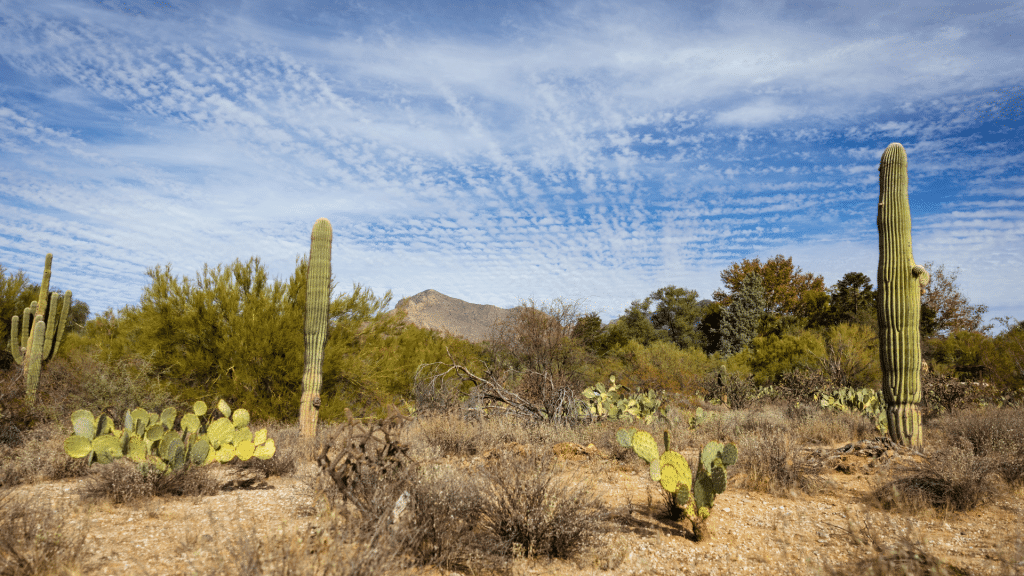
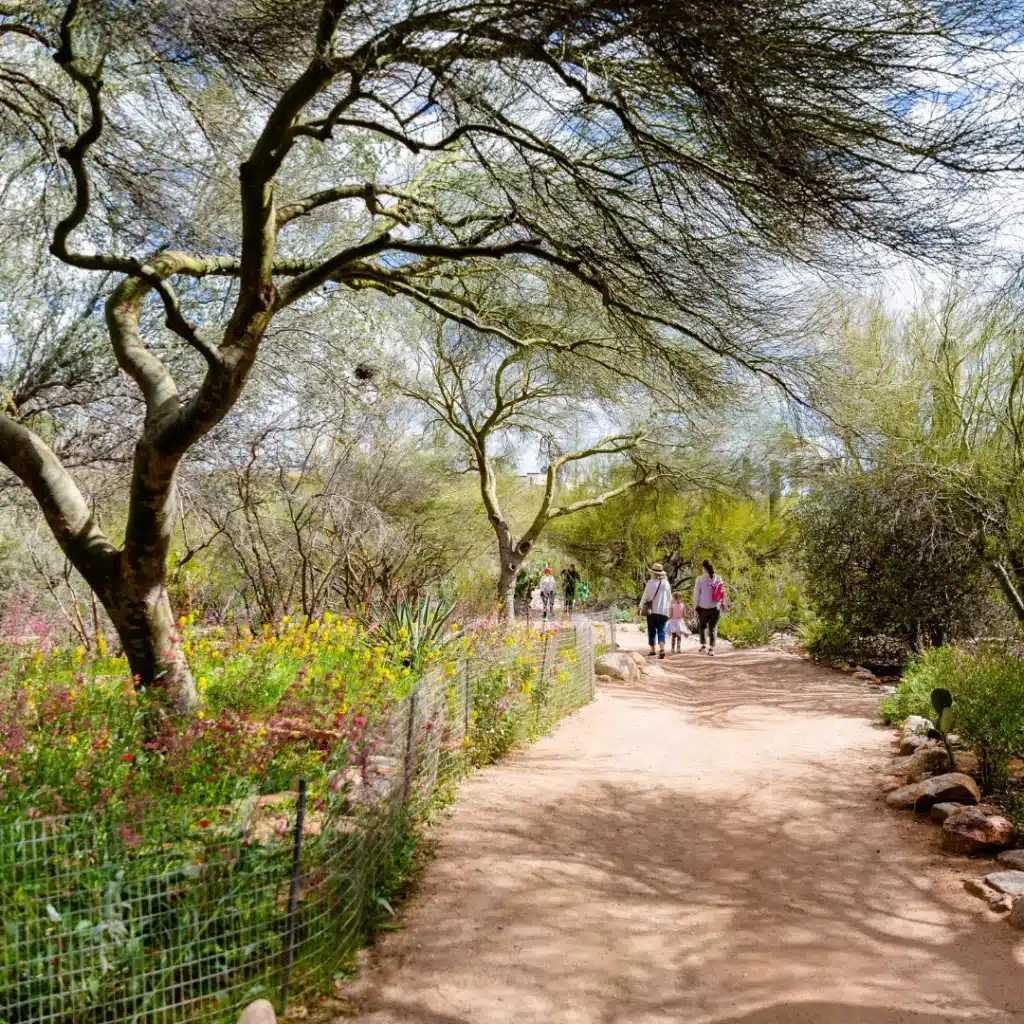
View from Tohono Chul’s South Loop Trail in November 2024, featuring a vibrant expanse of native cacti and desert plant life.


Enhancing the Garden Experience

  • Children’s Garden: We’ve refreshed all garden beds with new plantings, removed invasive species, and improved irrigation lines. This creates a more engaging and sustainable space for our younger visitors and their families.
  • Desert Palm Oasis and Mesquite Bosque: We’ve removed dead and invasive plants and have introduced new native species, revitalizing these areas for a more immersive desert experience.
  • Queen of the Night Cacti Cultivation: We’re currently growing over 300 Queen of the Night (Peniocereus greggii) cacti. Many of these will be planted throughout the gardens, promising even more spectacular Bloom Night events in the future.
  • Plant Propagation: Our nursery team propagated over 1,200 plants in preparation for our Fall Plant Sale that took place in October. This effort supports our mission of promoting desert-adapted plants and provides you with the opportunity to grow a piece of Tohono Chul at your own home.
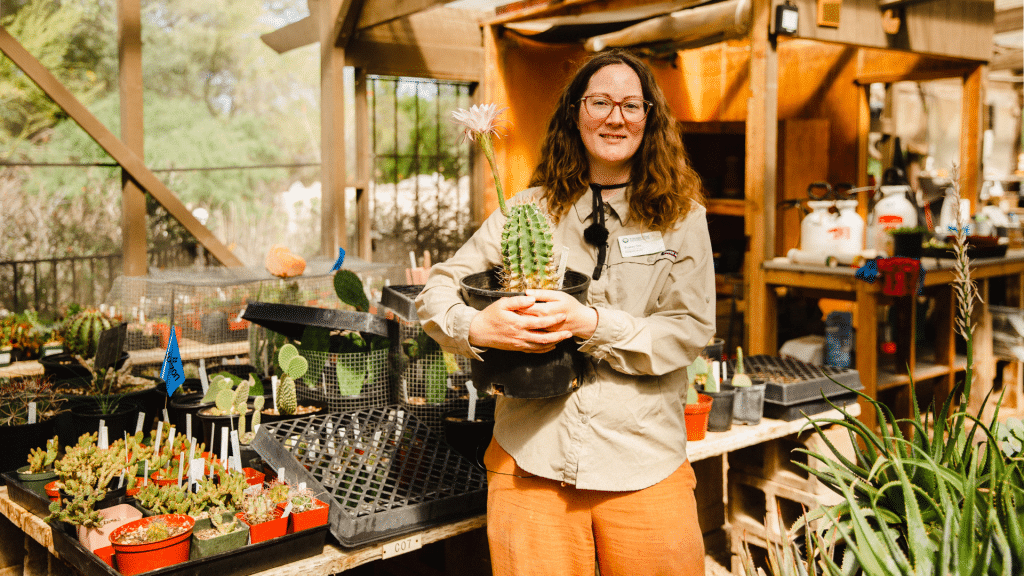
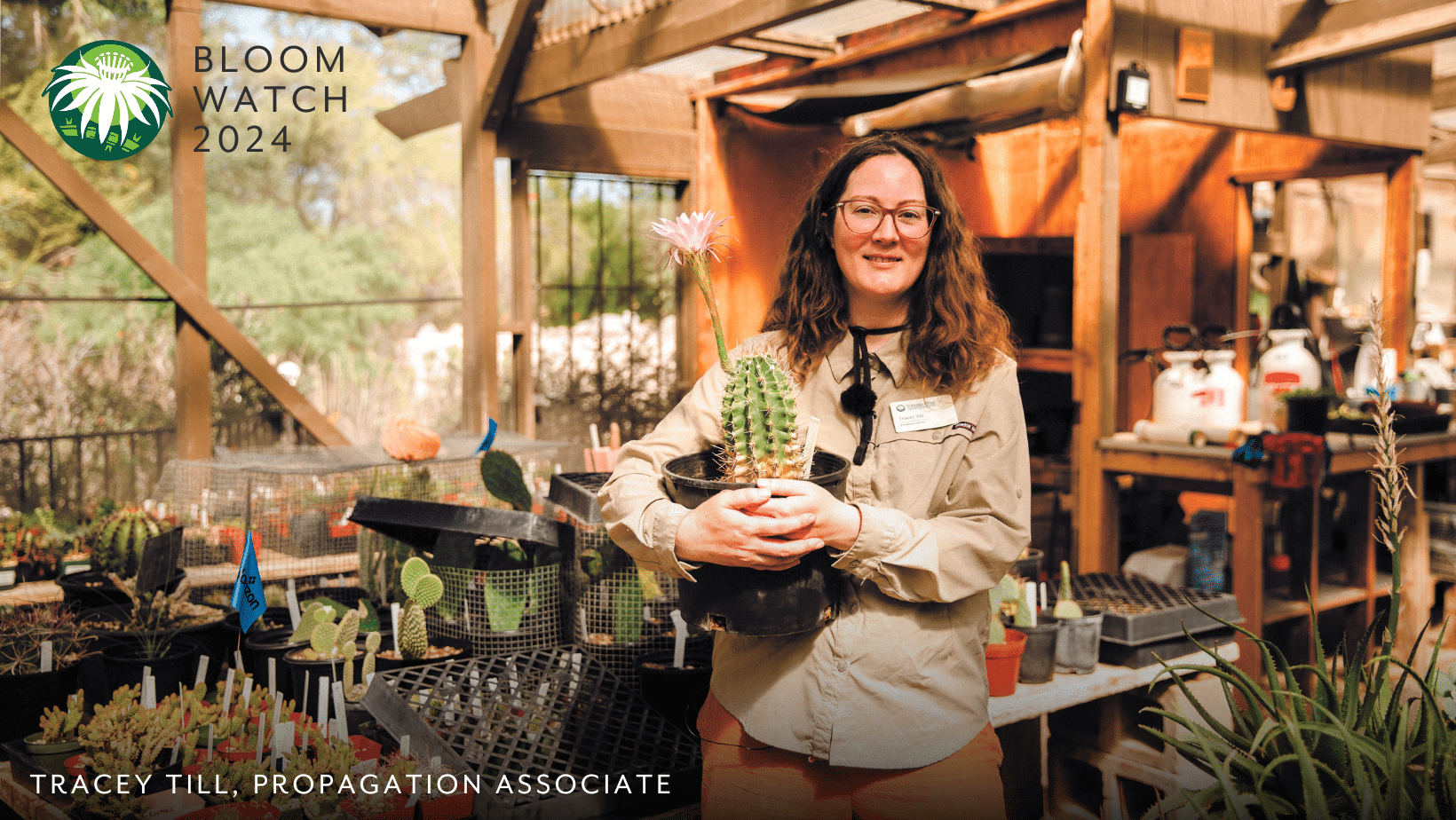
Tracey Till, Propagation Coordinator, proudly holds a homegrown cactus in Tohono Chul’s North Propagation House.


A Shared Vision for Tomorrow

In a world that’s constantly changing, we believe that places like Tohono Chul are more important than ever. We all need somewhere to escape, to breathe, to reconnect with nature and each other. Our hope is that when you walk through our garden, you feel a sense of peace and belonging—a place where the outside world’s worries simply melt away.

Thanks for being a part of our family and for helping us create a haven of beauty and community in the heart of the desert. We invite you to make plans to visit your desert oasis for a few hours, just as the Wilsons dreamed for us.

With heartfelt gratitude, | Con sincera gratitude,

Jamie Maslyn Larson
Executive Director
jamie@tohonochul.org


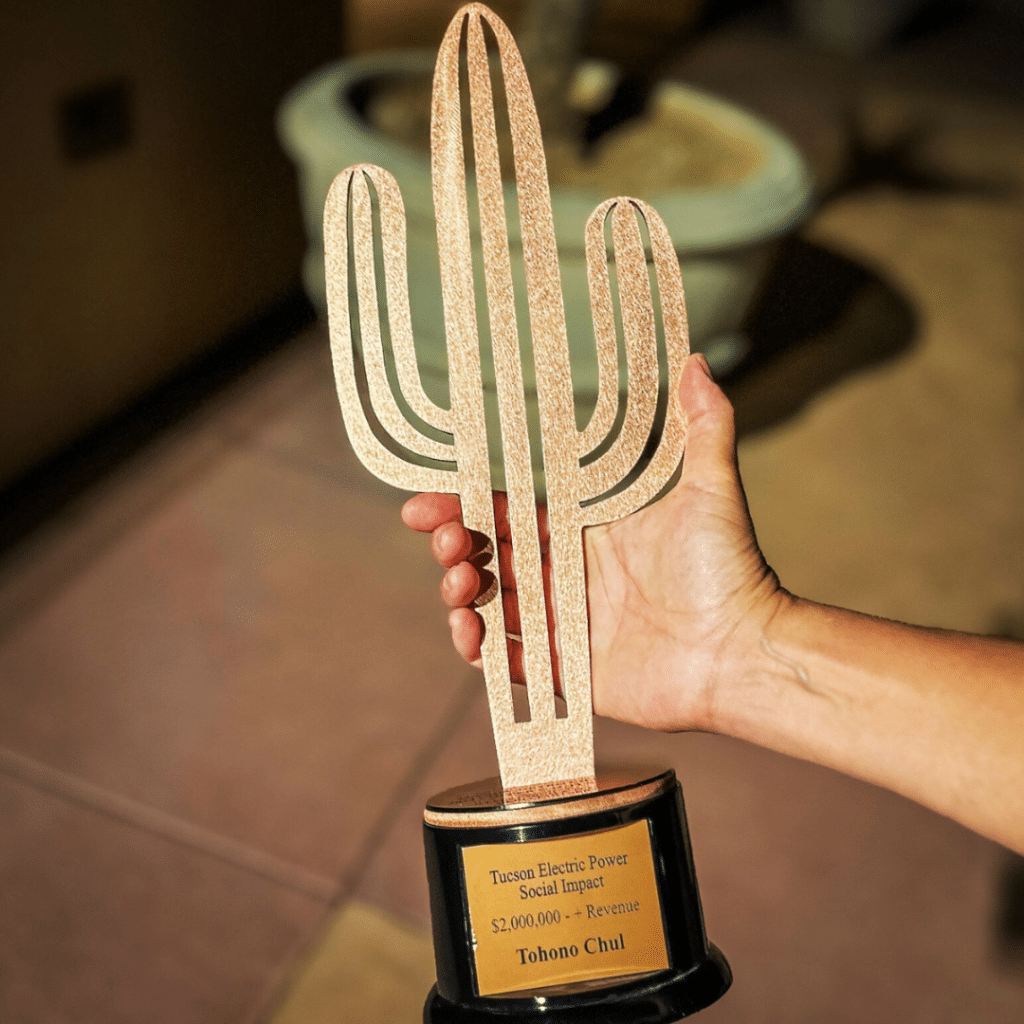
Tohono Chul Wins TEP Social Impact Award at the 2024 Copper Cactus Awards

We Won!

We’re thrilled to share that Tohono Chul took home the Tucson Electric Power Social Impact Award ($2,000,001+ Revenue) at the 2024 Tucson Metro Chamber’s Copper Cactus Awards last Friday, September 13th. This prestigious award honors nonprofits making a meaningful difference in Southern Arizona, and we are deeply honored to be recognized for our efforts in creating a more inclusive, accessible, and vibrant community space.

We couldn’t have achieved this without the support of our incredible team, volunteers, members, and visitors—thank you for being a part of our journey!

Learn more about this incredible honor below or click here to read the media release.


About the Award

For 27 years, the Copper Cactus Awards have been the premier event recognizing outstanding businesses and nonprofits in Southern Arizona. This prestigious ceremony, led by the Tucson Chamber of Commerce, honors those who drive innovation, create jobs, and make a positive impact in our community.

The Tucson Electric Power Social Impact Award, presented by the Tucson Metro Chamber, recognizes a nonprofit organization that has made a significant contribution to Southern Arizona. In 2024, the focus is on groups creating a social impact, defined as having a positive effect on people and communities through actions, programs, or policies. The award honors organizations that have improved the quality of life for those they serve, maintained a strong workplace culture, stayed current with industry trends, and demonstrated positive local economic impact.

Tucson Metro Chamber Copper Cactus Awards Presented by Wells Fargo -h2 —  Tucson Metro Chamber

Tohono Chul’s Community Impact

Over the last two years, we’ve worked to create a more vibrant, inclusive space for all Southern Arizonans. Through family-focused activities, evening events, and the opening of Children’s Museum Oro Valley at Tohono Chul (CMOV@TC) on-site, we’ve welcomed more Tucsonans than ever before. We’ve experienced a 62% increase in overall attendance with a tenfold rise in visits from children, with many young visitors and families exploring the wonders of Tohono Chul for the first time.

This award highlights our efforts to make Tohono Chul more accessible and welcoming to the Tucson community. We’ve introduced bilingual signage, partnered with Museums for All and Act One’s Culture Pass program to offer reduced admission to low-income families, and worked with Sun Tran to improve public transportation to and from our gardens. These initiatives are all part of our mission to be a community oasis where people from all backgrounds can experience the beauty and importance of nature.

In addition to these community-focused efforts, we’re dedicated to creating a positive, supportive environment for our staff and volunteers. We launched a professional development program that offers staff the opportunity to continue their education, attend conferences, and pursue certifications; because of this we now have two certified arborists on staff!

We believe that by investing in our people, we can continue to grow as an organization and better serve the Tucson community.

Take a closer look at our initiatives and the impact we’ve made this year with our Copper Cactus Awards nomination video.

Ribbon cutting at the Children’s Museum Oro Valley at Tohono Chul with Tohono Chul Executive Director Jamie Maslyn Larson and Children’s Museum Executive Director Hilary Van Alsburg.
Development Manager Frank Vidal hands a balloon to a young visitor during the grand opening celebration of the Children’s Museum Oro Valley at Tohono Chul.

Thank You

We want to express our gratitude to our hardworking staff, dedicated volunteers, trusted board members, generous sponsors, and the entire Tohono Chul community—the members, donors, visitors, artists, critters, and flowers alike.

To everyone who has strolled our trails, admired our gardens, supported a fundraiser, become a member, attended an event, dined at the Bistro, enrolled in a workshop, or brought their kids to explore nature with us—this award is for YOU. Your support allows us to join hands with our community and protect this little desert corner for future generations.

And of course, we would like to give a big thank you to the Tucson Metro Chamber, Tucson Electric Power, and everyone who helped make this achievement possible.

Here’s to another year of being your community oasis.

Click here to see all the amazing winners from the 2024 Copper Cactus Awards!


Bloom Night 2024

Saturday afternoon was filled with anticipation. At noon when Chris carefully checked the buds, they were soft, signaling that they were ready to go! 

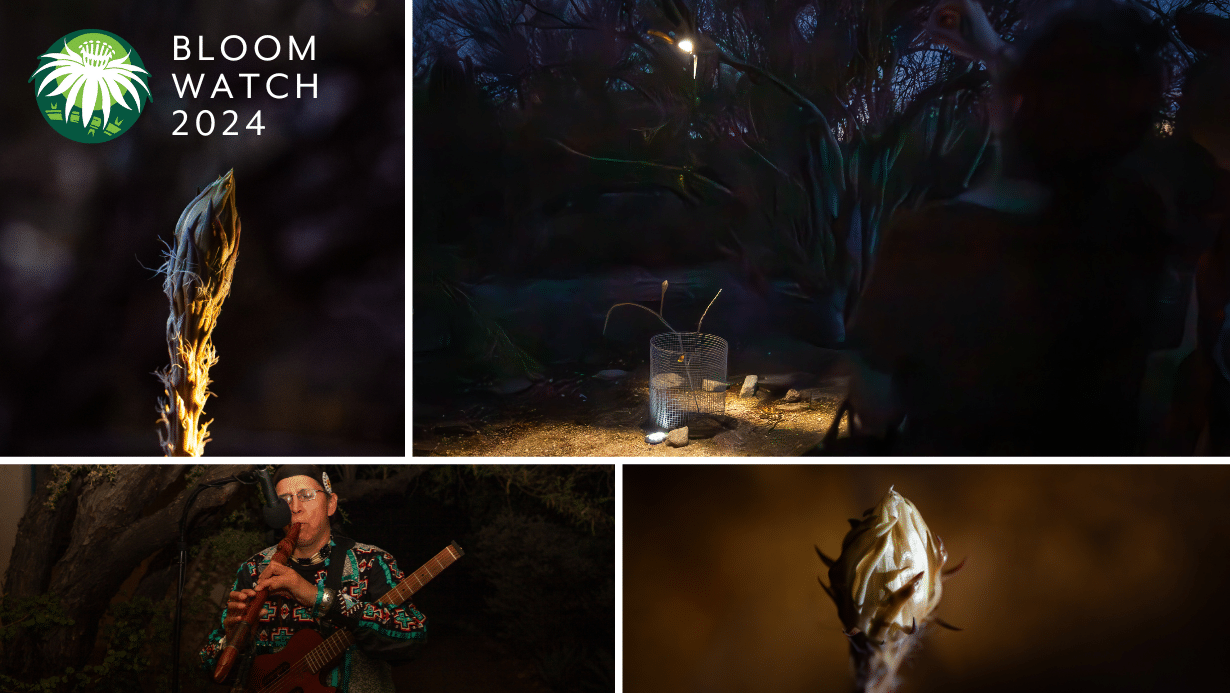
The evening that followed was a celebration fit for desert royalty. As the glowing sunset faded into the night sky, the air was filled once again with native flute music and a cheerful murmur. Curiosity, excitement, and a wistful peace permeated Tohono Chul. 

From the Pavillion, Garden’s Manager Jack Dash gave a presentation where he shared his extensive knowledge of the Queen of the Night. With fresh insight, visitors then ventured out to see the Queen for themselves. 

Bloom Night Tohono Chul 2024

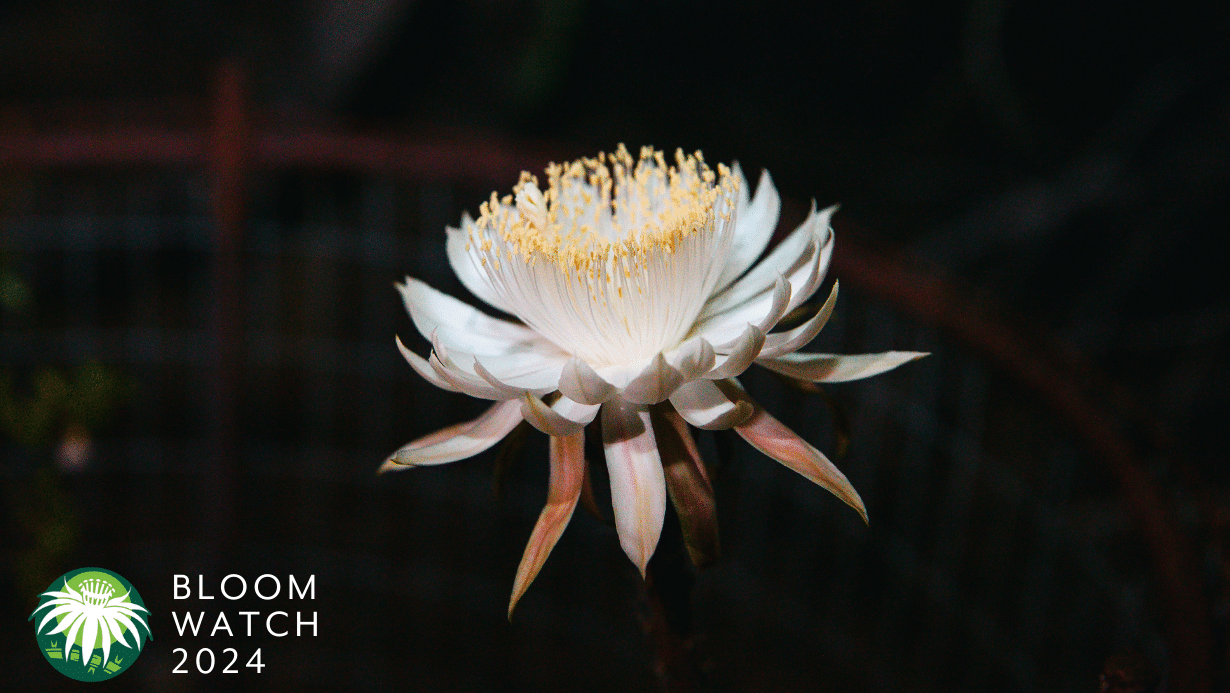
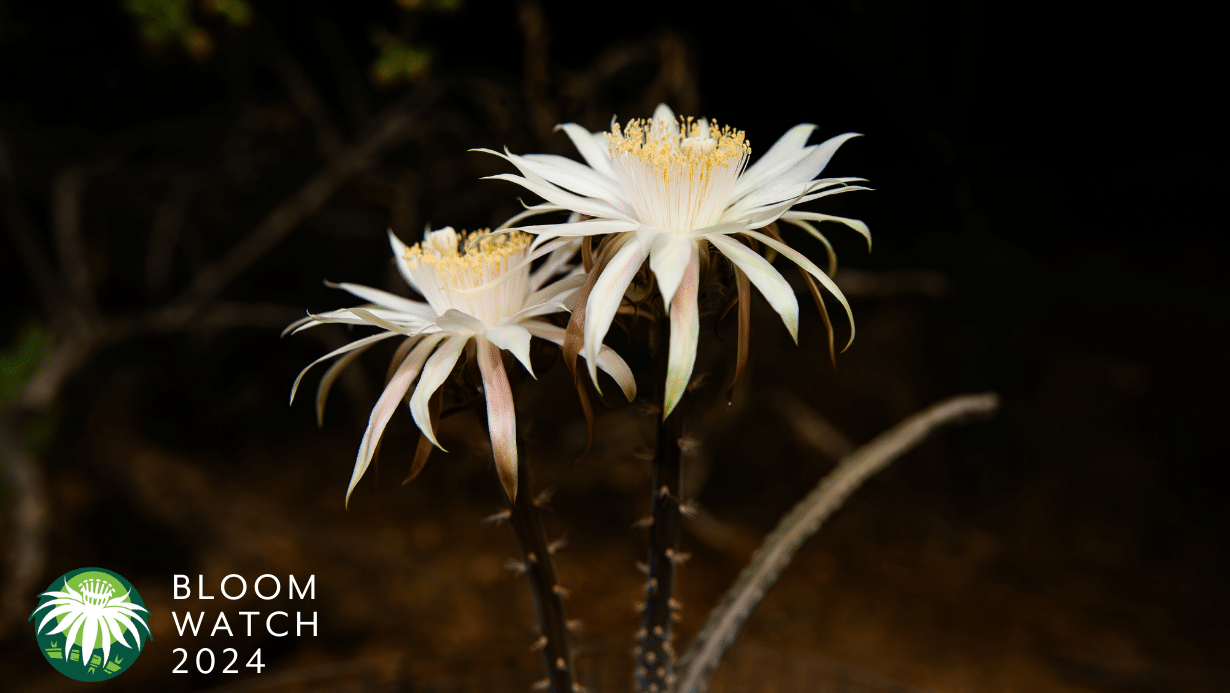
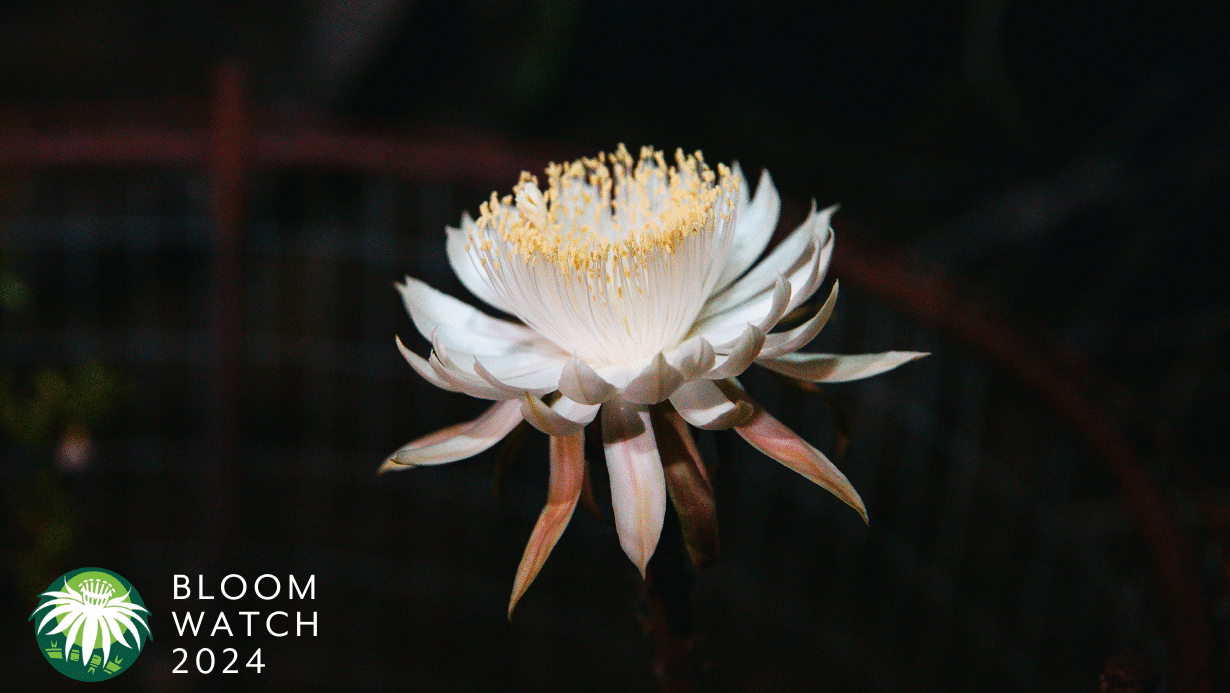
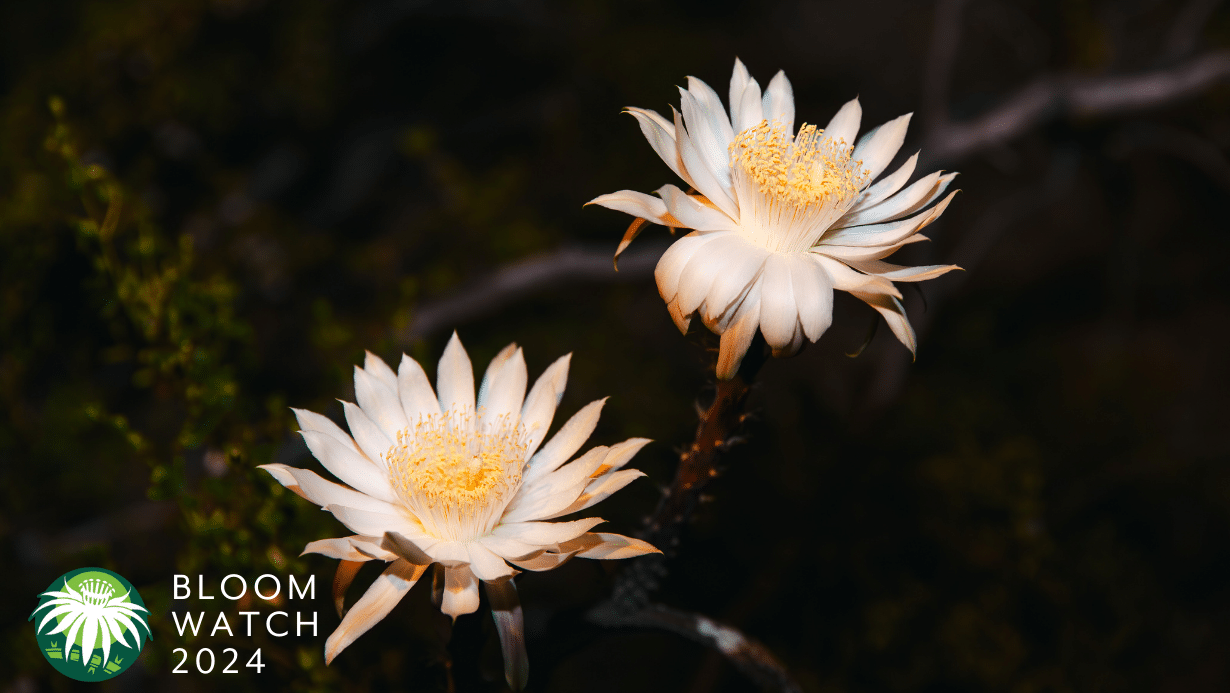
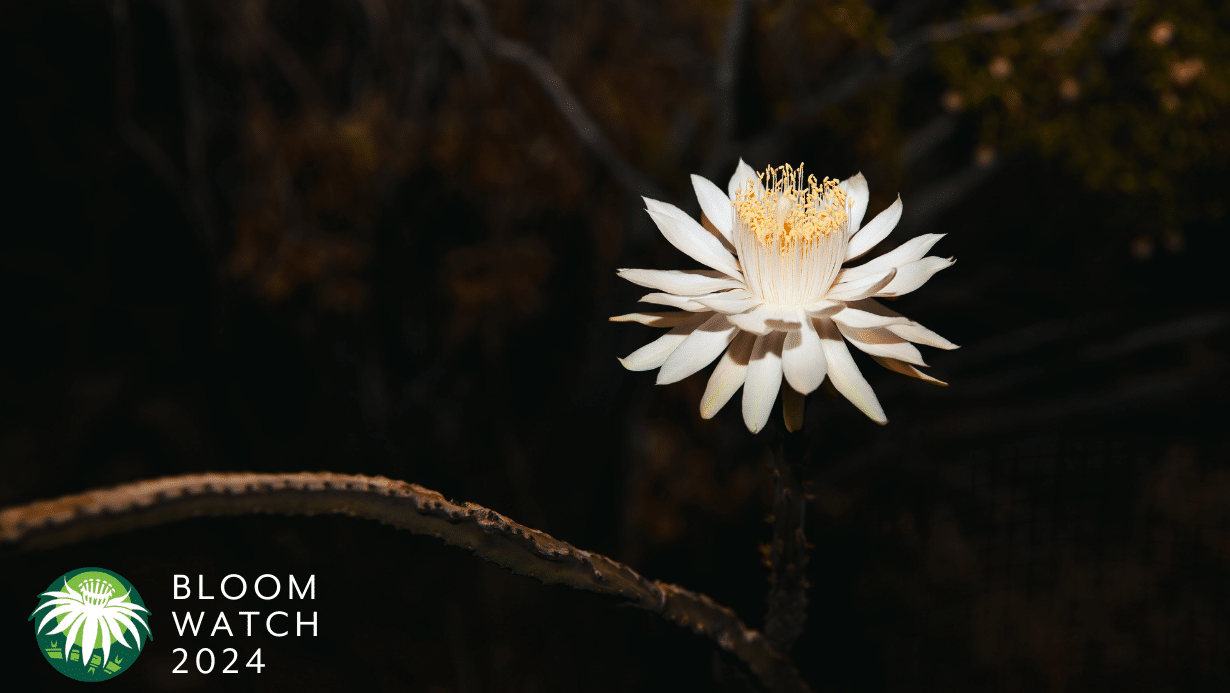
The soft glow of lights decorated the park and lit the pathways through the dark labyrinth of Desert View Trail. Our dedicated docents guided visitors as they marveled at the elegant white blossoms.

Observant guests were greeted by kangaroo rats, desert millipedes, and nighthawks. Some adventurers searched for scorpions with a UV light. We were excited to welcome an enthusiastic film student from the University of Arizona who came out to film eventgoers experiencing the blossoms for a documentary. The trail was bustling with people eager to see this cryptic desert plant come alive.

Not only was the desert open for viewing for members, but Bloom Night coincided with “Chillin’ at the Chul’, with refreshments and music creating a fun community space. At the Overlook, the Queen’s Court was also in full bloom for the public to enjoy. 

My hope is that we will remember a feeling—that the desert is special and holds one-of-a-kind living beings like the Queen of the Night.


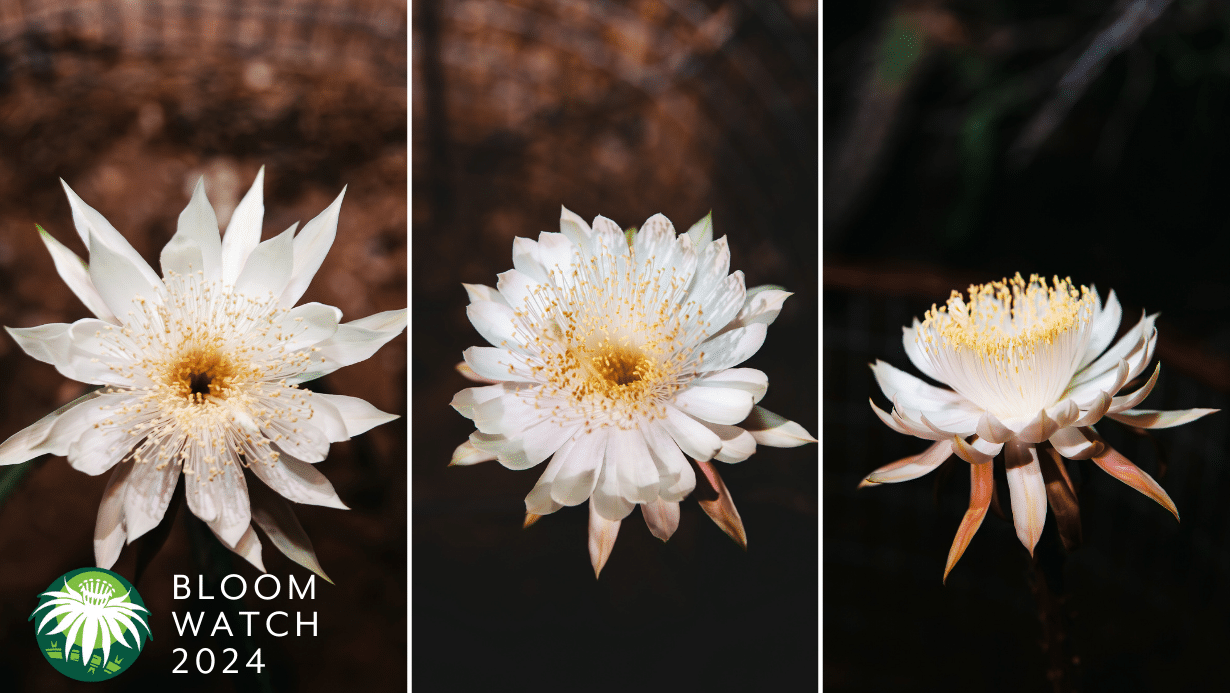
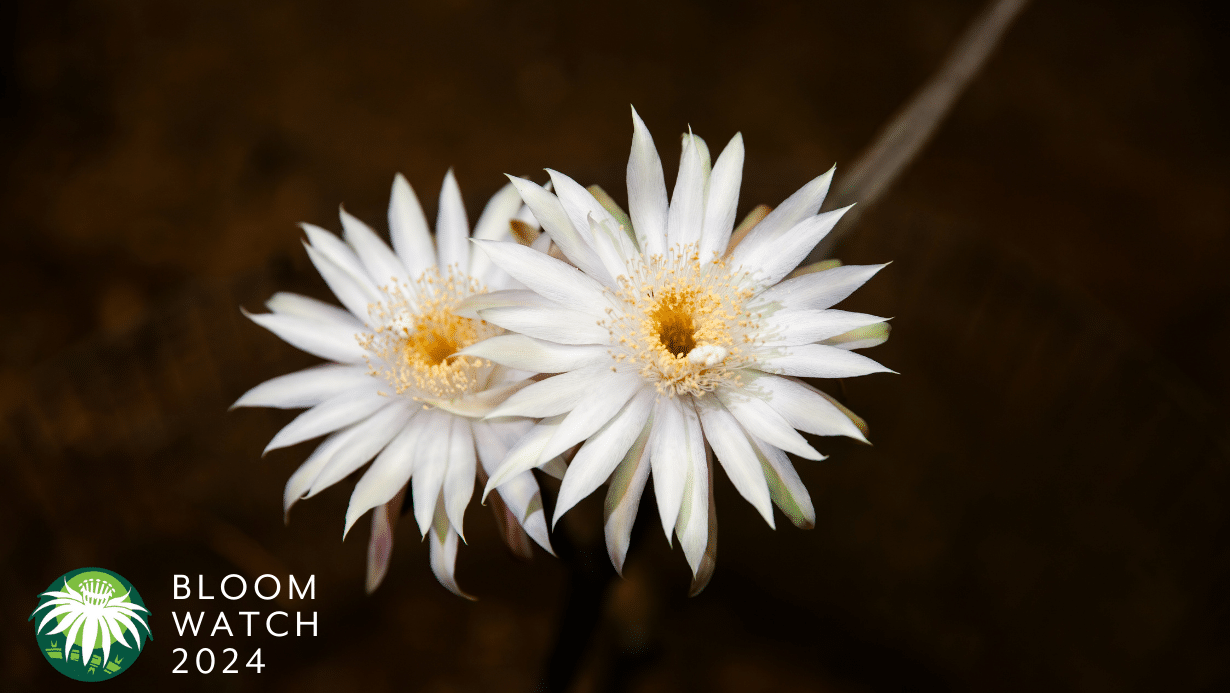
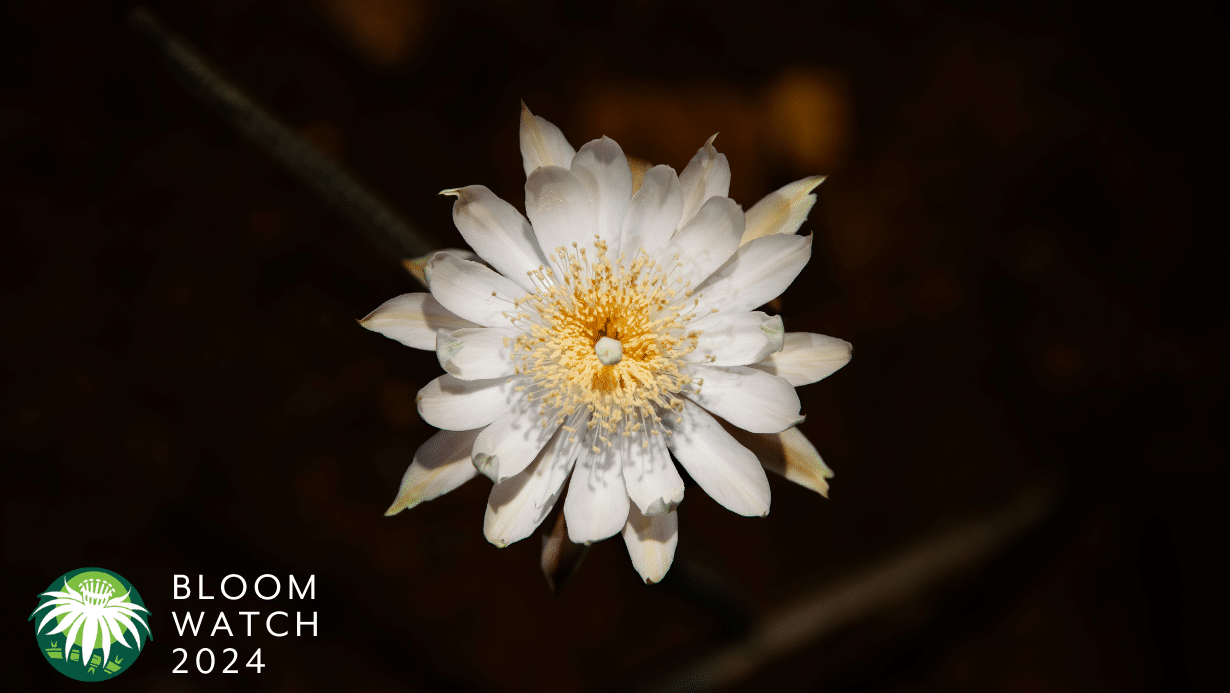
Check out these stunning photos of the Queen from Bloom Night!


Bloom Watch is written by Tracey Till, Propagation Coordinator


Until next year…

Click here to sign up for Bloom Watch emails.
Be sure to select “Bloom Watch” on the dropdown menu.


Bloom Watch #3 | A Royal Growth Spurt

Monsoon Magic

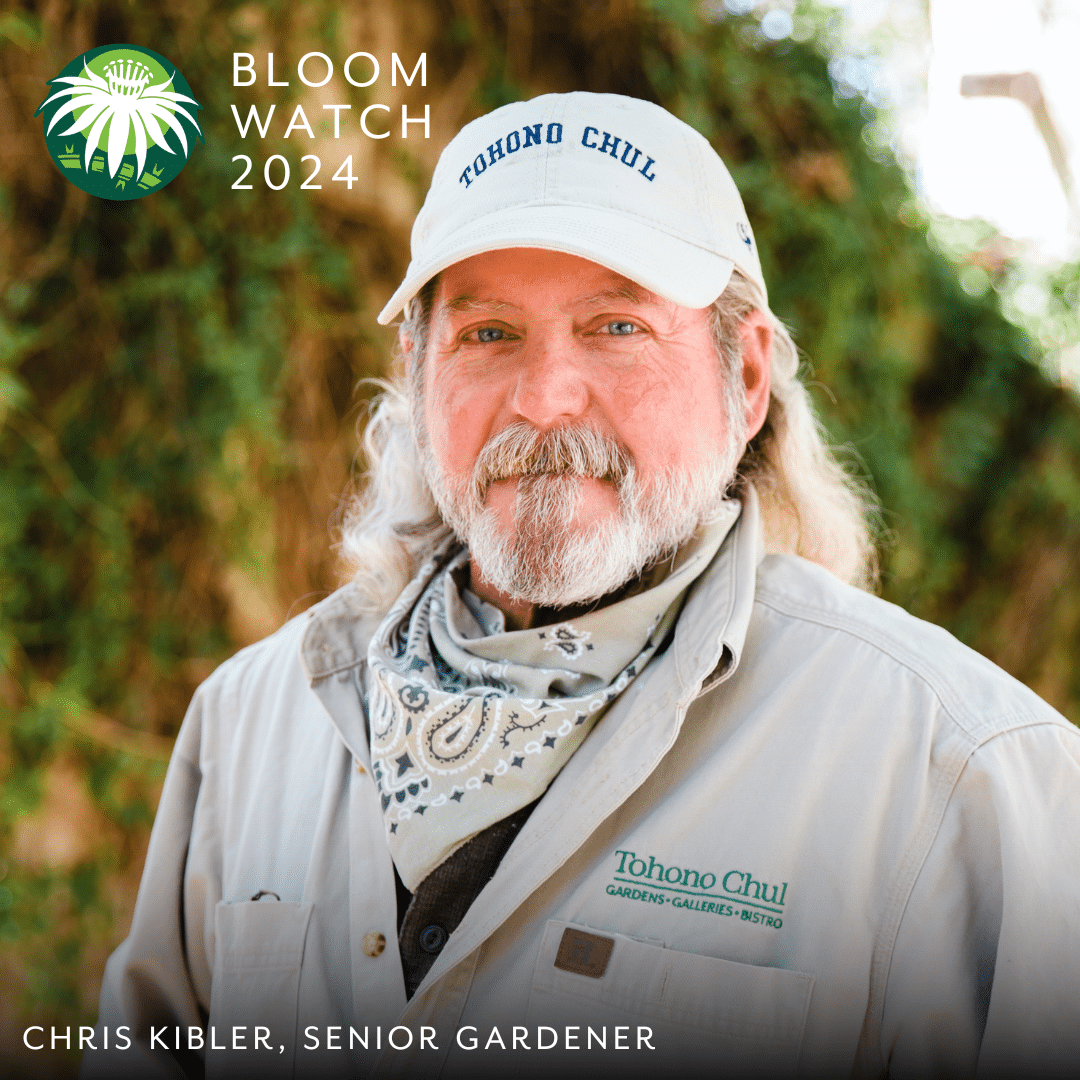
Last Friday morning as Chris Kibler, Senior Gardener here at Tohono Chul, made his rounds on the Desert View Trail, he noticed that the buds on the Queens were still small and tightly closed; but a lot can change in a few days. Bloom Night is approaching much faster than we originally predicted!

The summer solstice began blanketed in a dusty haze. A nebulous veil covered the mountains and a strong wind swept the city. Sand was carried over hundreds of miles high in the sky across the Southwest from New Mexico; a cloud of seeds.

By Friday afternoon, the weather was shifting. The dry heat, a trademark of June in Tucson, began to moisten. Clouds were forming to the east which soon spread over the horizon. “We’re crossing our fingers that we get some rain,” said Chris. That very next afternoon, the familiar, earthy smell of petrichor filled the air. Puffy cumulonimbus clouds formed over the Catalinas. The sky opened up and delivered the first Monsoon of the season, quenching the desert’s thirst and feeding the Queens.

I’m sure you have noticed the increased humidity this week. Doors are swelling. You can cut the air with a knife. This consistent humidity has done wonders for plant life throughout the garden and surrounding desert. It’s almost as if you can see things growing in real time.

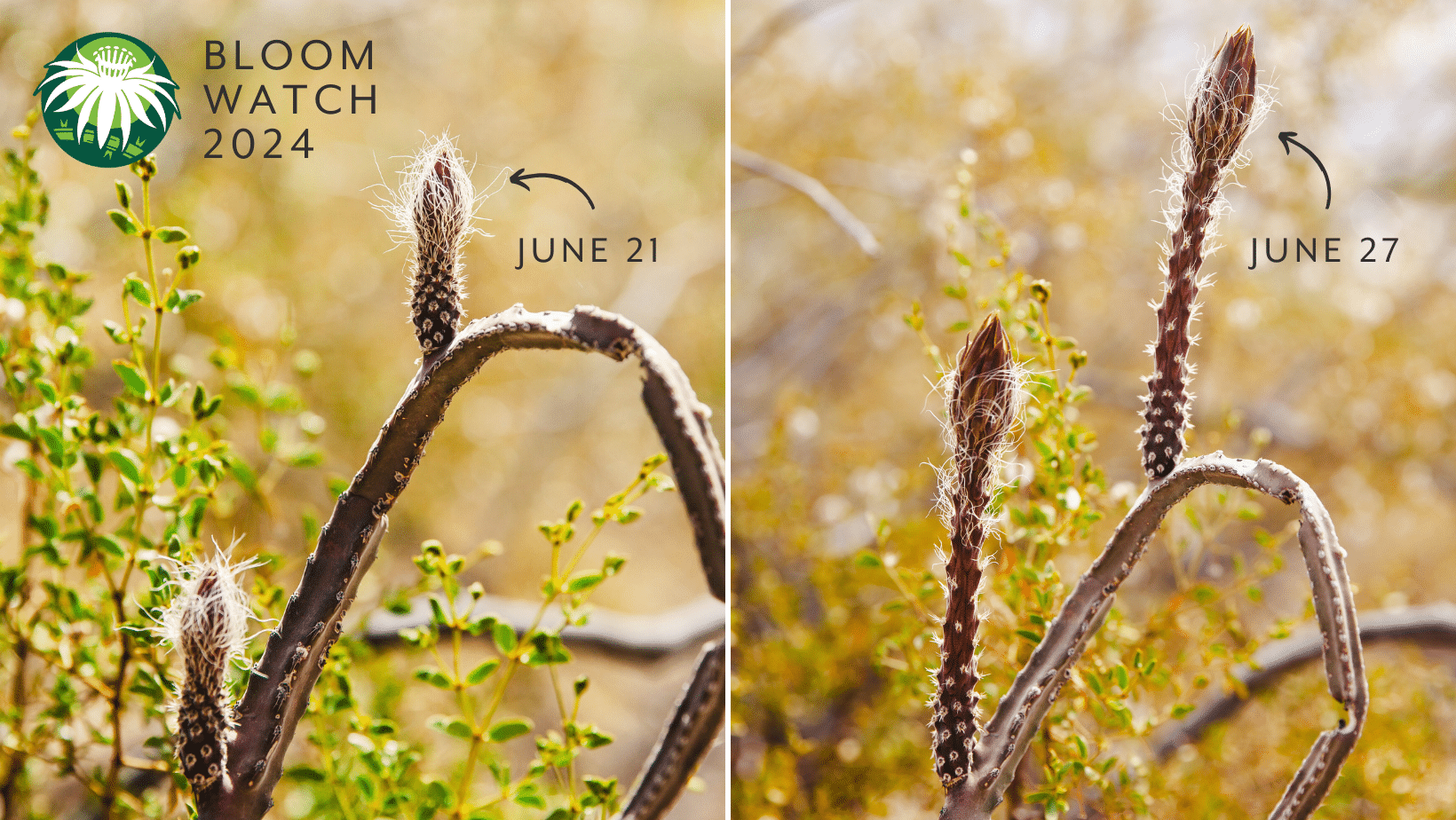
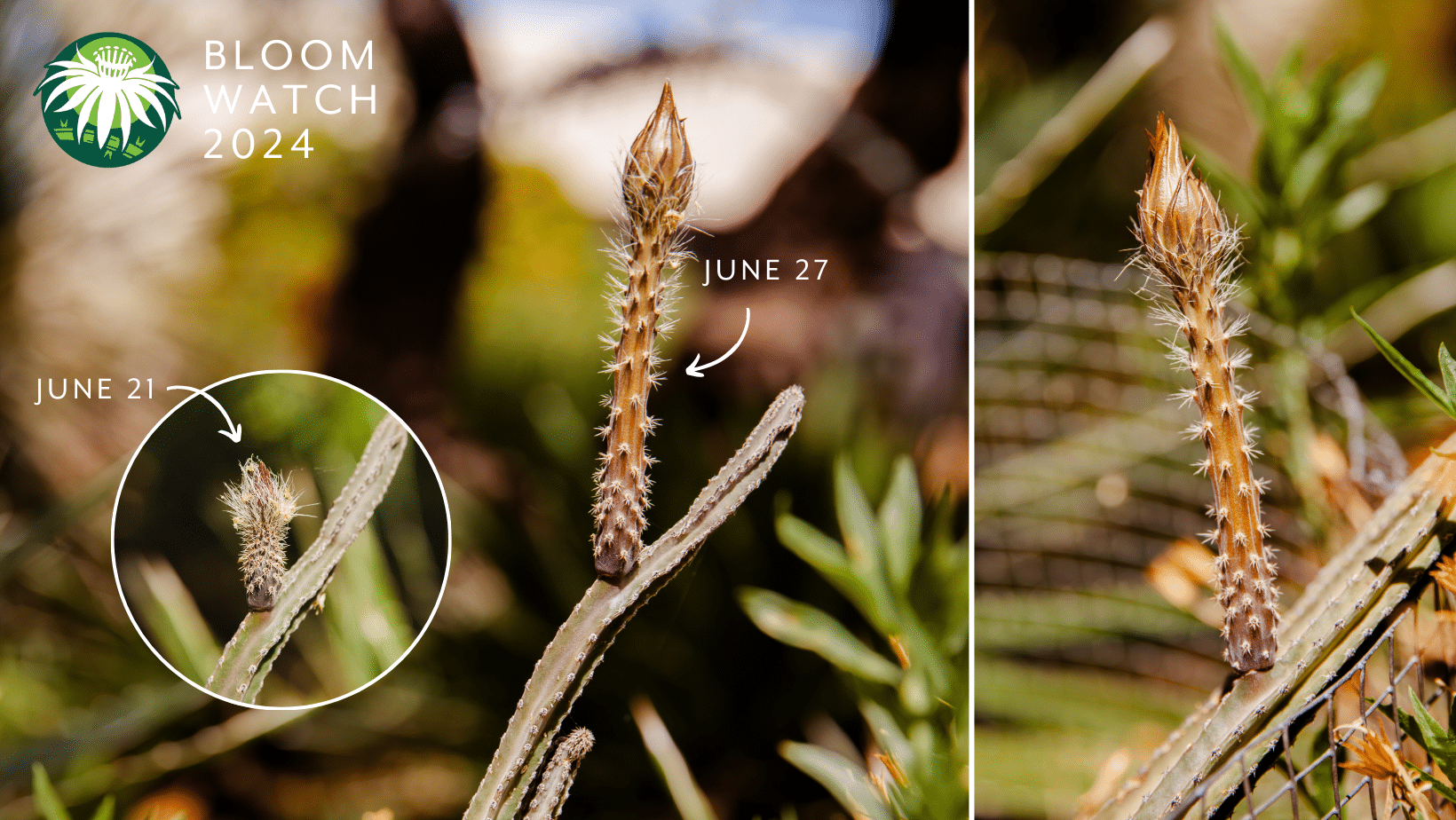
The Queens have experienced rapid growth since Saturday’s storm, doubling in size over the course of the week.
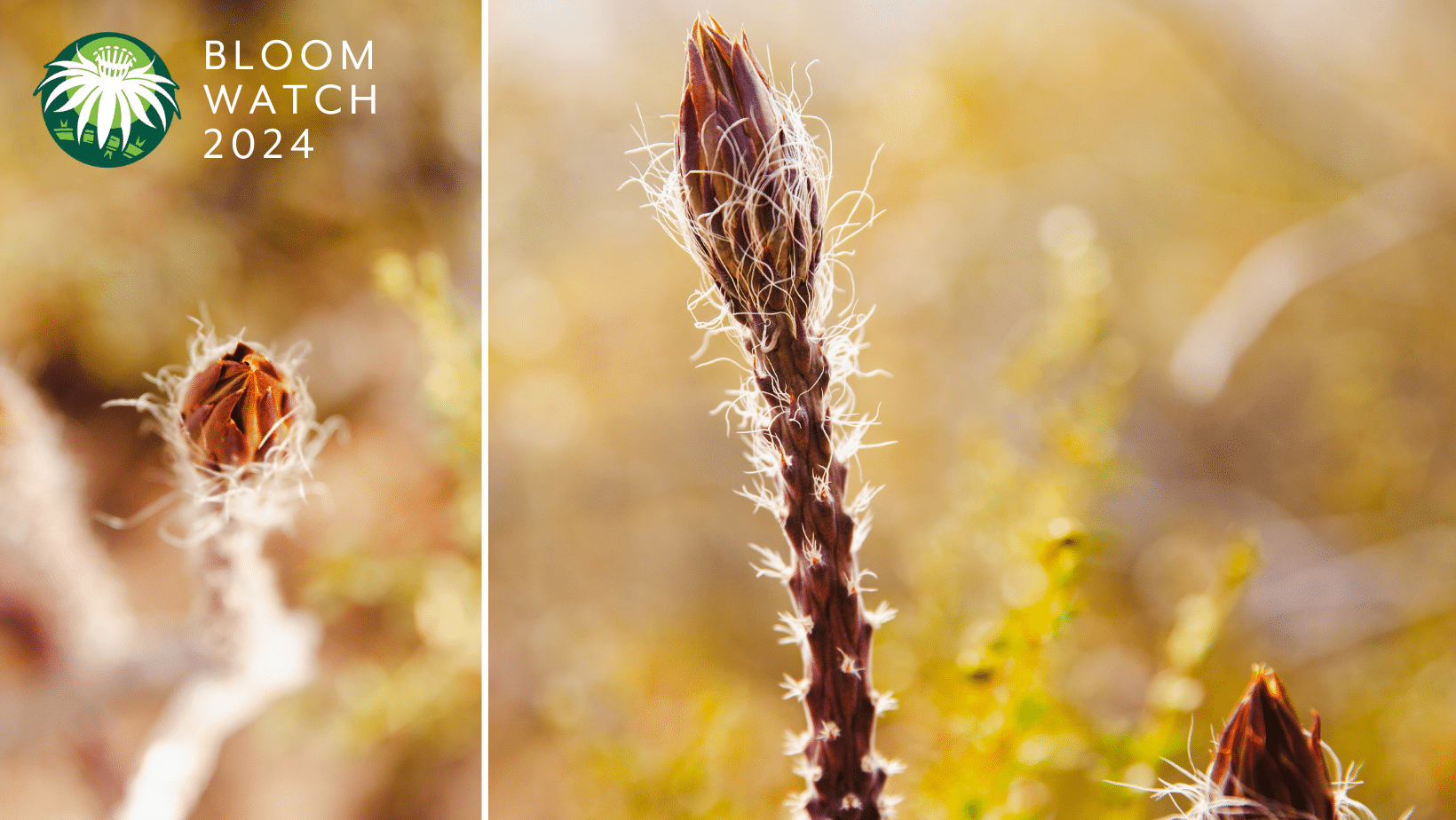
Buds are turning color with bits of deep maroon peeking through, hinting at the petals growing just beneath.

Due to this rapid growth spurt, we anticipate Bloom Night to occur sooner than expected. That’s right — the Queen is coming! We predict that the buds will grace us with a royal show either late this week or early next week. Last year, they chose July 23rd as their day. Which day will our resident monarchs choose this year? Will it be this weekend? Maybe. All we can do in the meantime is measure, observe, and wait.


The Queen’s Court

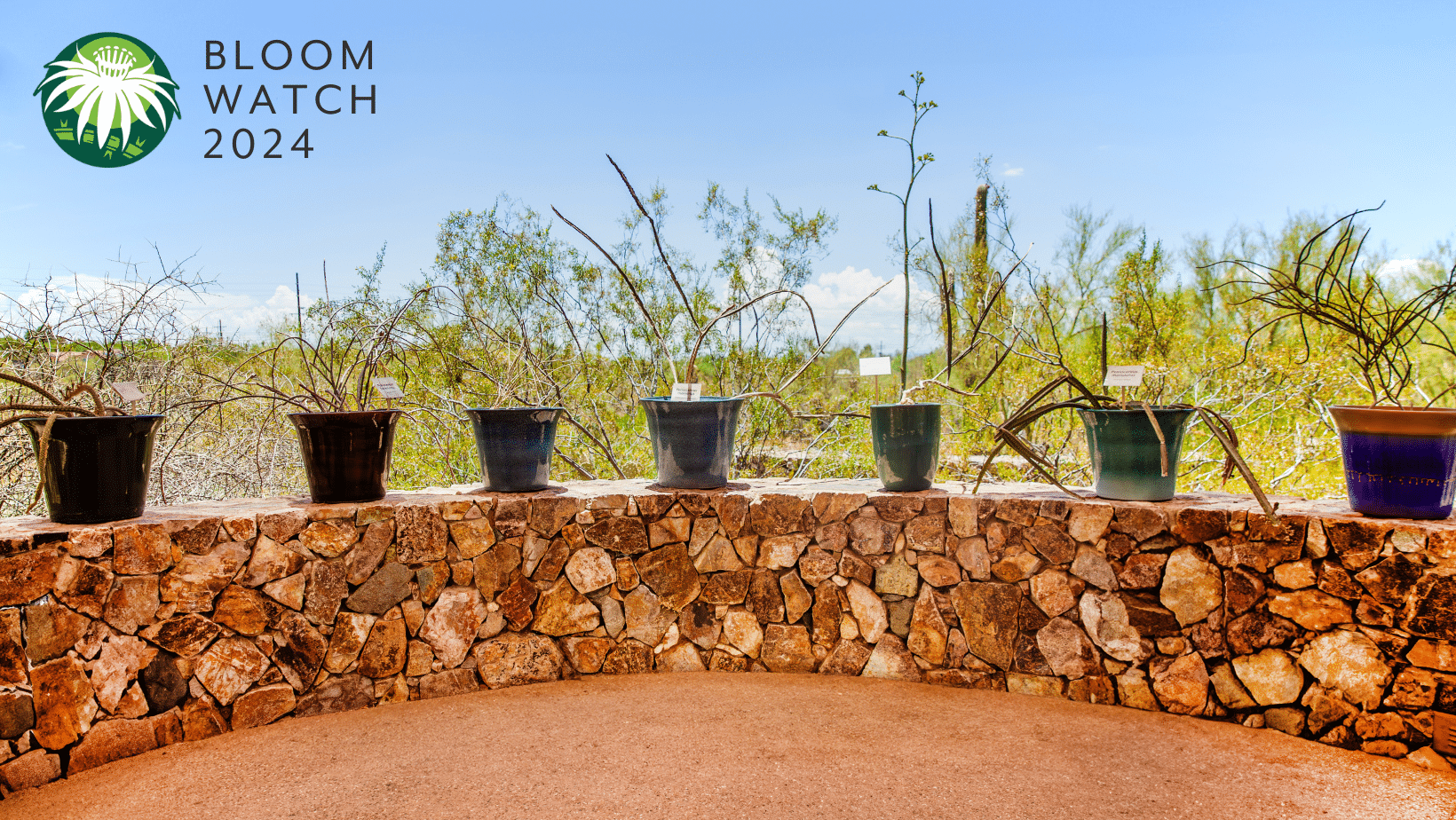
Meanwhile, at the Overlook, Chris discovered that our Peniocereus collection, known as the Queen’s Court, has sprouted 79 buds!

The Queen’s Court (located at the Overlook on the southern side of the gardens) displays our diverse Peniocereus collection.

The Queen’s Court collection is a great example of the remarkable diversity found within the Peniocereus genus. These unique plants are native to the Southwest US and Mexico, flourishing in varied and distinctive habitats; from the creosote flats and gravelly slopes of the Sonoran and Chihuahuan deserts to the dry tropical forests of Western and Southern Mexico. For example, Peniocereus serpentinus can be commonly found growing in the understory of mesquite woodlands. At the same time, the Peniocereus marianus has been spotted sprouting from a sheer basalt cliff on the Sinaloan coast.

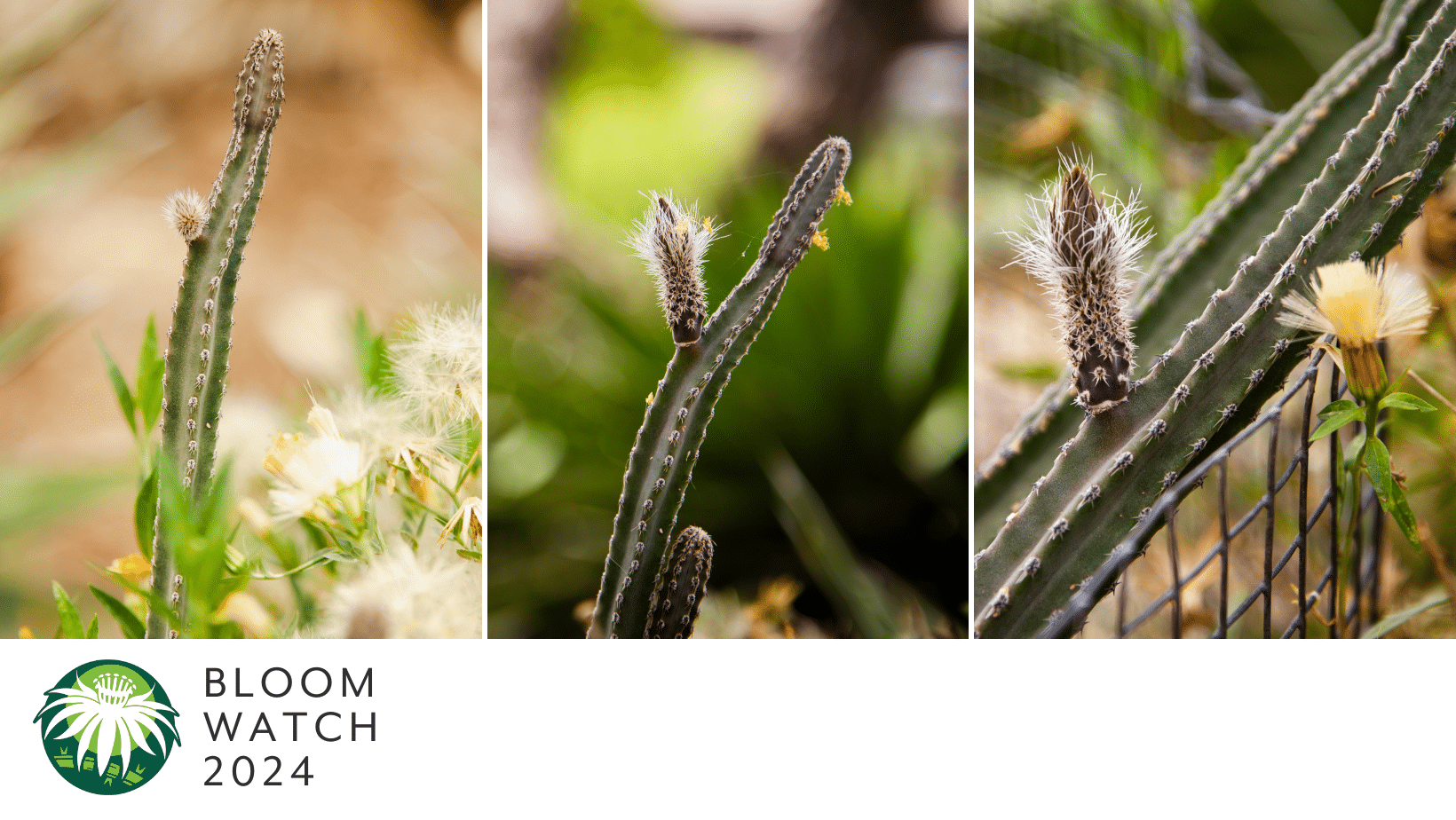
Details of buds from the Queen’s Court (left to right): Peniocereus cuixmalensis, Peniocereus oaxacensis, Peniocereus maculatus

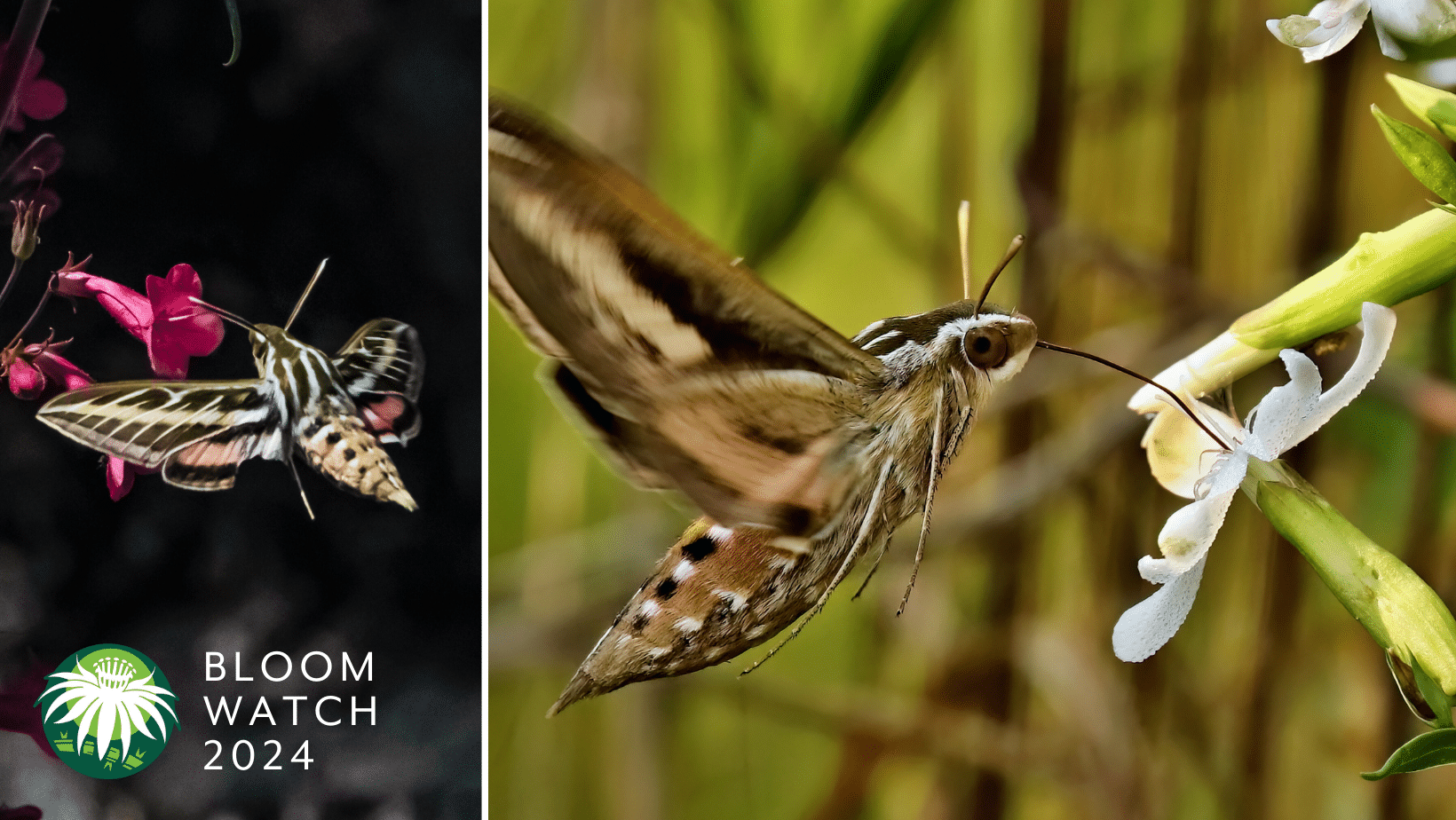
Buds in the Queen’s Court have begun to bloom sporadically, much to the delight of local pollinators. Bats, birds, and insects, especially certain moths, eagerly await their late-night snack. Since the Queen of the Night blooms only once a year, pollination is critical to its survival.

Pollination is the reproductive process of plants where pollen is transferred from one flower to another, enabling seed and fruit production and ensuring the next generation of plants. The Peniocereus greggii relies primarily on nocturnal pollinators, particularly sphinx moths (Sphingidae), for this essential process.

The white-lined sphinx moth is an important pollinator for the Peniocereus.

The Queen of the Night’s flowering behavior, scent, and structure are finely tuned to attract nocturnal pollinators. Its large, bright, tubular flowers are typical of plants pollinated by moths. The narrow shape facilitates easy access, allowing them to hover and reach deep into the flower with their proboscis, a straw-like mouthpart used for feeding.

Soon, the desert will be alive with the fluttering of moths and the sweet scent of blooming Queens.


Bloom Watch is written by Tracey Till, Propagation Coordinator


The Queen is Coming…

Due to rapid growth from recent rain and increased humidity, we predict Bloom Night to occur sometime within the next 7 days, potentially as soon as this weekend.

Sign up for Bloom Watch emails here.
Be sure to select “Bloom Watch” on the dropdown menu.


Members Only

This year, Bloom Night is an exclusive members-only event. Your support helps preserve the Desert View Trail and our Peniocereus greggii collection while we work to ensure proper pollination of these special plants.

Don’t miss out—become a member today and unlock a year of perks and benefits at Tohono Chul, including early access to plant sales, discounts, free daily admission, reciprocal admissions at other public gardens, and much more.


Predictions and estimates for Bloom Night are subject to change based on various factors such as weather conditions, growth patterns, and environmental influences.

Bloom Watch #2 | Beneath the Surface

Tohono Chul Gardeners Chris Kibler and Shauna Smith, along with dedicated volunteer Tammy, have been diligently watching over the Queens and measuring their progress.

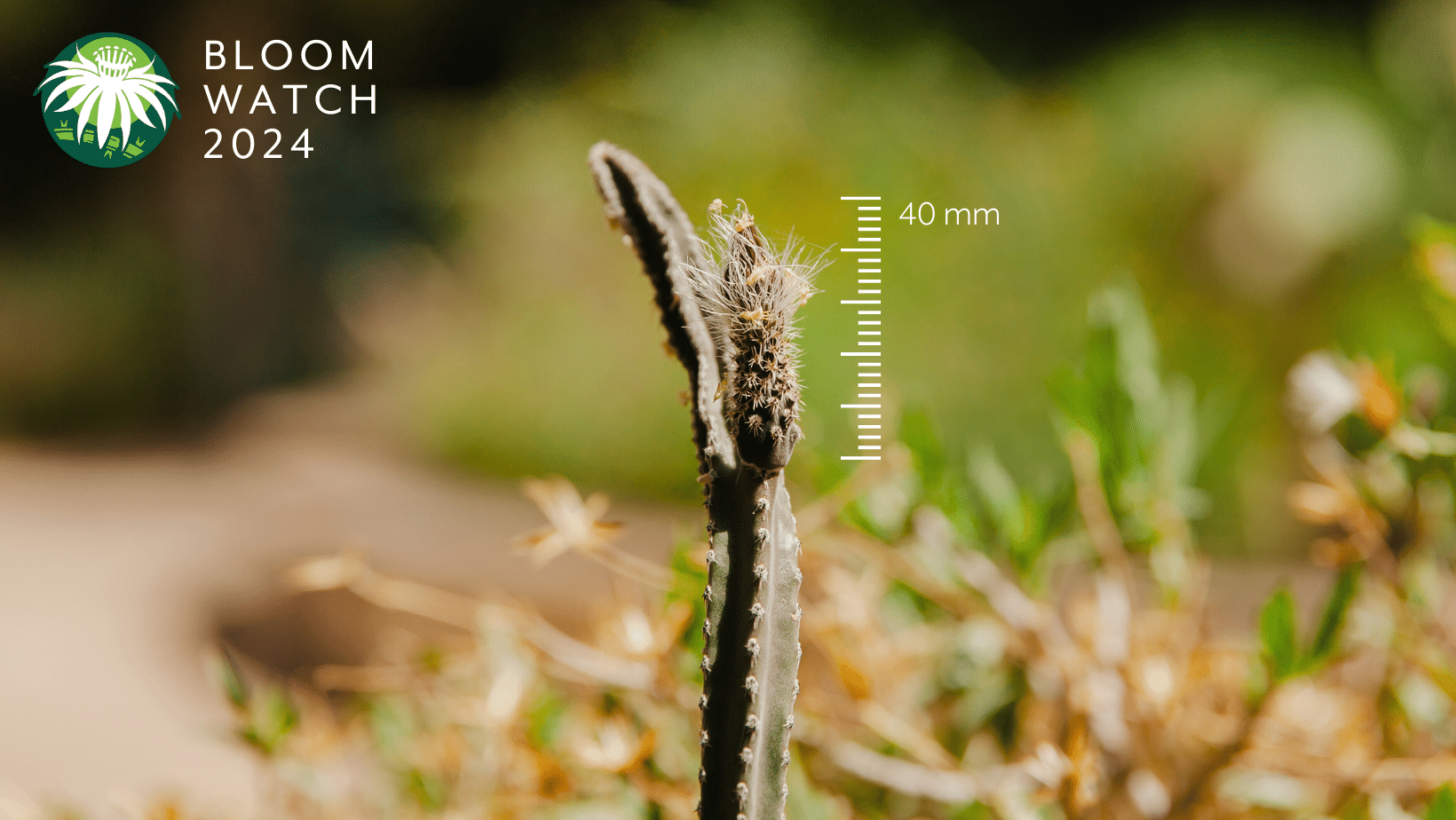
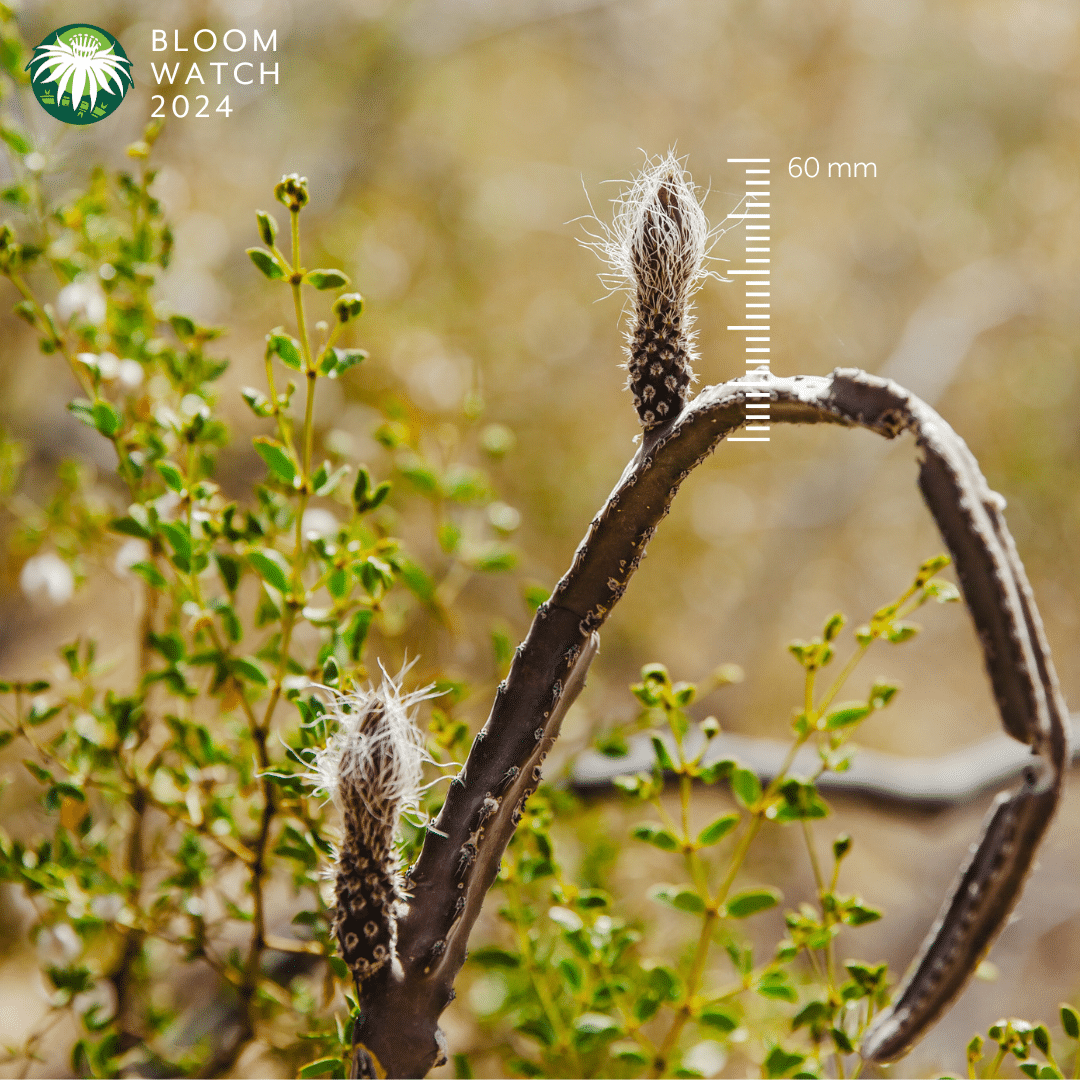
Shauna and Chris recorded measurements of the growth of the buds for our records. “Most are at 40 mm, with a few near 60mm. With the onset of this heat they’ve slowed down.” said Chris, Senior Gardener at Tohono Chul. According to the Gardeners, Bloom Night could be anywhere between 2-4 weeks out. But as we all know, Mother Nature works on her own timeline.

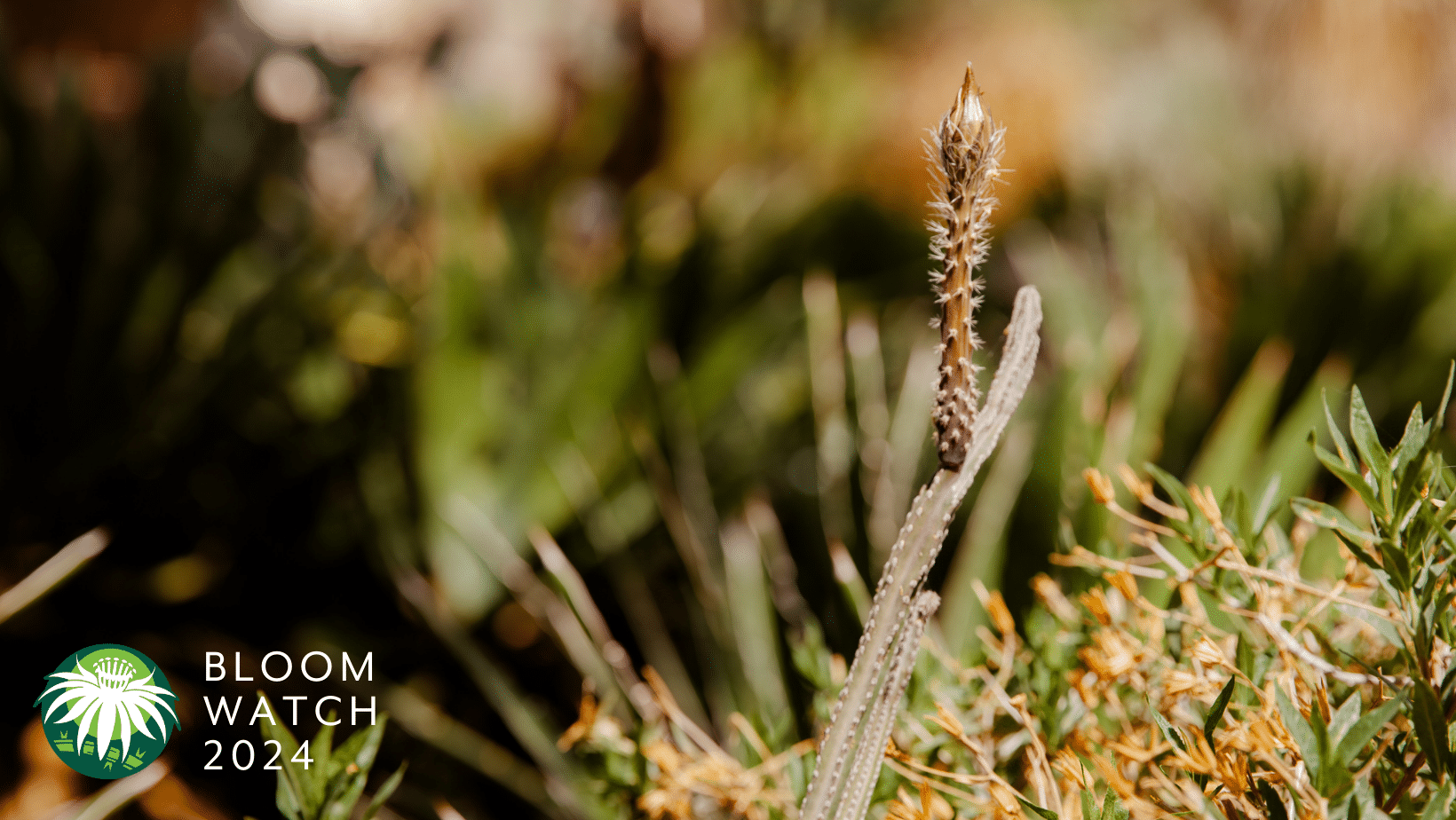
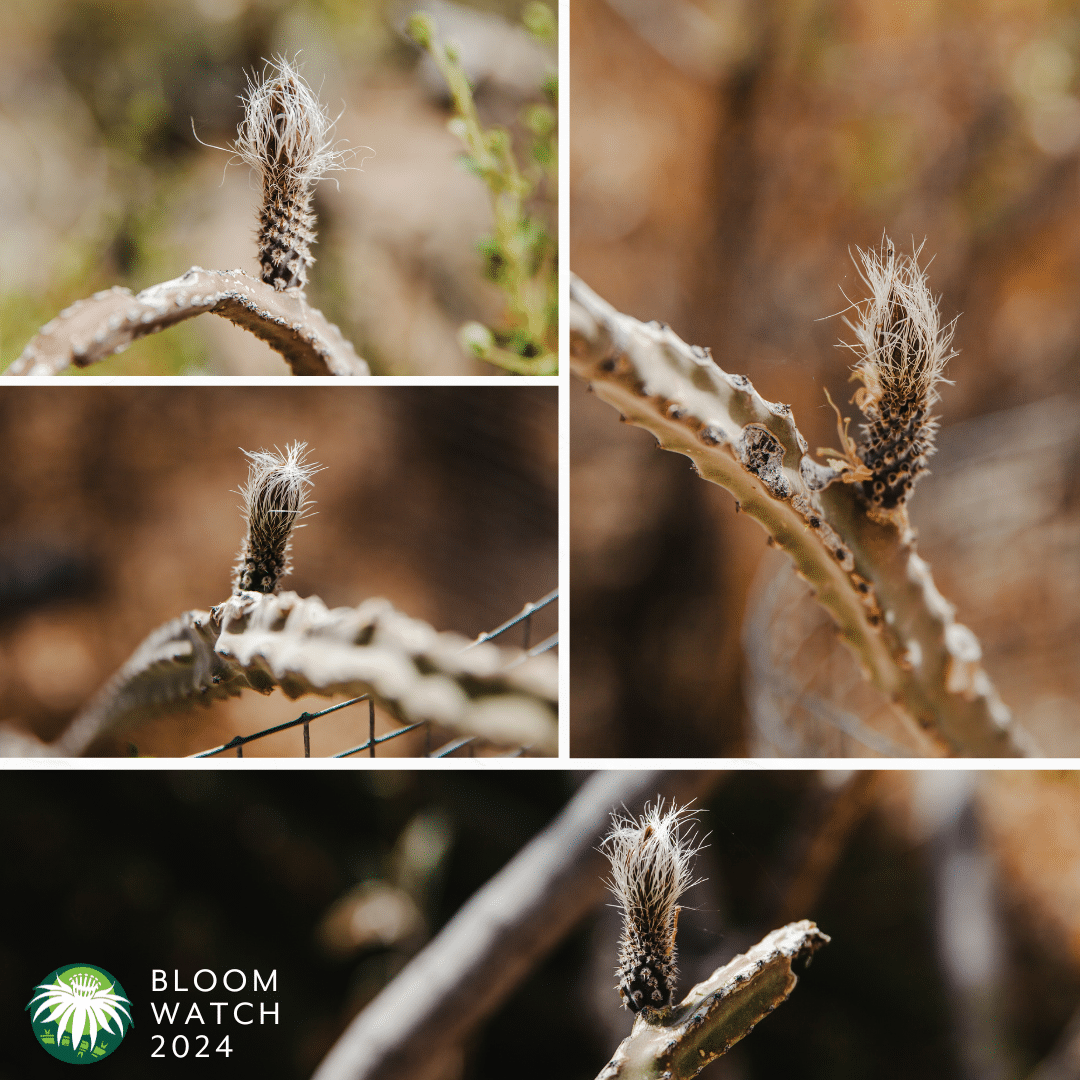
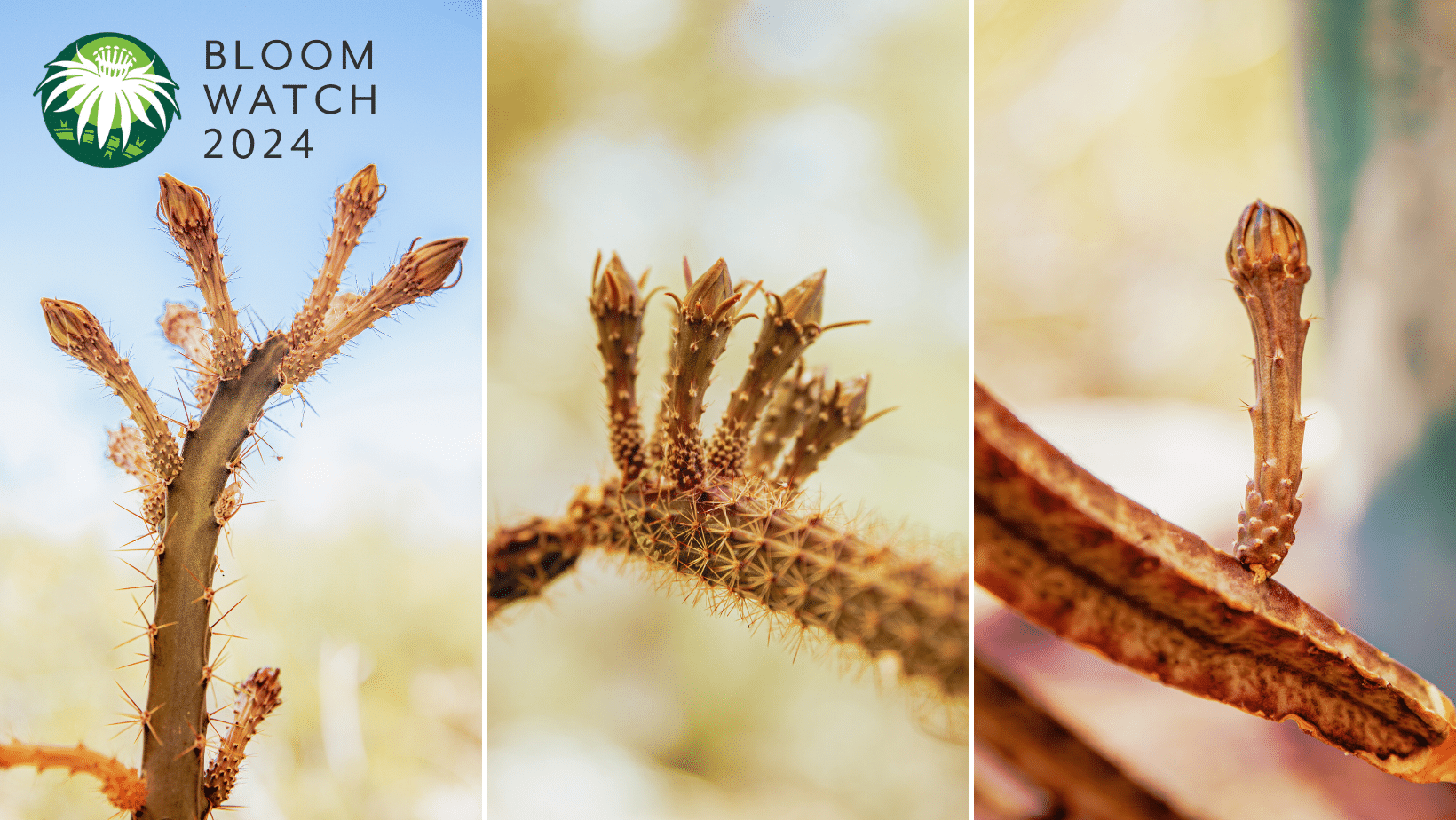
Stems grow from the tips. Concentrated spines and fuzz help protect the area where cell division is occurring on a Peniocereus greggii, the night-blooming cereus.

I ventured out to the Desert View Trail early Tuesday morning to see the Queens for myself and hear what the trail has to say…

Larrea sparkle in the morning sun, as if covered in dew. Seeds waiting for the winds of change, the monsoon.
A gossamer seed released like a puff of smoke, floats by.
Spiderwebs glisten between branches, the invisible is visible.
Every tree is a tree house for the beetles and bees. You can see the small oval holes like windows.
A wasp, brown and red, hovers over a Queen of the Night.
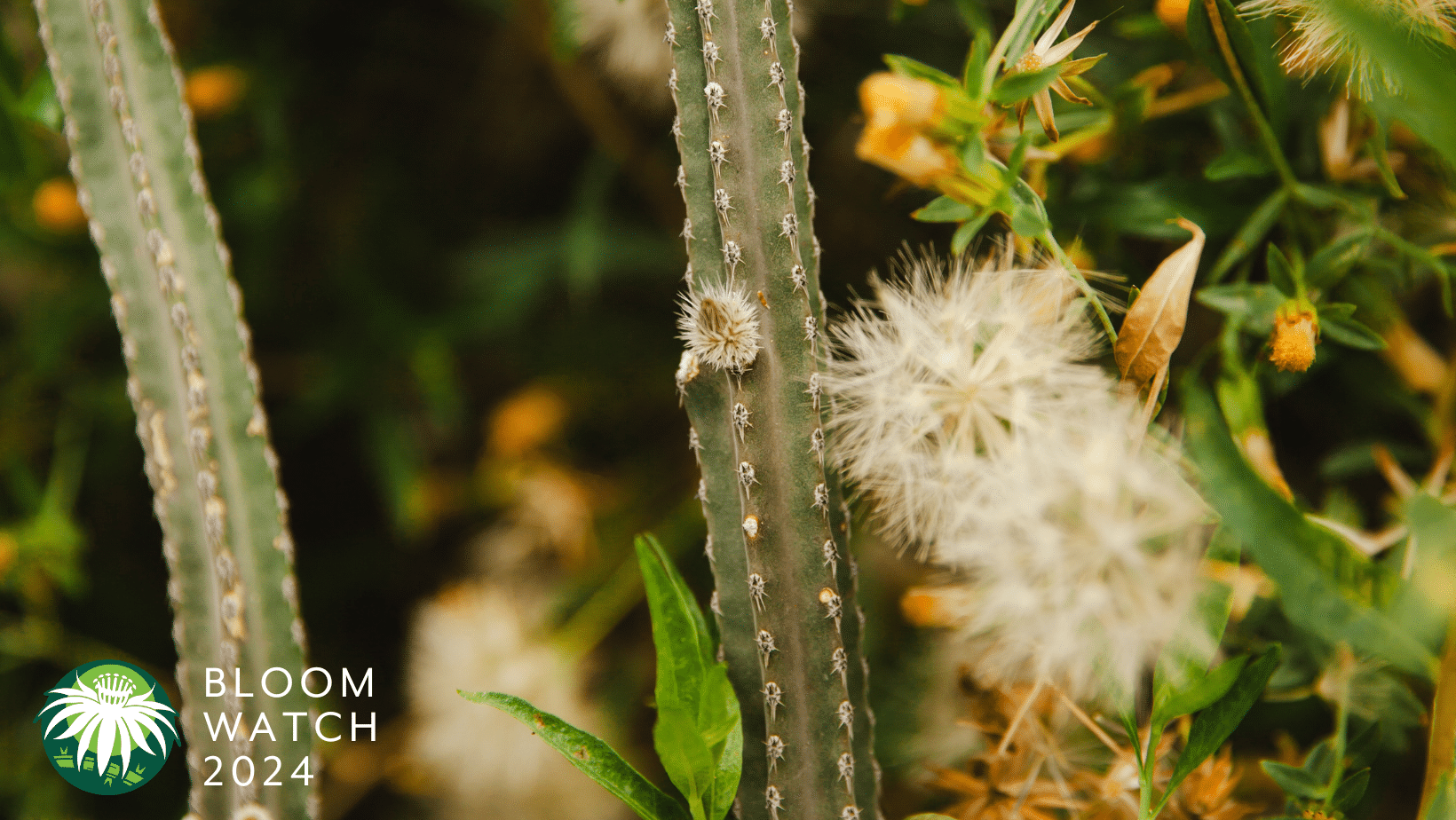
Flowerbuds! They decorate the plant like little black and white flames. Star-shaped spines cling to the trunk of their nursery tree, an acacia.
Amongst the wild trees and grass the soil is covered in white and orange stones.
Gneiss stones freckled with garnets slowly worn away into sand by streams of rainwater and wind.

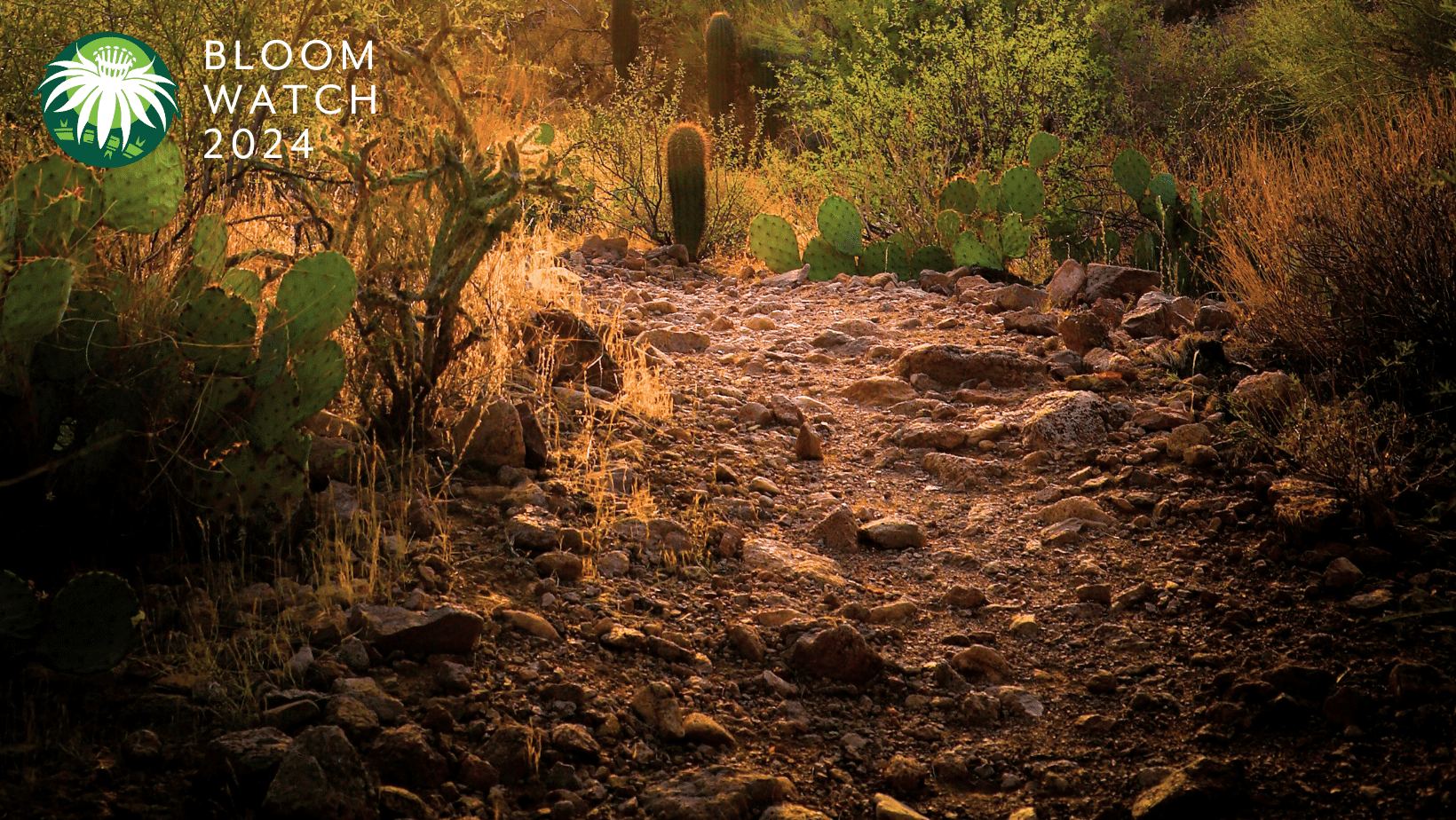
Many small footprints appear in the dusty, well-worn path. Hoof, paw, and claw. An occasional sneaker print from a Tucsonan.


My walk makes me wonder, what is this gravelly soil made of anyway? Why does the Peniocereus greggii grow here and not everywhere?

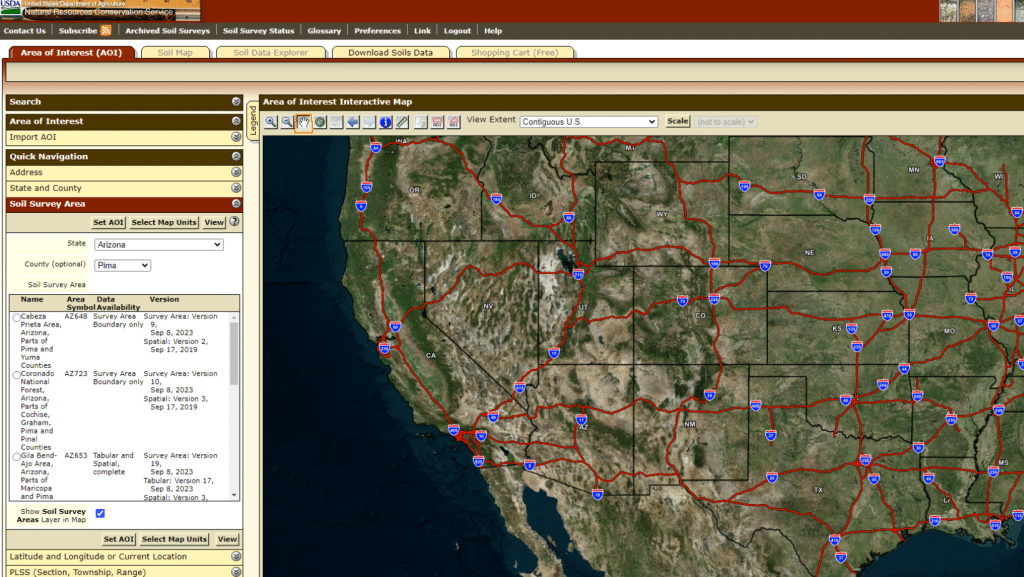
Heading back to civilization and leaving the peaceful morning vista, I’m sitting at my desk. I decided to let my curiosity stray from the winding paths of the Desert View Trail and onto the winding paths of a Google search. I came upon the Web Soil Survey website (provided by the USDA) and looked up the Desert View Trail’s location on their interactive soil map. Now, soil science is a foreign language to me, so I must read slowly to understand… “Alluvium derived from schist and/or alluvium derived from gneiss… along with other granitic and some volcanic and sedimentary rock”.

Screenshot from the Web Soil Survey website.

Okay, let’s break this down!

Alluvium is made of sand, gravel, silt, and clay deposited by flowing water. According to their website, The Desert View Trail and much of the surrounding area were likely formed during the Ice Age when mountain glaciers melted and produced lakes and rivers that deposited these sediments. Over time, calcium carbonate was also formed as slightly acidic rainwater trickled through the layers. The expanse of time; the natural forces of water, wind, and sun that shaped the landscape is awe-inspiring!

It seems the Queen of the Night is well adapted to the sandy, silty, gravelly soil. Perhaps adequate moisture and drainage are all that is necessary to allow the large tuberous root to grow and to prevent rotting.

Earlier, botanist and Tohono Chul Gardens Manager, Jack Dash, brought up the question to me of whether the baby Queens we are growing in the nursery could benefit from symbiotic microbes native to the desert soil.

Perhaps more is going on than can be easily seen. What else could be going on beneath the surface? Soil is not only a collection of tiny non-living rocks but a thriving and bustling community and ecosystem. It’s filled with active plant roots, algae, fungus, bacteria, and small invertebrates.

This graphic depicts the intricate web of microbial interactions within a soil ecosystem. Vibrant colors and organic shapes represent the diverse array of bacteria fungi and other microorganisms.

Many people know about the miraculous mycorrhizal (fungi that have a symbiotic relationship with the roots of many plants) that colonize tree roots and enable them to absorb more nutrients from the soil. It turns out that cactus also facilitate partnerships with fungi friends! According to the book Cactus Biology and Uses, root samples of different Sonoran cactus species were anywhere from 10% to 70% colonized by mycorrhizal fungi.

However, I have yet to dig up an article specific to Peniocereus greggii mycorrhizae. What might be happening beneath the soil of our Queens? For now, it remains a mystery to me.

The Queen knows where to grow. The Queen knows when to bloom. When she is ready.


Bloom Watch is written by Tracey Till, Propagation Coordinator


We are estimating about 2 to 4 weeks away from the big night! 
Stay tuned for updates.

Click here to sign up for Bloom Watch emails.
Be sure to select “Bloom Watch” on the dropdown menu.


Members Only

This year, Bloom Night is an exclusive members-only event. Your support helps preserve the Desert View Trail and our Peniocereus greggii collection while we work to ensure proper pollination of these special plants.

Don’t miss out—become a member today and unlock a year of perks and benefits at Tohono Chul, including early access to plant sales, discounts, free daily admission, reciprocal admissions at other public gardens, and much more.


Predictions and estimates for Bloom Night are subject to change based on various factors such as weather conditions, growth patterns, and environmental influences.

Bloom Watch #1 | All Hail the Queen

All Hail the Queen

The season is turning on the Desert View Trail. Early spring wildflowers have dried and are dropping their seeds, feeding the quail, and becoming part of the seed bank. As they bloom, cacti, shrubs and trees utilize water reserves, and stretch to deep underground rivers to quench their thirst.

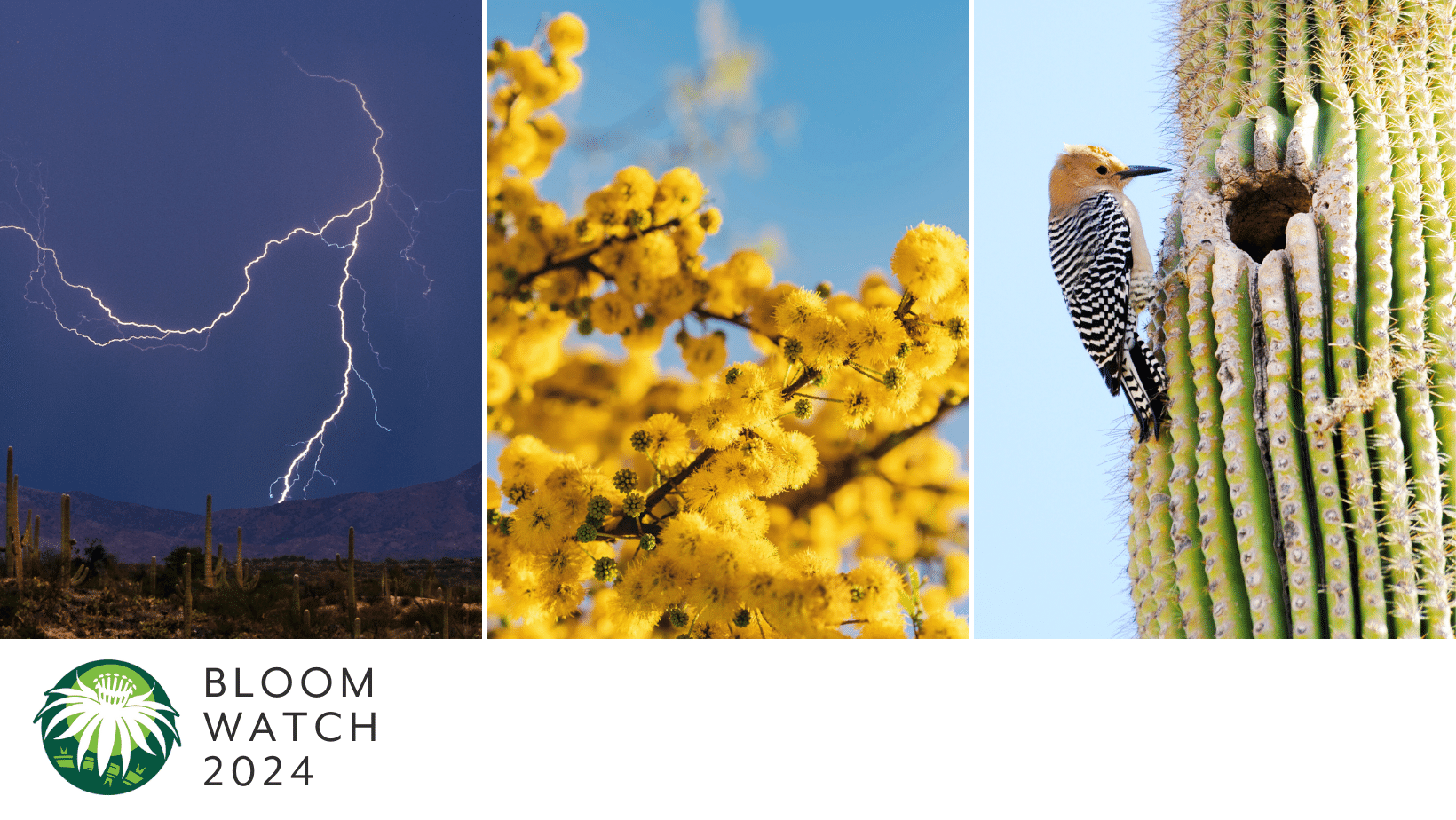
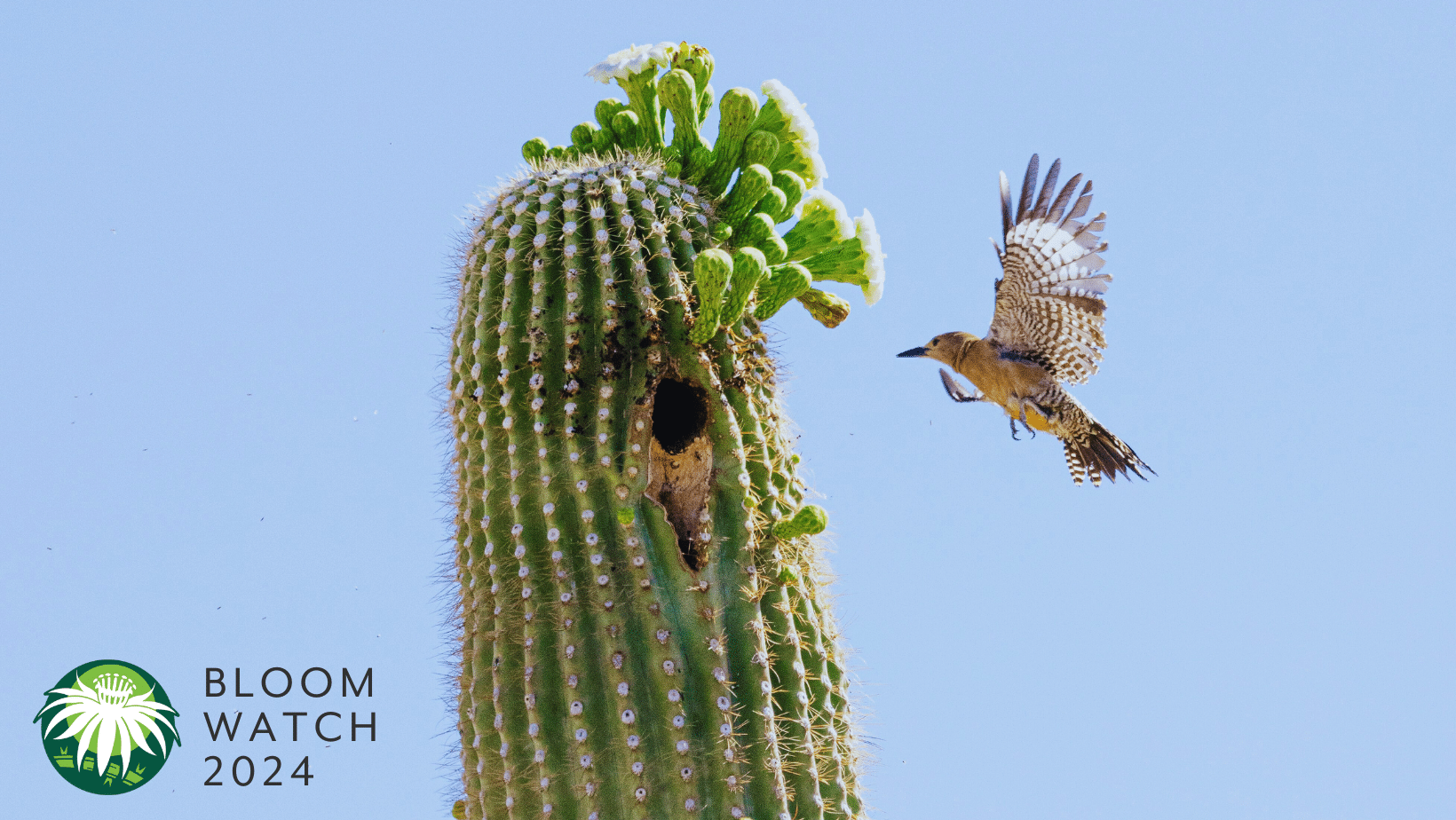
Acacias along the wash are covered in little pom-poms that winged creatures visit for nectar and pollen. Saguaros open their buds to the sky and beckon hungry visitors. Leafcutter ants gather fallen yellow blossoms. Green pears grow on the Opuntia. Cactus wrens are busy nesting. There is a ripe crunch underfoot as you walk on the dry earth. Dry fore-summer is here!

What will this season bring for the Queen of the Night, Peniocereus greggii? Several plants that had seemingly disappeared below the surface have reappeared after the long late winter and early spring rains.

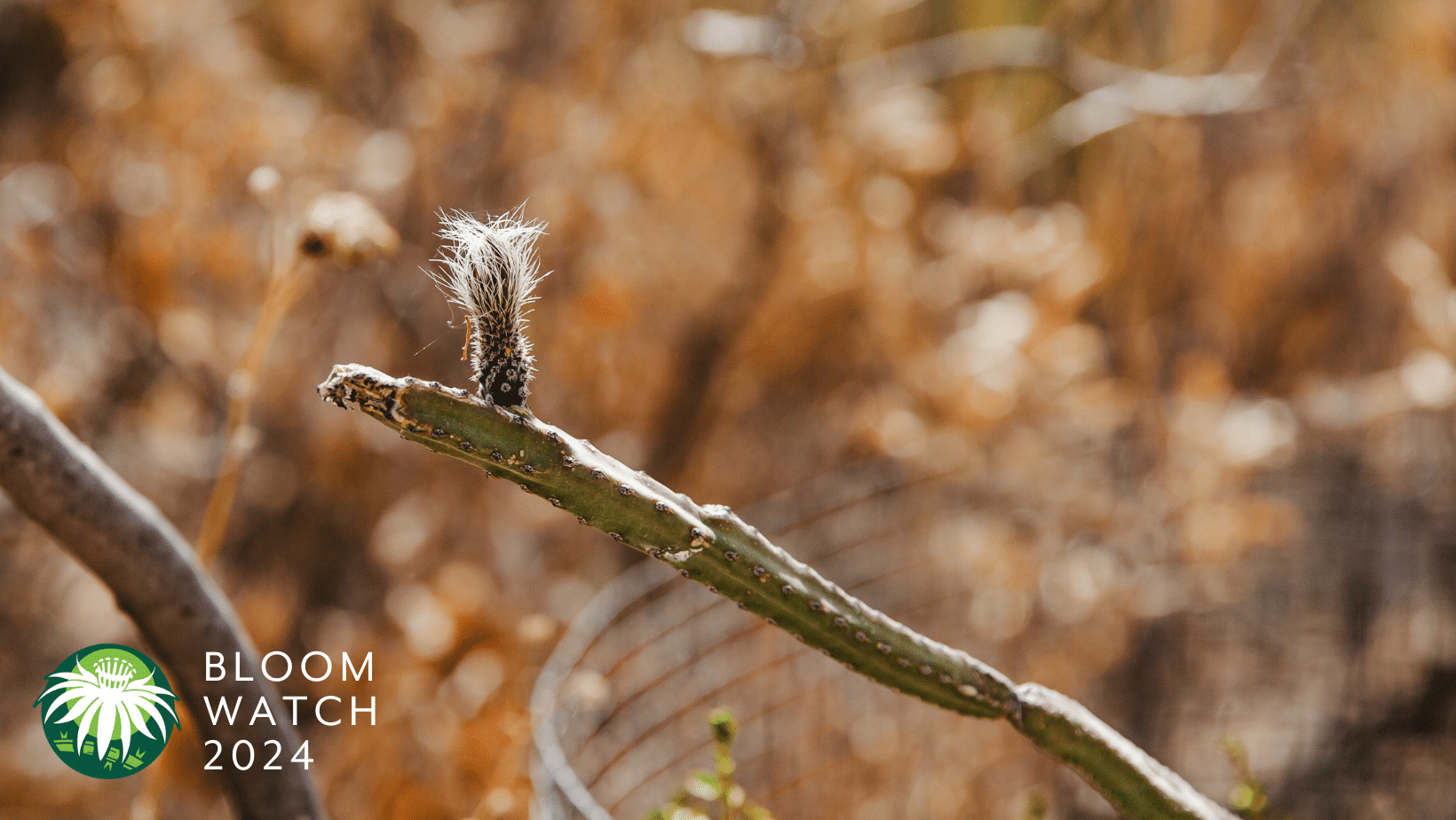
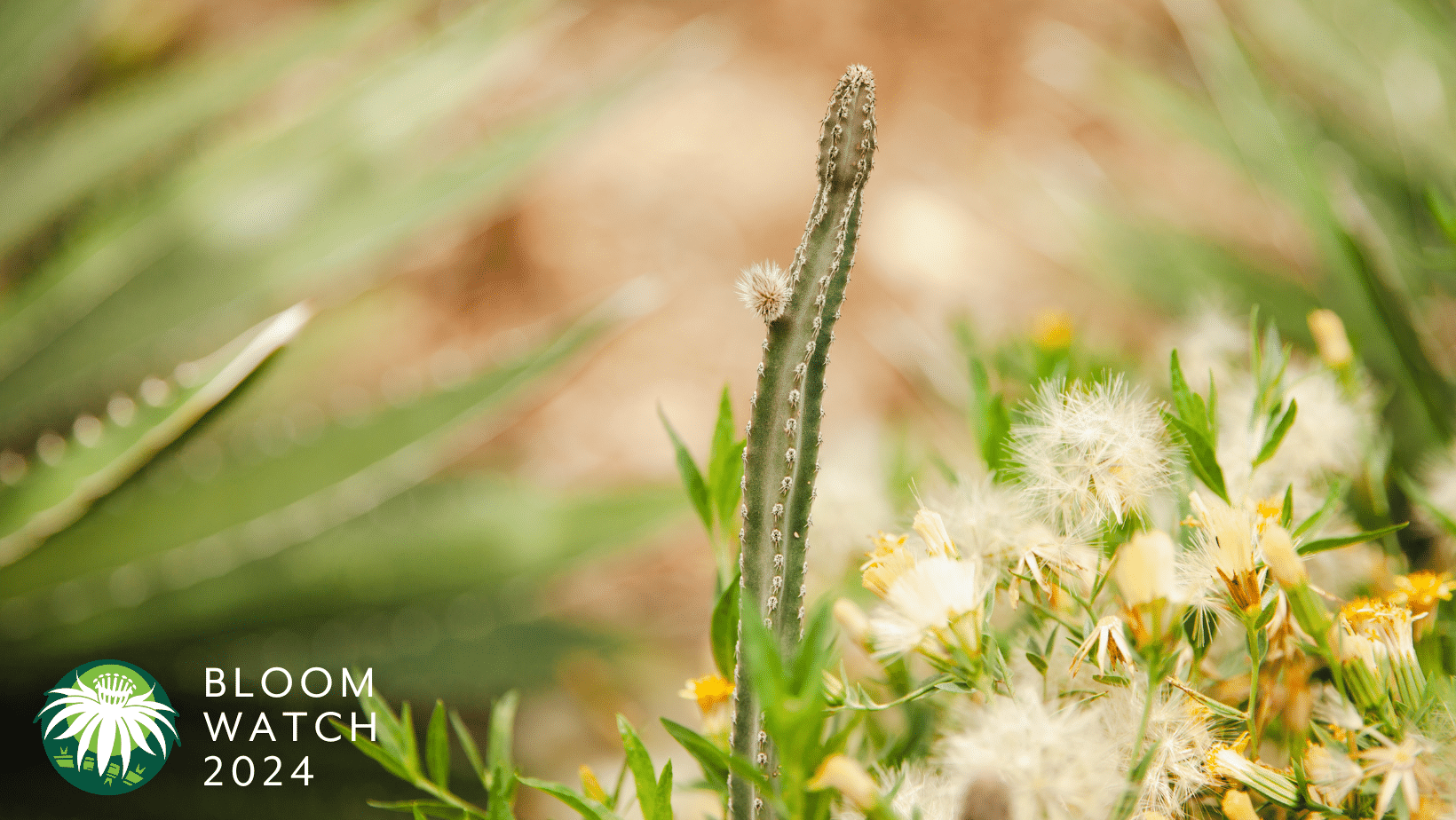
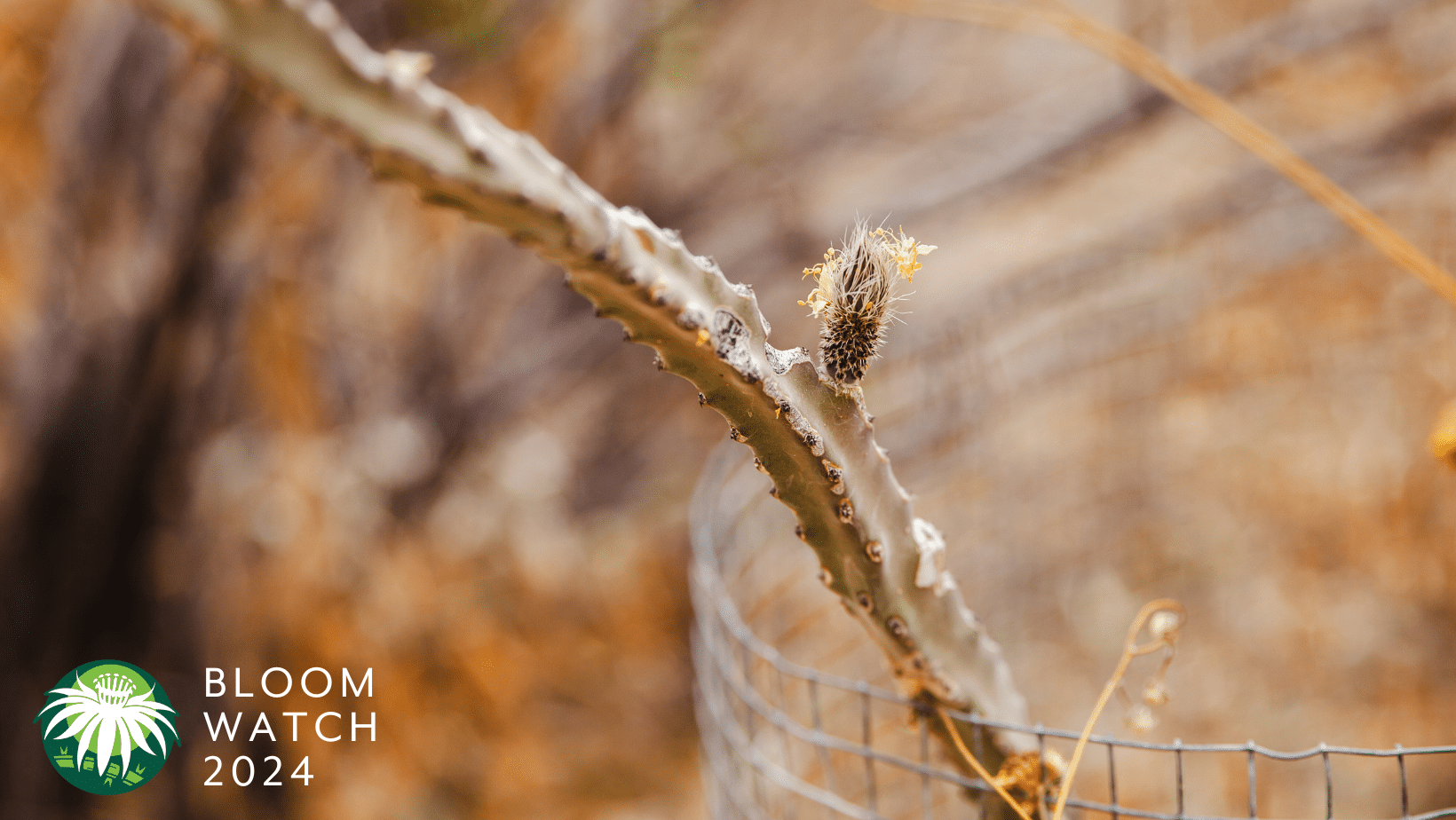
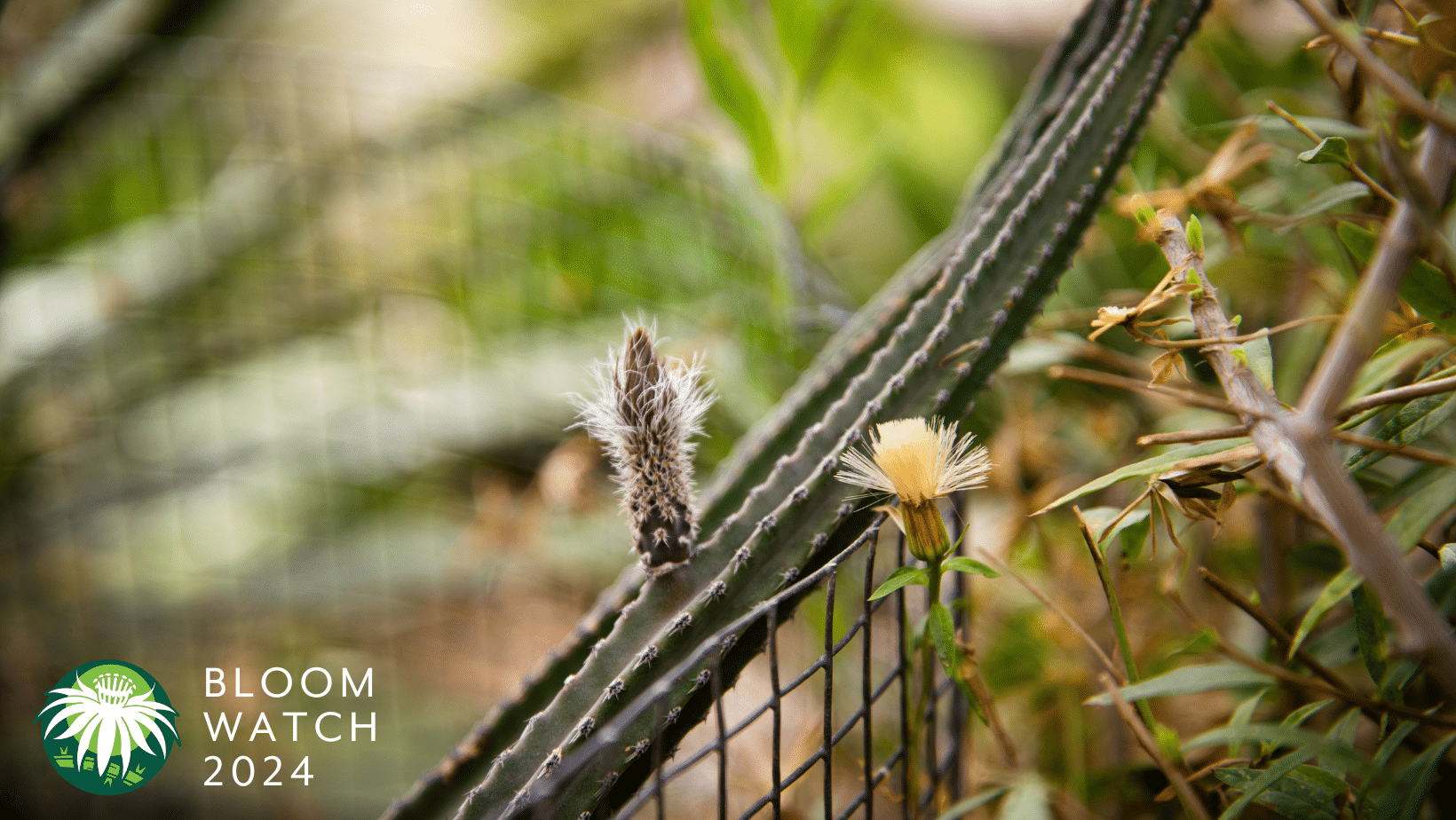
The fuzzy white branch tips and buds are the telltale signs of new growth beginning. The Queen is waking up.
Stems grow from the tips. Concentrated spines and fuzz help protect the area where cell division is occurring on a Peniocereus greggii, the night-blooming cereus.

They began to show buds after a spontaneous drizzle that occurred in May. “I think the little bit of humidity is making them push,” said Chris Kibler, Senior Gardener here at Tohono Chul.

They have changed a lot in the last 2 weeks. There is variation in bud size with most between 10mm and 20 mm. They won’t be blooming any time soon. 


Rain, surprise. 
Snowy fruit. 
Bathing in the scent. 
Beetles hide in prickly pear blossoms,  
Goldfinch gather chia seeds. 
Quails hurry, lizards lounge. 
The Queen stretches; her white hair begins to grow.


Bloom Watch is written by Tracey Till, Propagation Coordinator


We are estimating about 3 to 6 weeks away from the big night! 
Stay tuned for weekly updates.

Sign up for Bloom Watch emails here. Be sure you select “Bloom Watch” on the dropdown menu!