A Note from Executive Director Jamie Maslyn Larson

Dear Tohono Chul Family, 

The heat is on! Seems like eons ago when we had Tohono Chul’s annual Member’s Reception in a much cooler April. Hundreds of members came to enjoy music, stroll the gardens, and learn about our recent initiatives and programs. It was a pleasure to spend time with you! We are moved by your unwavering support of our mission and enjoyment of our vibrant desert oasis. 

A Look Back

At the 2023 Members Reception, I shared the “State of the Gardens Address” —it sounds serious, and it is. Our goal of the speech was to connect more deeply with you, share some specific goals for the next year and tout some of our accomplishments since I joined as Executive Director. Here are some of our accomplishments in the last 18 months: 

Jamie Maslyn Larson during the 2023 Members’ Reception. By Nikita Marie Photography.

Team Building

We want to make Tohono Chul the best place to work in Tucson! Our progress includes filling essential roles, including a full time Director of Finance, Director of Strategic Growth, Human Resource Manager, gardens, marketing, events, philanthropy, propagation, and facilities. We reinstated monthly staff meetings, created goals, and now support our team’s growth with professional development funding.  

New Programming

You understand how amazing Tohono Chul is, and each day more and more people are becoming invested by becoming members. New programs like Chillin at the Chul and Children’s Museum Oro Valley have increased visitation by children by ten times from one year ago! And our membership has increased by 25% in one year, to over 9,500 households. 

Renewing our Gardens
As patrons of Tohono Chul, I know you have a reverence for our beautiful gardens. You also know that gardens are dynamic, living systems that are constantly changing and need tending. We are making our gardens more lovely to experience every day—with arbor care, new relaxing seating, and our first renovation project: Spanish Colonial Garden! Come November, this garden will showcase our beloved Ironwood trees, have 100% native Sonoran Desert species, and elevated water conservation and dark skies compliant lighting. 

Becoming Good Ancestors
Ralph Nader once stated, “we must strive to become good ancestors.” It is our responsibility to make Tohono Chul ready for its future stewards and preserve it for them as well as us. And we cannot do that without thinking about the impacts from climate change. Whether it’s the work to conserve water or climate risk assessment of our tree collection, we are taking major steps to become a model of what the Wilson’s called for us to be: “wise stewards of the Sonoran Desert.” 
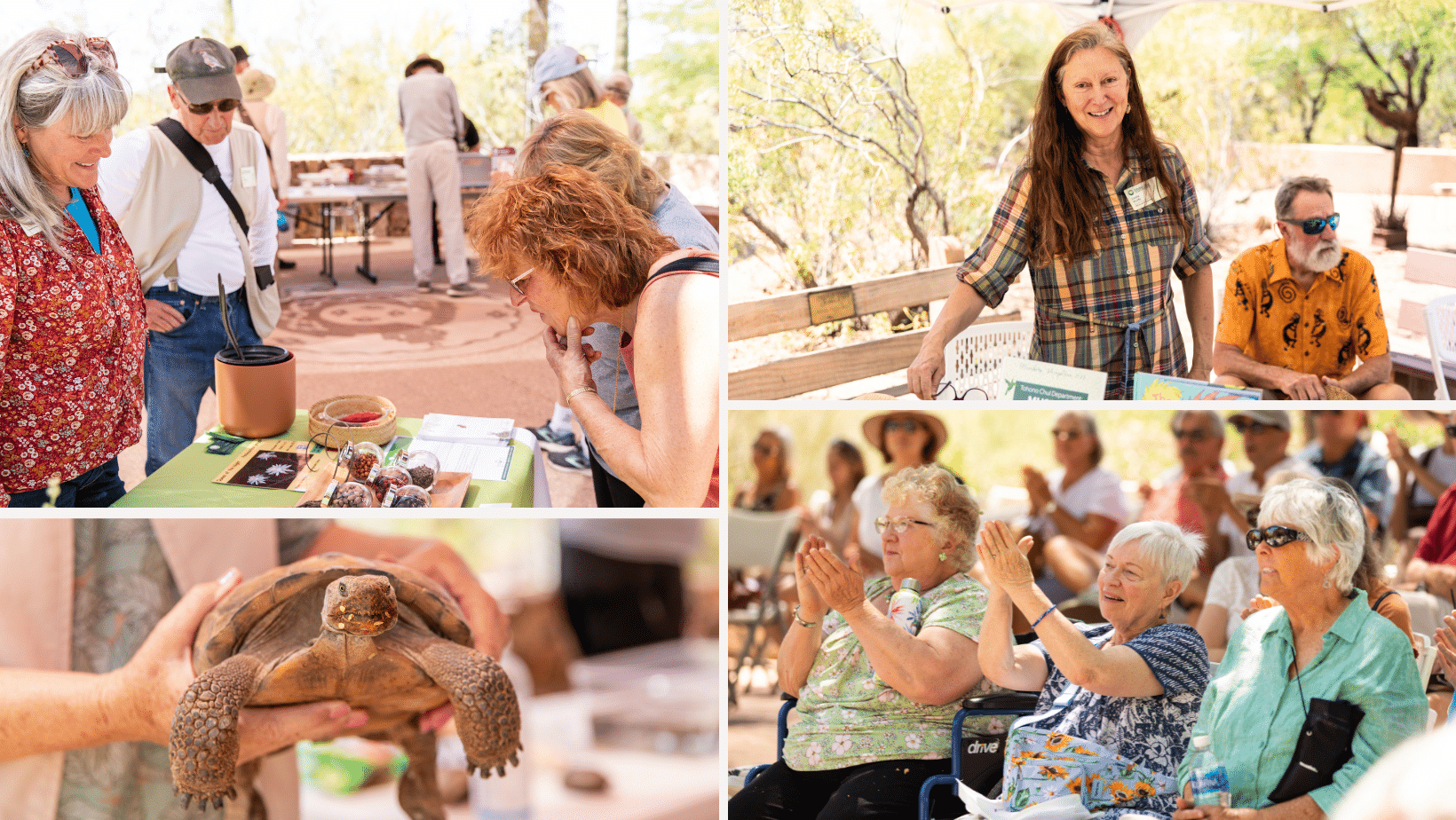
Images from the 2023 Members’ Reception. By Nikita Marie Photography.

How do you value Tohono Chul?

Tohono Chul is a true gift to our community, thanks to the incredible vision and generosity of Dick and Jean Wilson who donated Tohono Chul to us. We asked our friends at Long Realty to help us quantify the monetary value of Tohono Chul in today’s dollars: a jaw dropping $40-50 million! But to me, and I know to you, Tohono Chul is priceless and one of a kind. We are a part of what makes Tucson and Oro Valley great places to live.  
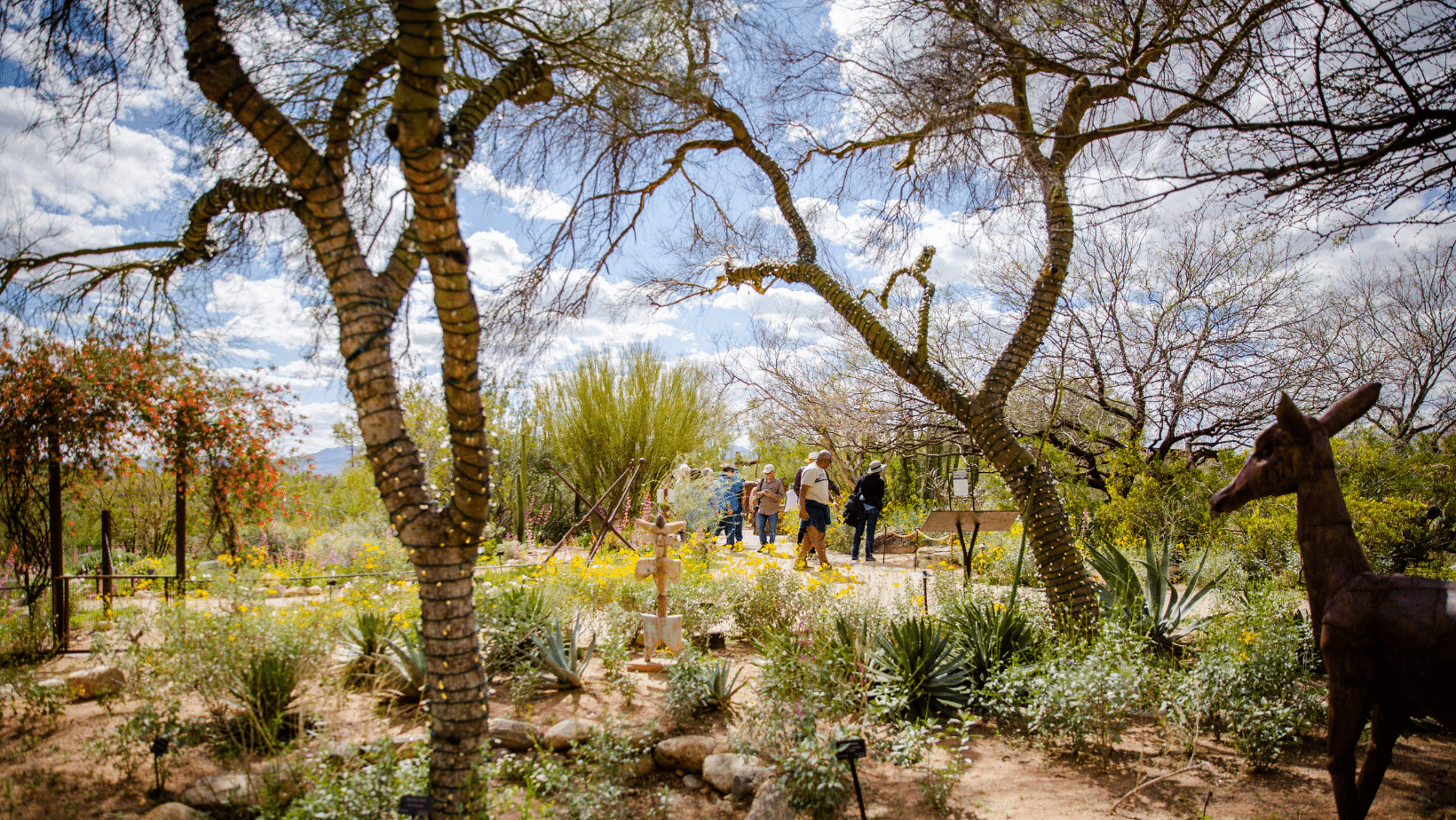
Visitors wander the Gardens of Tohono Chul, Spring 2023

Others feel the value of Tohono Chul in their lives as well. Last year, we saw our highest attendance in over 20 years! Our gardens, galleries, bistro, educational and public programs have folks returning again and again, connecting with a community who understand and appreciate the value that our garden provides.  

Please share with us what you value about Tohono Chul! Jot me an email at executivedirector@tohonochul.org. We are incredibly excited for the future and grateful for your support. Thank you for being part of our community. 

Best Regards, 

Jamie Maslyn Larson 
Executive Director

Bloom Night Recap | The Queen’s Monsoon Magic

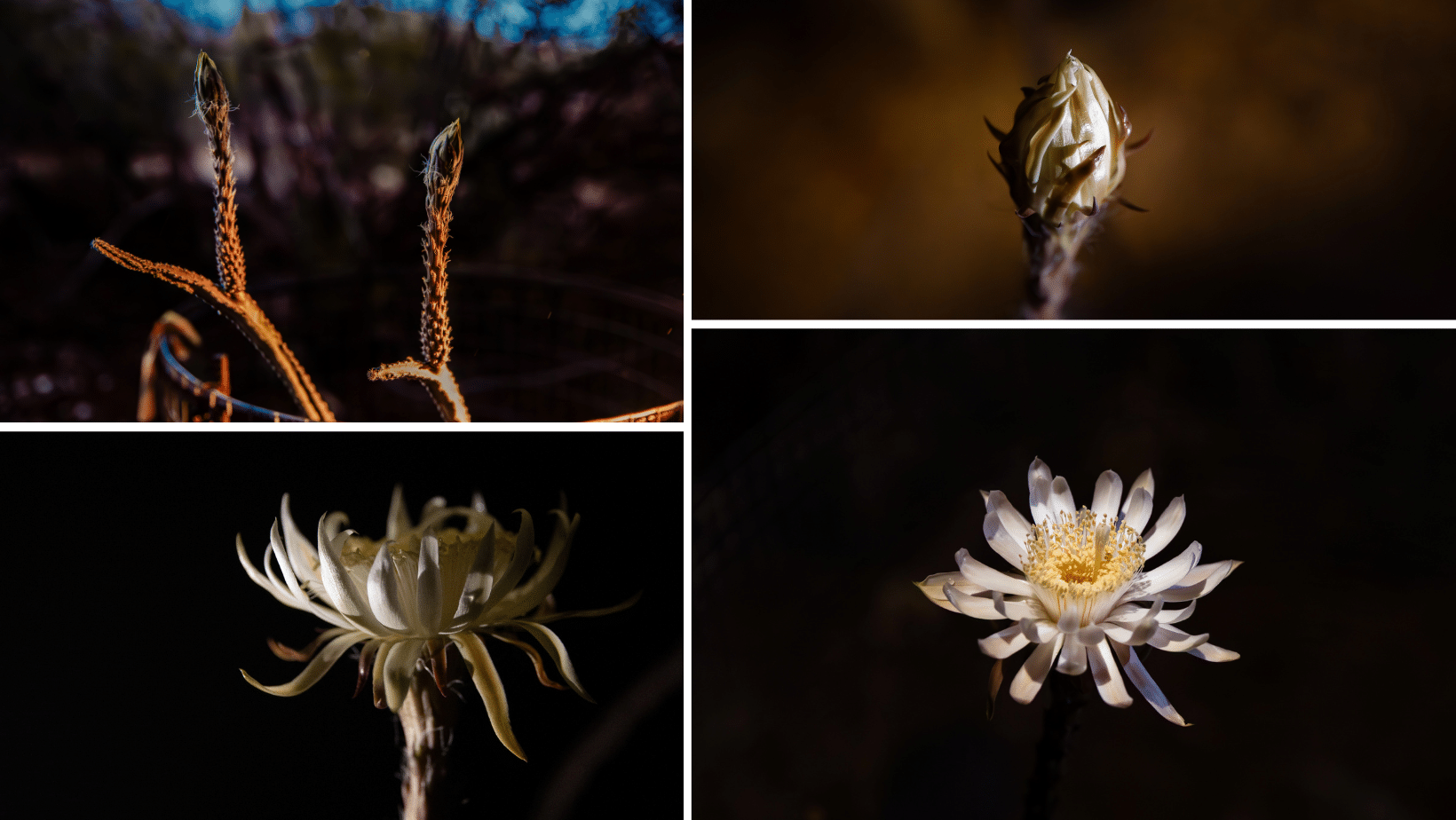
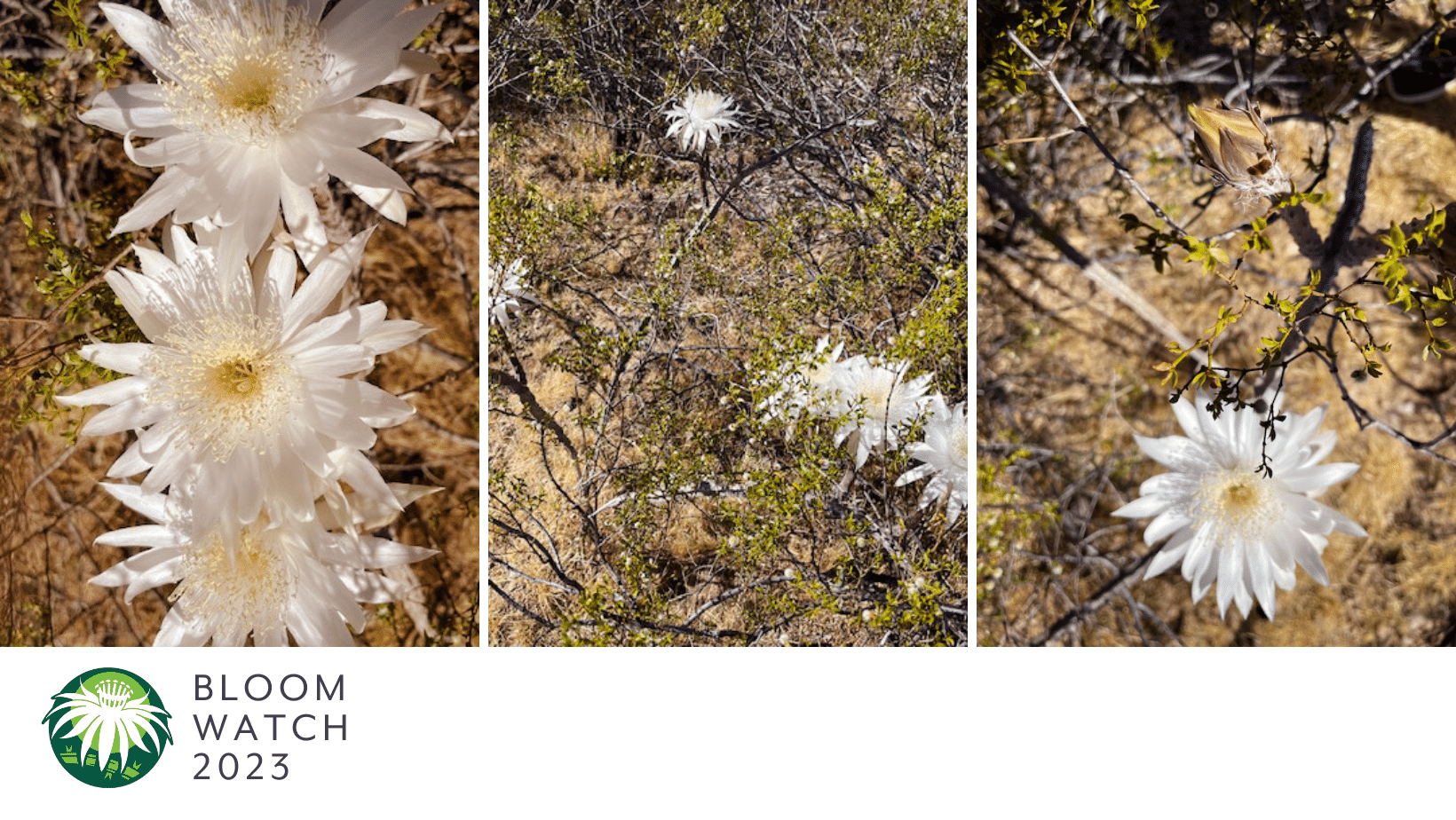
Last Sunday was an eventful one. Chris says that early that morning, the buds were still closed tight, but by afternoon some were already showing the white of their petals! 

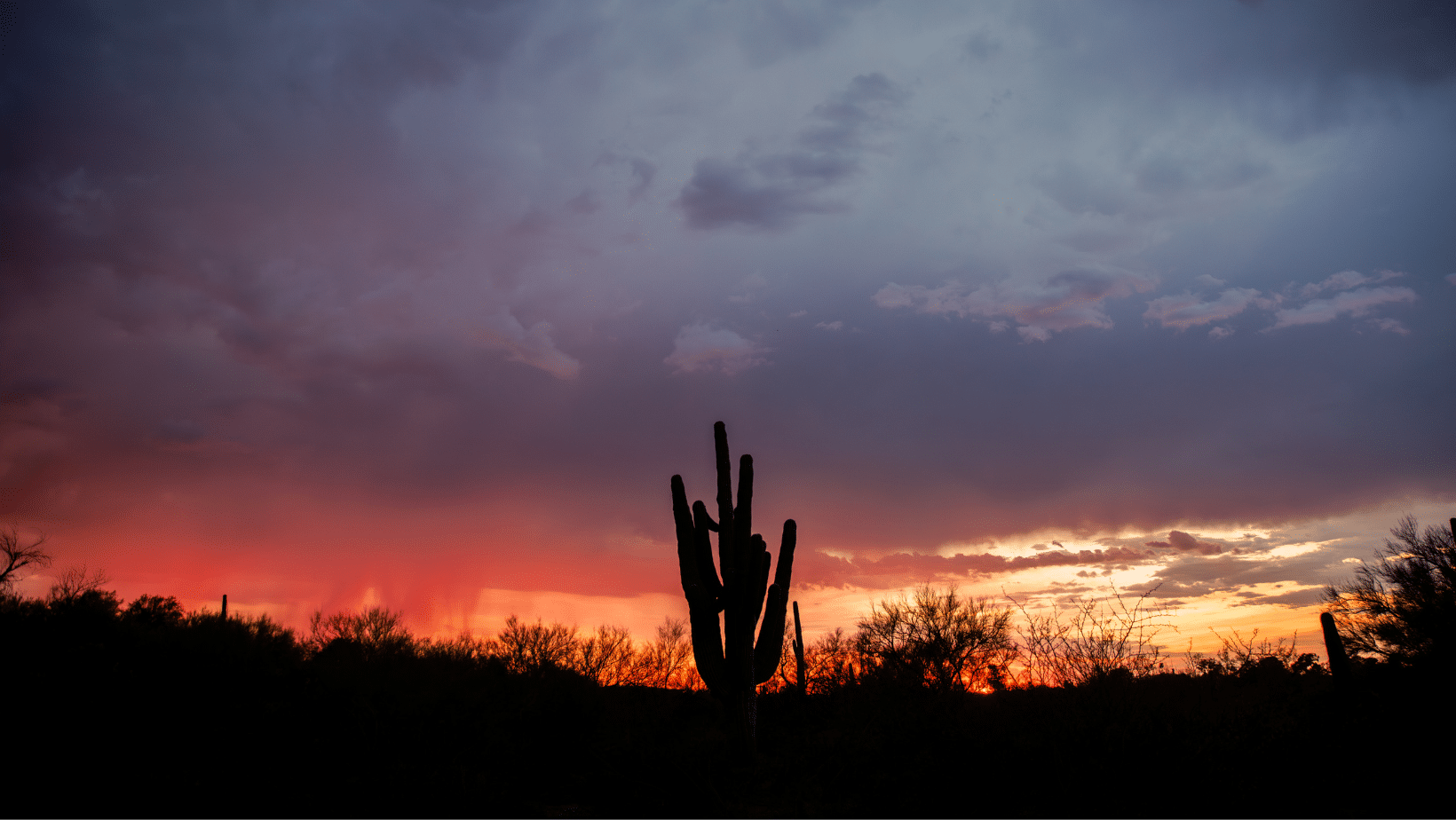
Around 6 pm we could see an opaque storm cloaking the northwest from Tucson’s East side. Filled with excitement and cautious optimism we made our way to Tohono Chul. Beautiful cascades of rain fell in front of the sunset. A dramatic backdrop of pink cotton candy clouds and lightning set the stage.

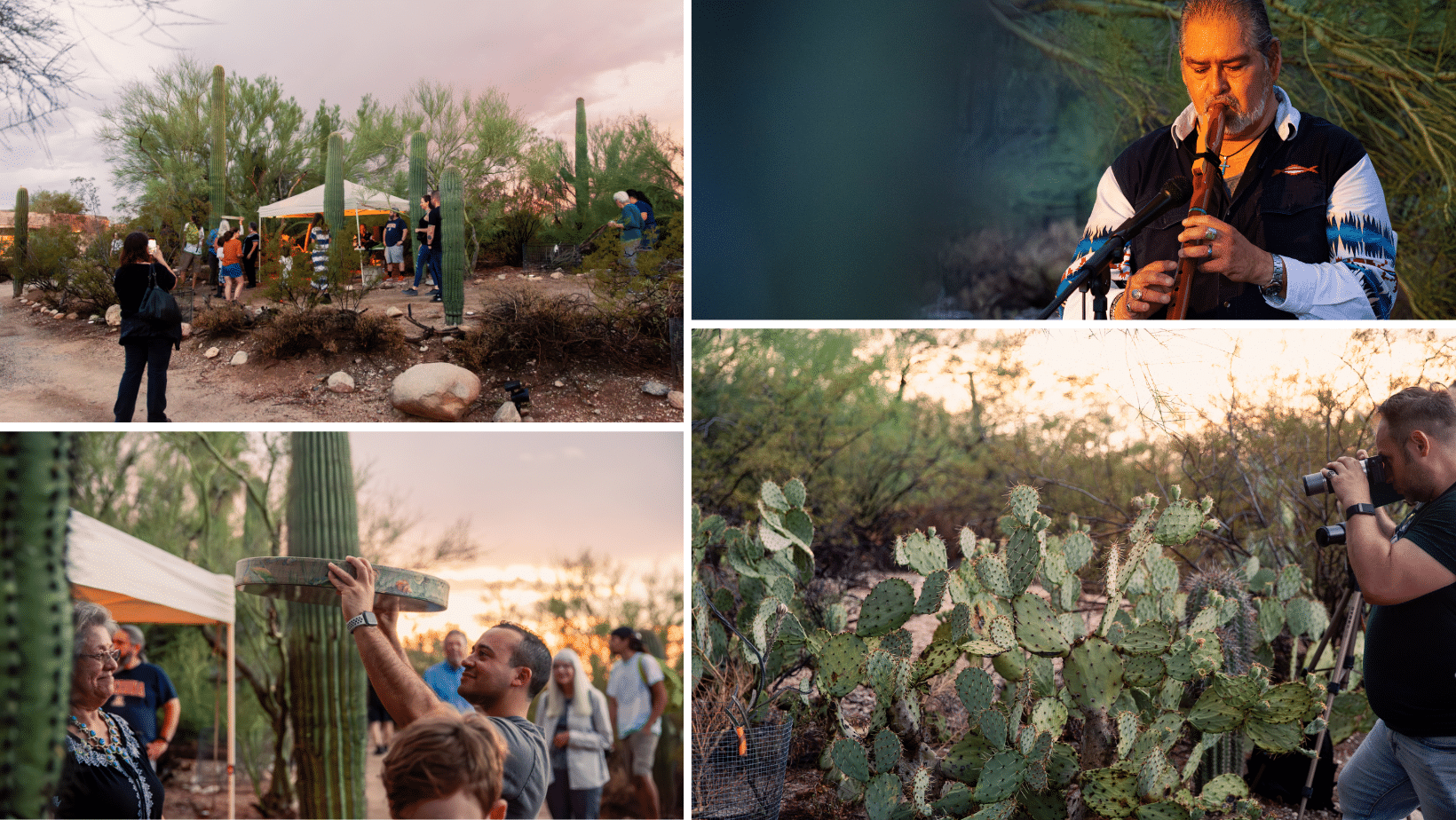
The brief downpours cooled the air and filled it with the scent of creosote leaves. The Queen’s blossoms were timid and we waited expectantly for them to open. Native flute music echoed as we crowded around the blooms. Nature does not hurry for anyone.

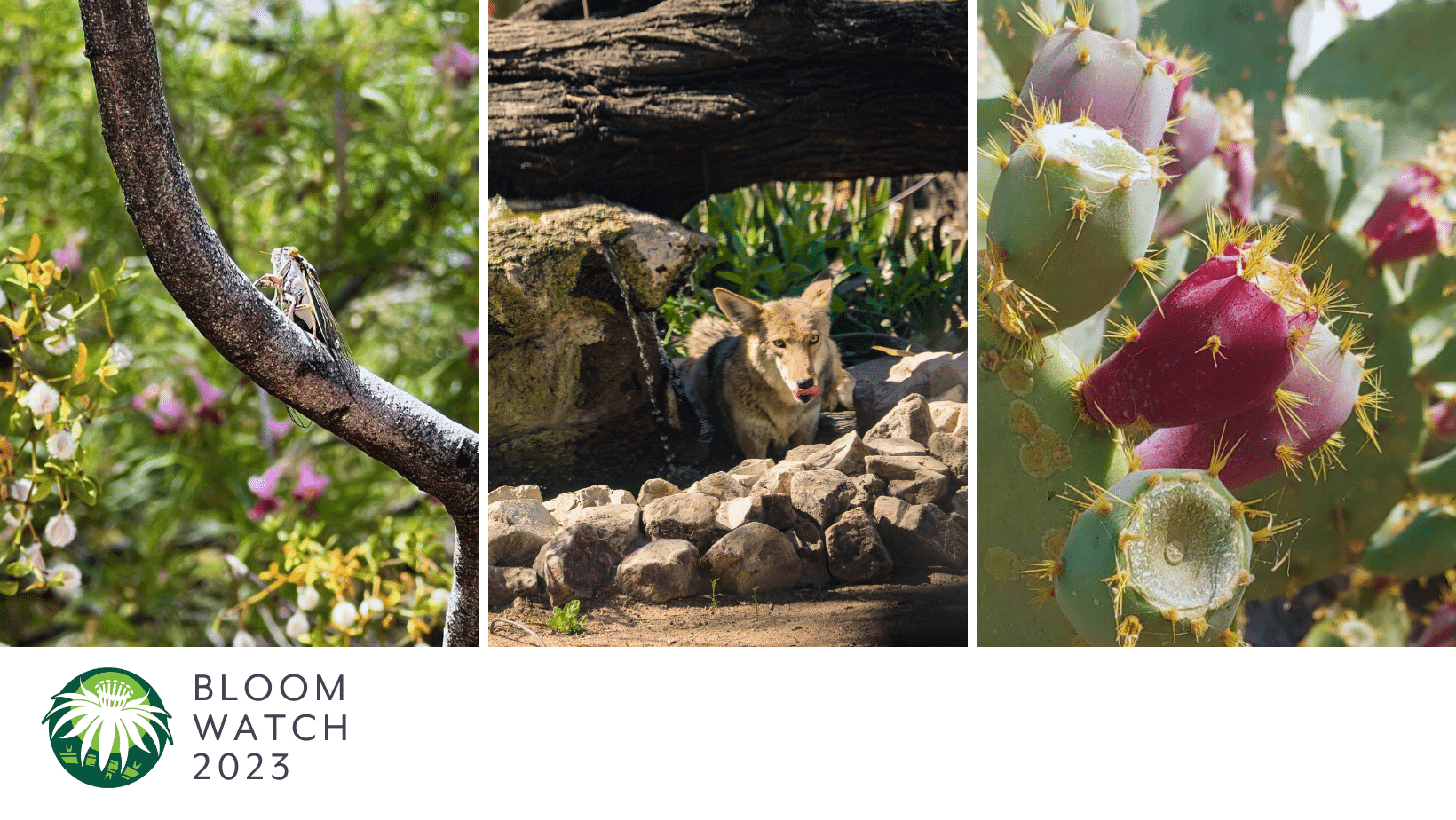
The monsoon gifted us with some much-needed rain and brought life and vibrancy to the Desert View Trail. Tarantulas, tarantula hawks, sphynx moths, night hawks, and other critters were out and about. Spadefoot toads sang. Guests poured into the gift shops and took refuge under the ramadas. The exhibit house was a welcome escape from the rain and gave us a moment to experience an artistic interpretation of the Queen and the Sonoran Desert.  

It was a lovely garden party for the Queen, filled with music, untamed beauty, and community. 

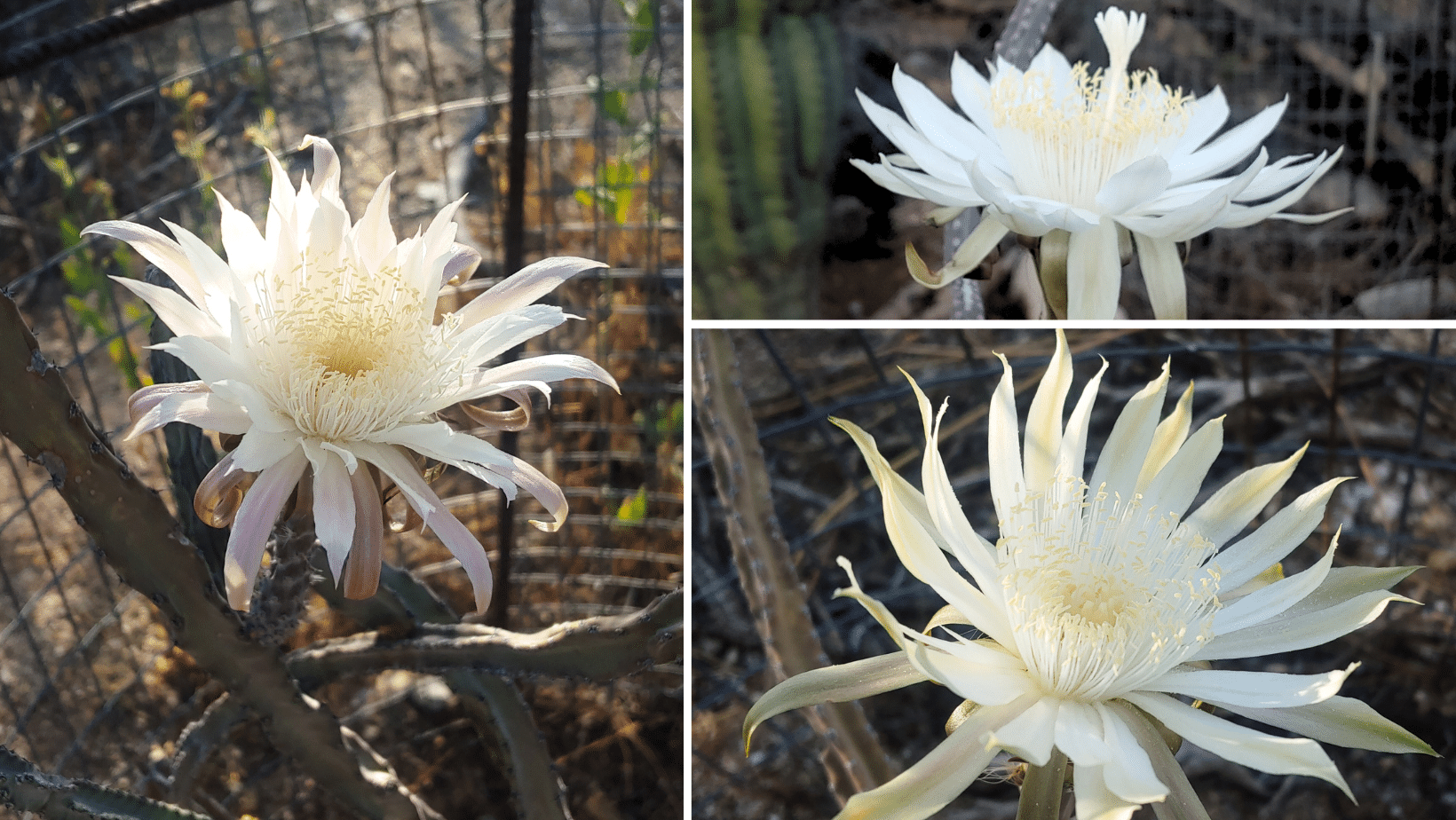
At 6 am the next morning the blossoms were still open and the fans of the peniocereus greggii filled the parking lot. A fervor of photographers took a morning stroll to see the ephemeral flowers. 

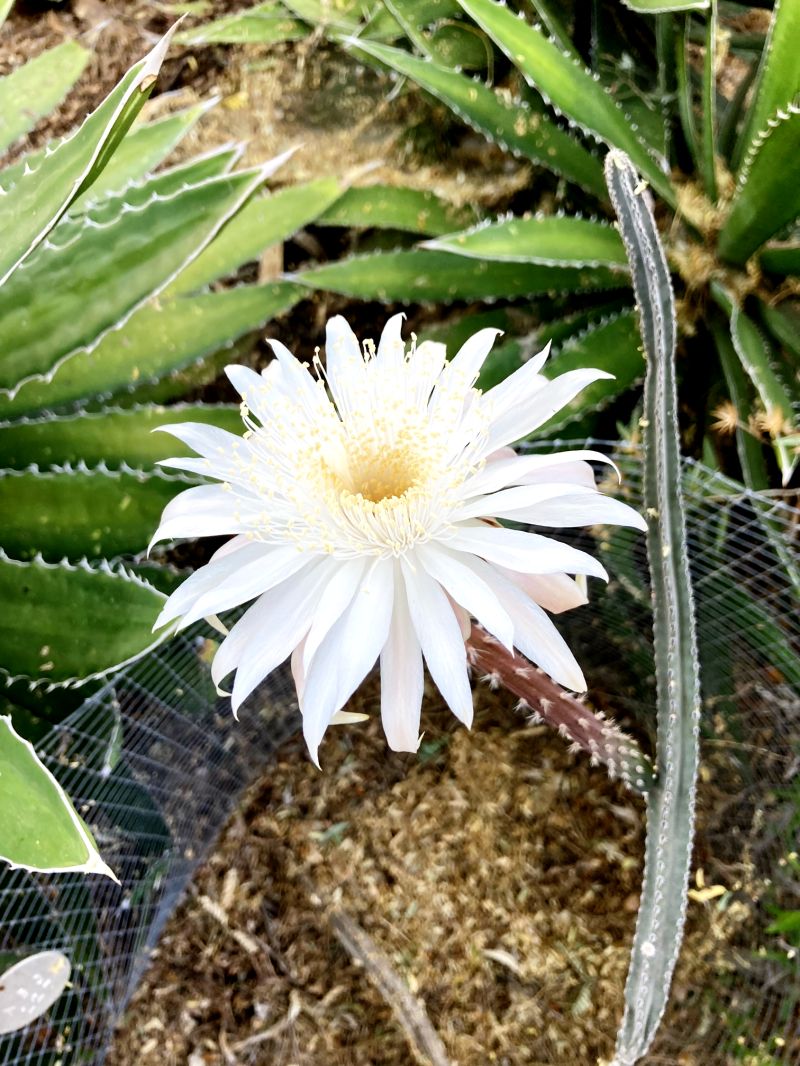
The very next evening we had the few last remaining buds open. We hope that these uninterrupted inflorescences will show a good pollination rate. The gardeners carefully covered them in mesh bags to protect the developing fruits. We shall see! 

Thank you to everyone who came out and braved the rain. For all the volunteers and staff who made it possible. To those who waited patiently for a glimmer of beauty. Happy Monsoon!

Until next year.

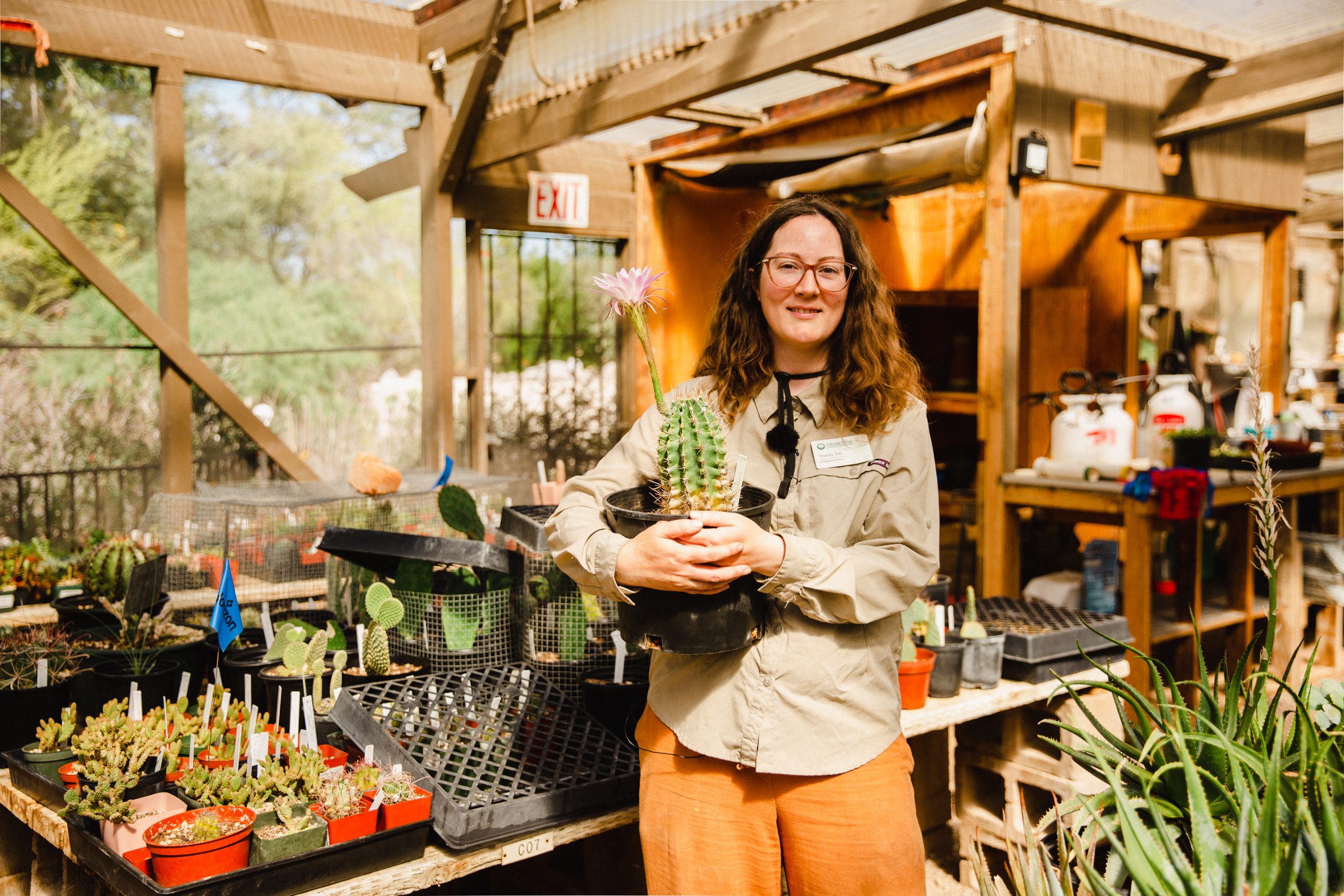
Tracey Till, Propagation Associate

Bloom Watch #9

Bloom Night is Coming…

Movement! As Chris suspected, the Queen’s buds are growing after the rain we had on July 17. 

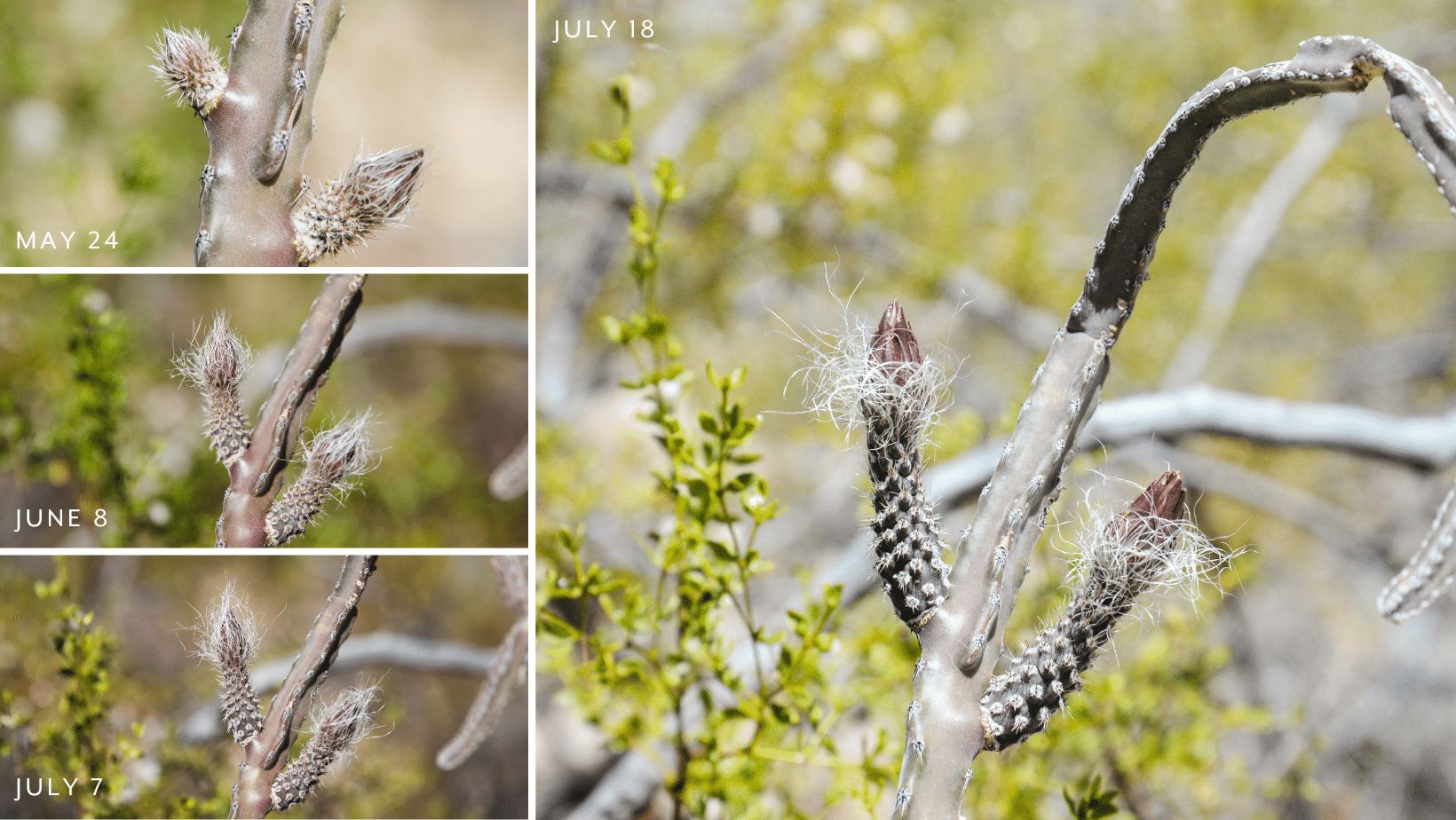
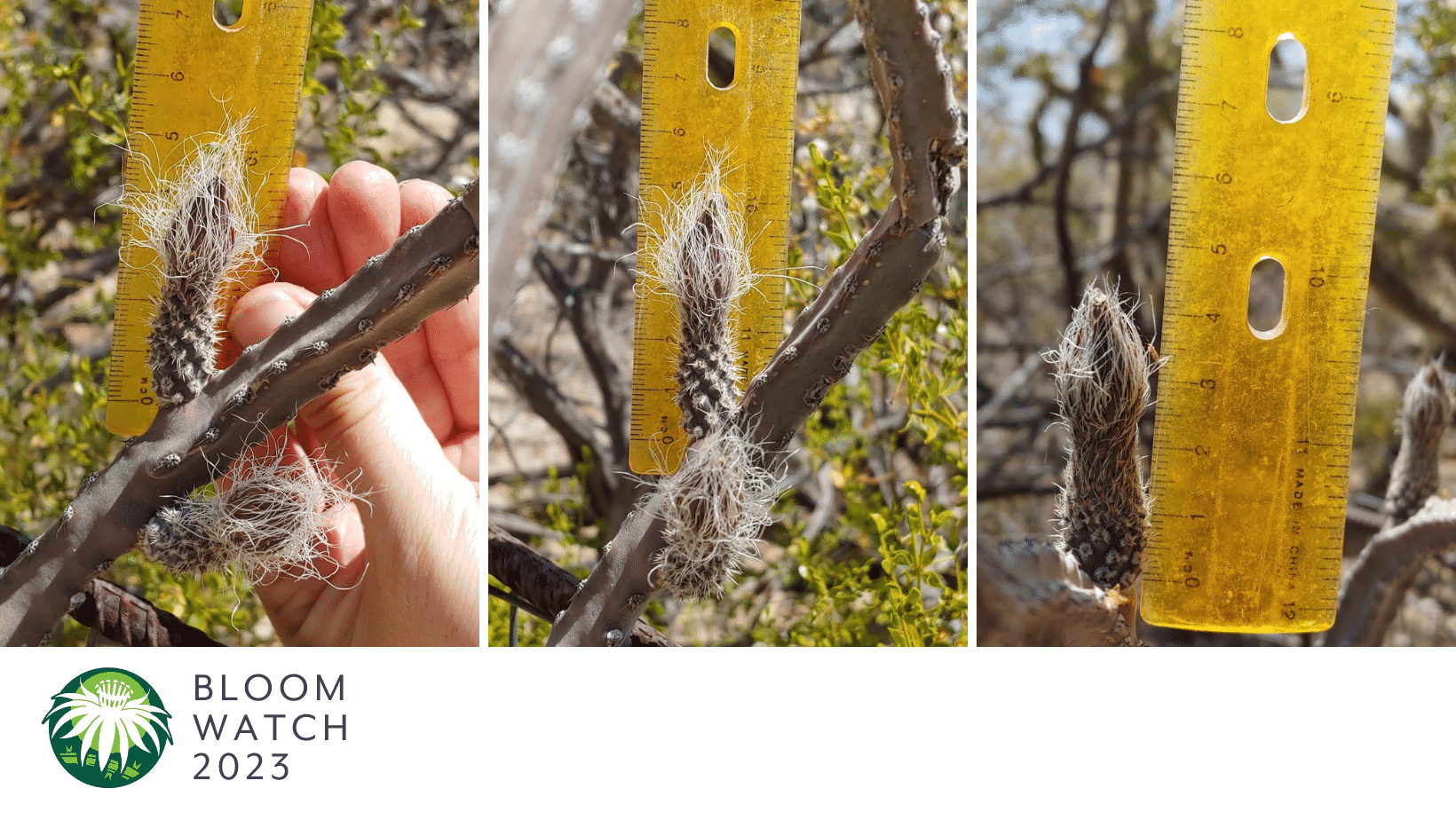
The Queen’s are growing 20 mm a day now, which puts us a few days away from Bloom Night! The largest of the floral branches has reached 120mm, with the smaller ones close behind at 90-100 mm. We are watching closely, but as we know, the Queen is in charge. We won’t know exactly when the Queen decides to bloom until the day of, but we suspect that it’s very soon.

Peniocereus greggii growth over the last several weeks.

Monsoon time is here! According to a dedicated volunteer, the Penstemon Garden’s rain gauge had almost 2 inches of rain! Rain events bring more than just water- there is a change in temperature, humidity, and soil environment.

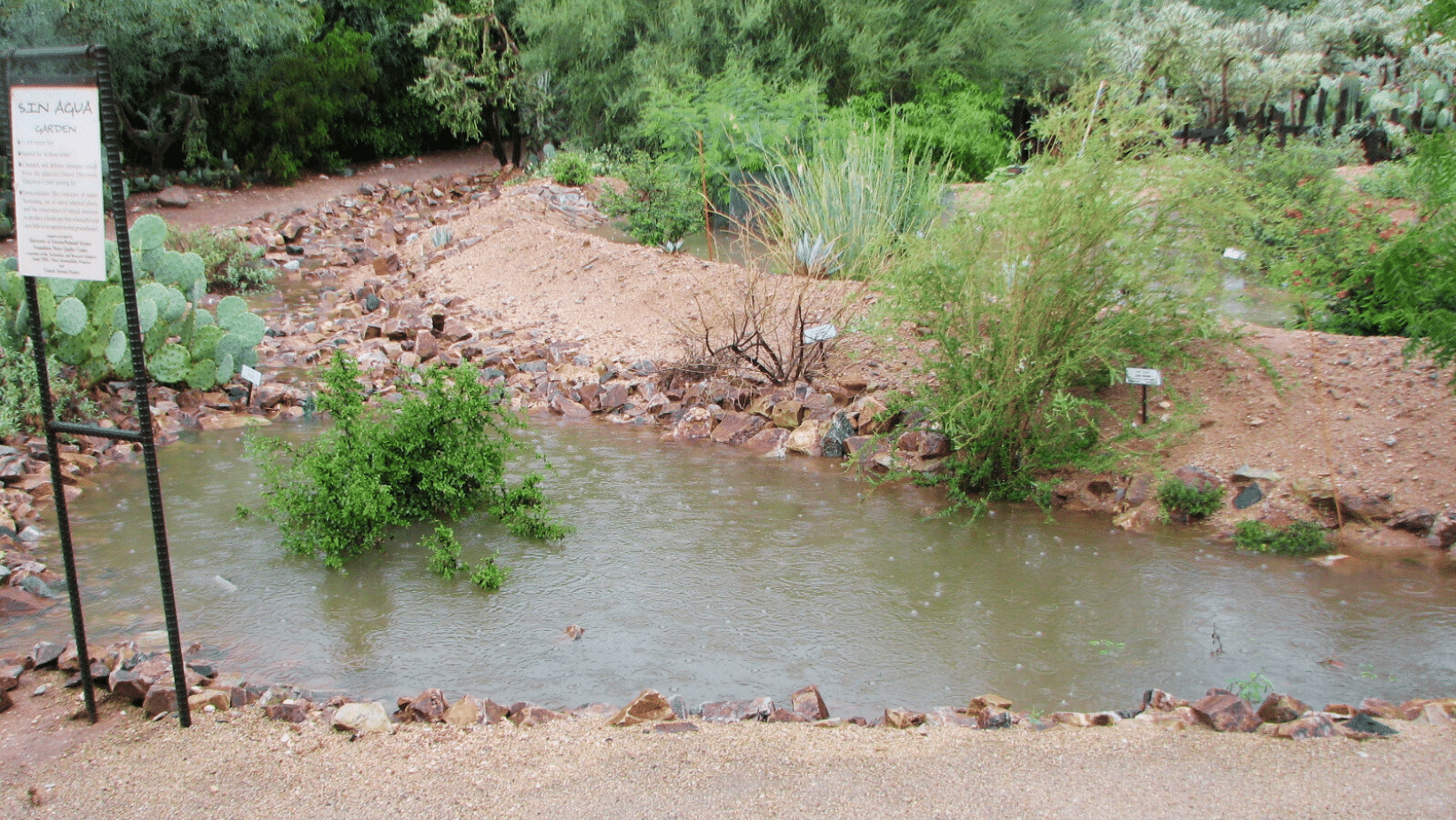
Sin Agua Garden

Soil biocrust becomes more visible as the algae and cyanobacteria grow. The desert plants respond, such as the typically leafless cholla putting out tiny true leaves next to their spines. Perhaps some of the Queen’s cactus seeds that were dispersed last fall by animals will wake up, carried to just the right spot under the shade of a mesquite, or a nook amongst the creosote, they will start to sprout. It’s a magical time to be in the desert.

Watch for our next post, as Bloom Night is imminent now!

By Tracey Till, Propagation Associate

Don’t miss the big night! Sign up for Bloom Watch emails here. 
Be sure you select “Bloom Watch” on the dropdown menu!

Bloom Watch #8

An Extrafloral Moment

As of Tuesday morning, the buds are stalled between 40 and 55 mm. Thanks to the rainstorm that came through last night we expect movement in the next few days. They are taking their time, waiting for the perfect time to bloom. Let’s remember to take things slow in this hot weather too! 

Peniocereus greggii

In the meantime, let’s talk about cactus biology! 

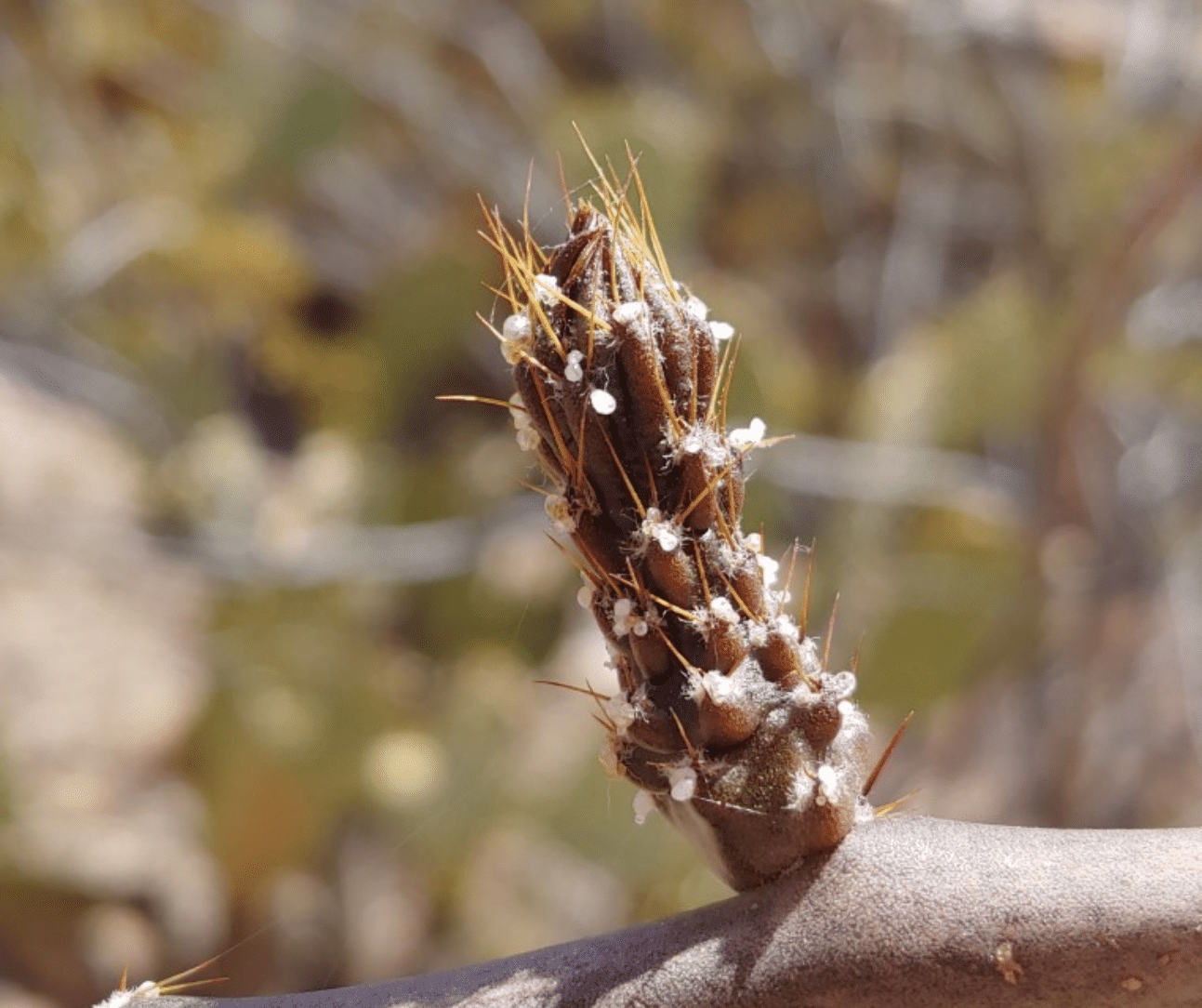
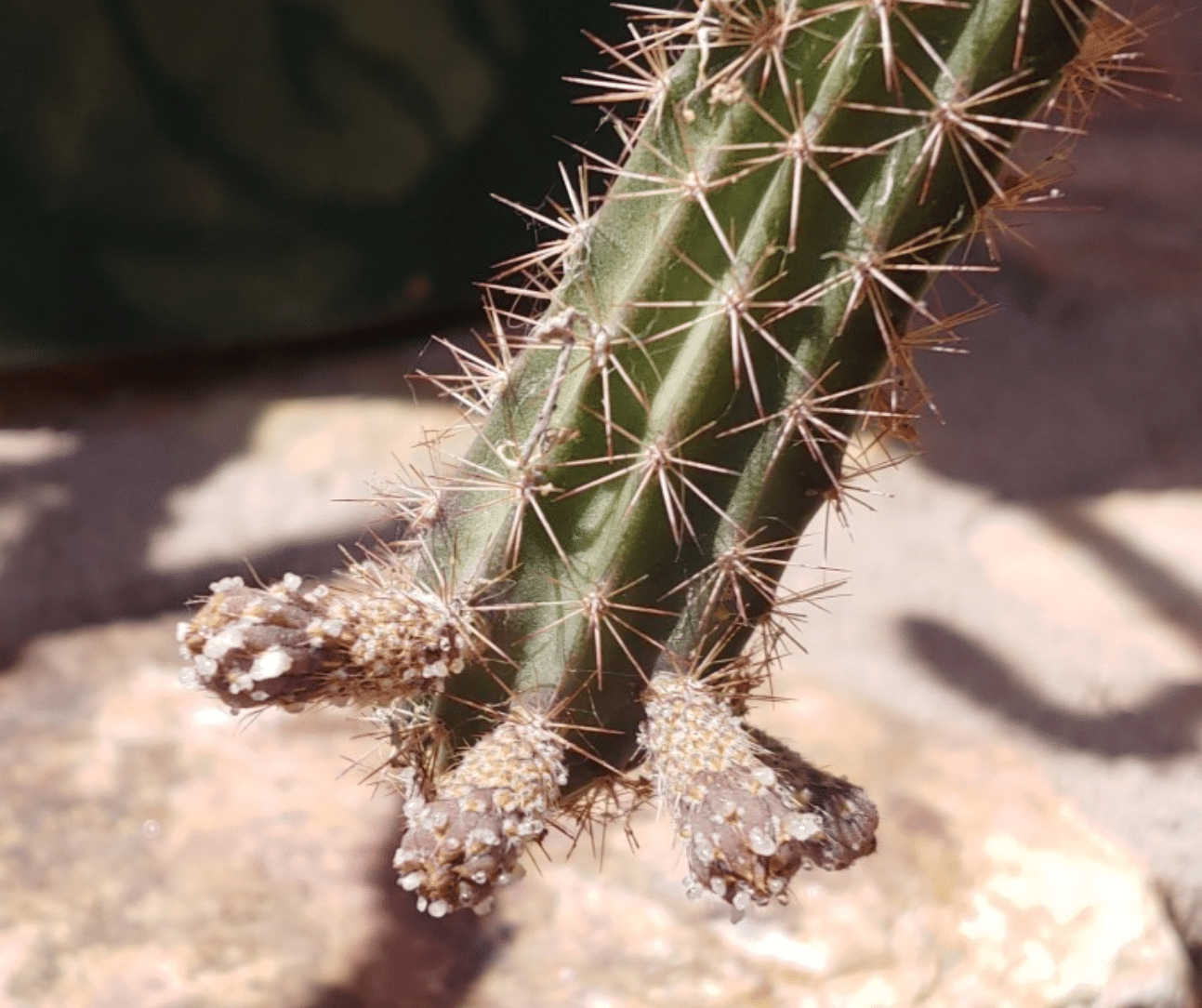
One day when I was visiting the Queen’s Court at the Overlook, I noticed something different. Tiny white spheres dotting some of the flowering branches of the Peniocereus. At first, I was concerned it might be honeydew from sap-sucking insect pests! However, I’d read about extrafloral nectaries on barrel cacti and held out hope that I might be observing them on the queens. 

Peniocereus rosei with droplets of nectar on the flowering branch exuded from extrafloral nectaries. 

Extrafloral nectaries are glands that produce a sugary substance on a plant that exists separately from flowers. 

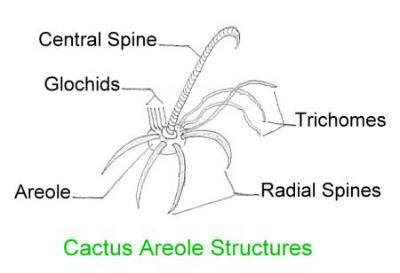
Here is some cactus anatomy for context. 

Evolution can take one facet of an organism that is used for a specific function and mold it like a piece of clay over time to fit a different function. Cacti are unique from other succulents by having what are called areoles. These evolved from normal lateral shoots that at one time had separate buds spaced out along the stem. 

Diagram from Cactusmuseum.com 

They became compact areas where spines, leaves, branches, and flowers all emerge. From a distance, they may look like an asterisk * thanks to the spines.   In the case of our Queens, unique areoles occur on the flowering branches of our Peniocereus oaxacensis and Peniocereus rosei and this is where the extrafloral nectaries occur. 

We’ve established that extrafloral nectaries (EFN’s) are specialized structures that produce nectar without a flower. They occur in many plants and not just cacti. If you see a tiny bump on a plant exuding a droplet of dew, it may be an EFN. Evolution gets creative when it comes to cacti; in particular, they can have different types of EFN’s. For example, Ferocactus emoryi, one of our native barrel cactus, has small round modified spines that look like little bumps. Harrisia pomanensis, also known as moon cactus, secretes nectar from totally normal-looking spines. Some also have specialized stem tissue like Pachycereus gatesii, a cousin of the senita. And still, others secrete nectar from tiny scale-like leaves at the base of the areole, as do our Peniocereus in the spotlight. (source

Why make nectar without a flower? For what purpose does the nectar serve, if not for attracting pollinators? Let’s remember that plants are in symbiosis with many insects that live on, under, and inside them. For many plants, an important insect friend is the ant. Ants will protect a food source from other herbivorous insects. In the case of cacti, ants can take care of any bugs that get past the spines and would otherwise like to eat a juicy cactus. 

The closer you look the more you will realize what an intricate ecosystem the Sonoran Desert truly is. 

Peniocereus oaxacensis with droplets of nectar on the flowering branch exuded from extrafloral nectaries. 

By Tracey Till, Propagation Associate

Don’t miss the big night! Sign up for Bloom Watch emails here. 
Be sure you select “Bloom Watch” on the dropdown menu!

Bloom Watch #7

Another rogue player …

“It looks like we have another rogue cactus on our hands!” said Chris on Monday morning. 

Queen of the Night #379 is at the head of the pack with two buds measuring 110mm and on track to bloom this week. The rest of the regal monarchs are still between 40mm-60mm. 

“With the increase in humidity this week, (40% this morning!) they may pick up the pace. I’ll definitely keep you all posted.” he says. 

“The Queen’s Court at the Overlook has several cacti ready to bloom. One was blooming Friday night! Check them out if you’re brave enough to go outside!” 

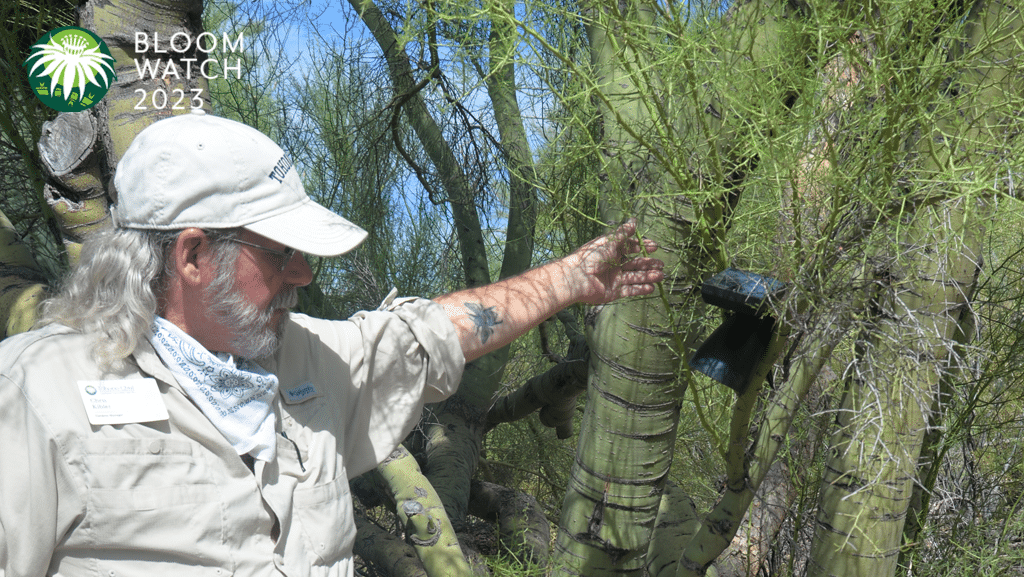
Gardens Manager, Chris Kibler, shows where one of the lighting units is installed above a bloom location in eager anticipation of Bloom Night.

A Botany Lesson

Speaking of the Queen’s Court (the row of potted cacti positioned at The Overlook here at Tohono Chul), one of the courtiers, Peniocereus striatus, illustrates a fascinating example of convergent evolution in the plant kingdom. Convergent evolution is the process of distantly related organisms evolving similar traits in order to adapt to similar situations. Introducing, Euphorbia cryptospinosa, native to the landscapes of Ethiopia, Somalia, and Kenya.

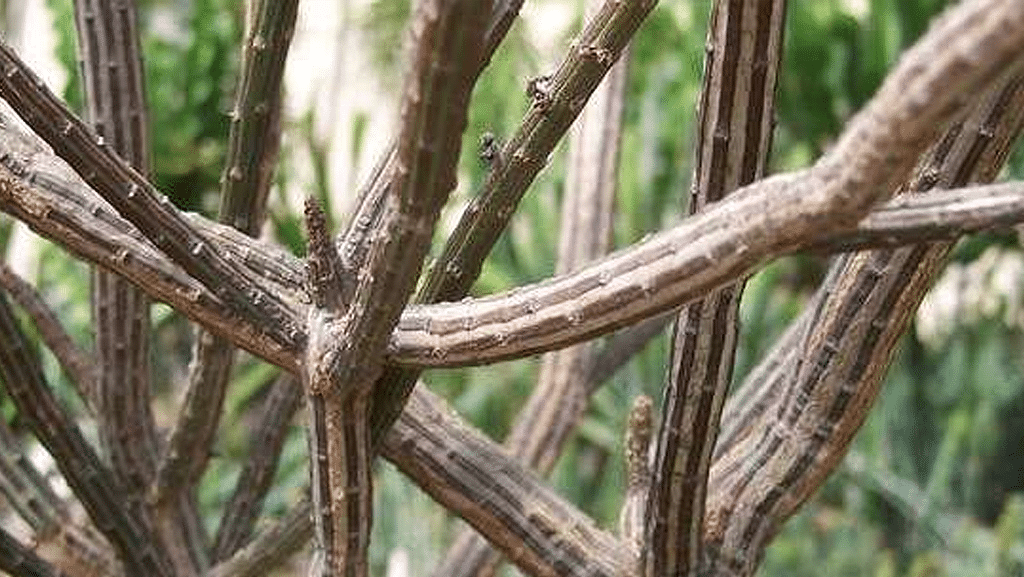
Euphorbia cryptospinosa close-up of stems. (Photo courtesy of Dave’s Garden davesgarden.com)
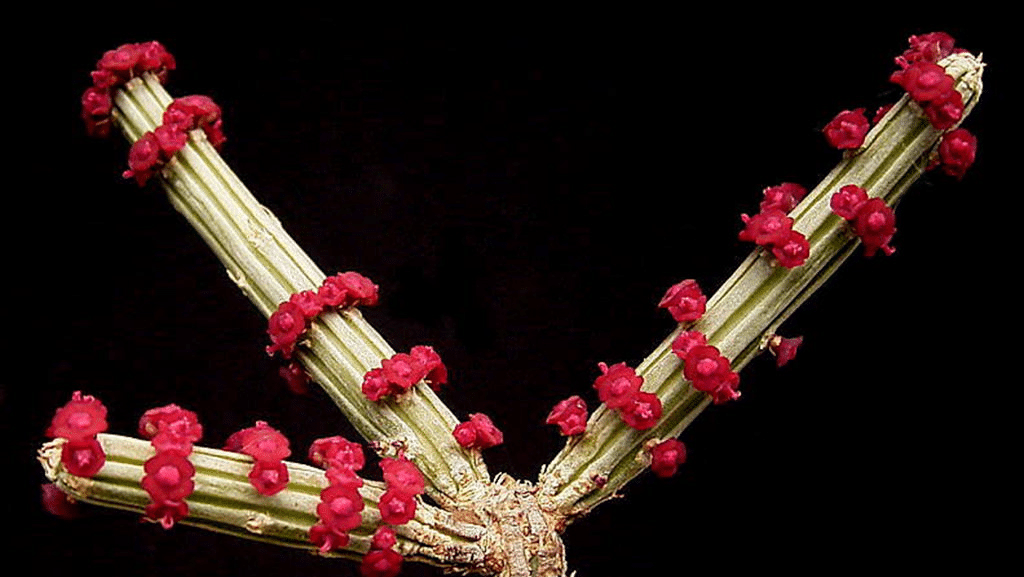
Euphorbia cryptospinosa: Flowering plant in cultivation. (Derivative of a photo by Frank Vincentz, contributor to the collection of photos courtesy WorldofSucculents.com)
This completely unrelated plant from the opposite side of the planet has been shaped by it’s own climate to look much like our Peniocereus striatus. Both have tuberous roots, with slender cylindrical stems that are camoflagued amongst the shrubs where they both grow in sandy, gravely soil. In addition to being succulent, both have developed an ingenious way of preventing extra water loss during drought.

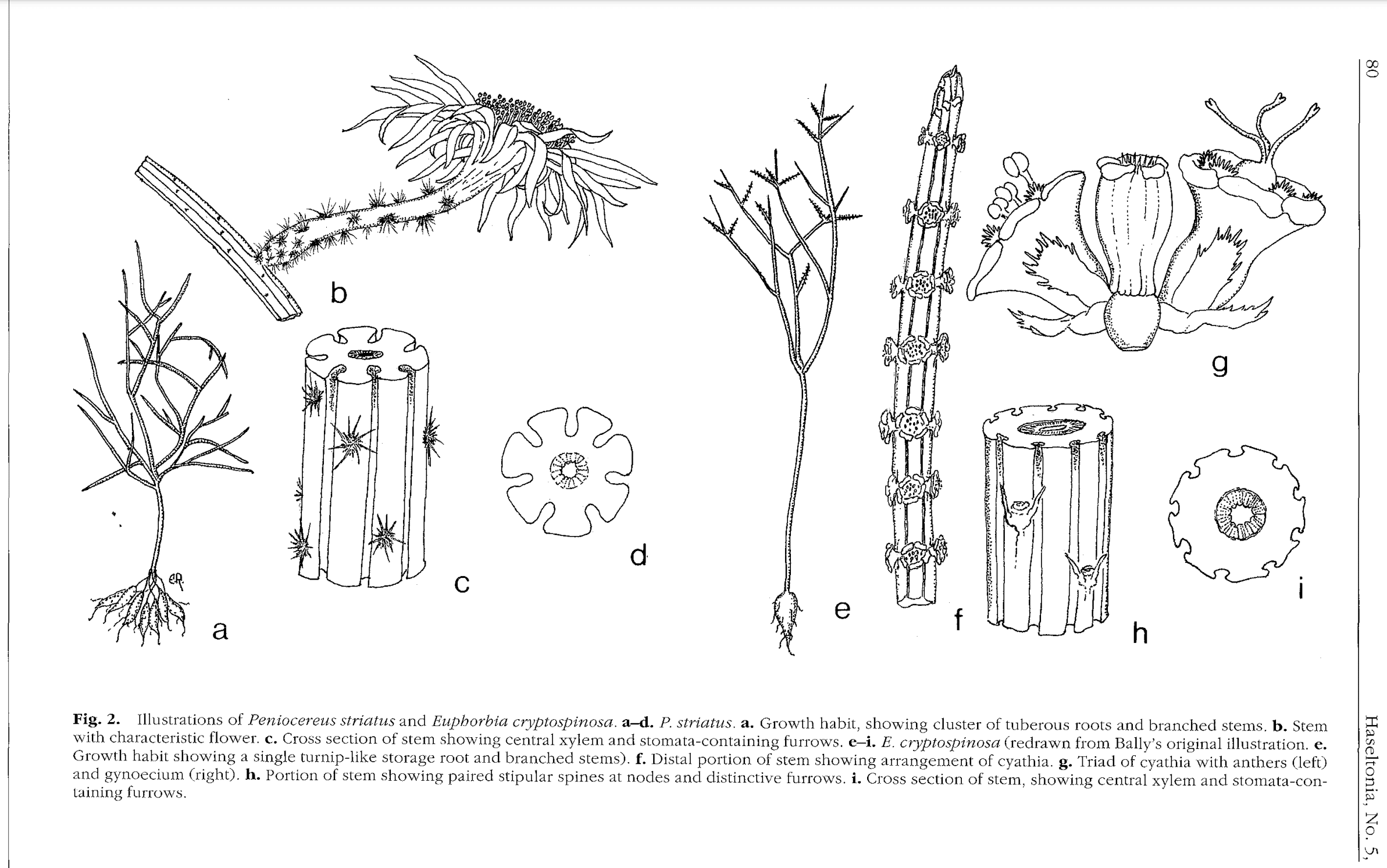
Stomata are unique to plants and are the specialized groups of cells that open and close to allow for gas exchange of CO2, oxygen, and water vapor, through the epidermis of a plant. In our courtier and our friend the Euphorbia cryptospinosa, the stomata are restricted to narrow furrows that run vertically along the stems. When they have acquired sufficient moisture, these stems are plump and the stomata are more exposed to the air to enable gas exchange, but still shielded from the wind.
When the plant stems lose water, the furrows are sucked in from this water loss and they begin to close up like an accordion. By enclosing their stomata this way, they preserve their thin stems from shriveling up, even in very dry habitats. By studying comparative anatomy in this way, we can learn a lot about how plants work. Thanks to the University of Arizona Herbarium for providing this research for free so we can all level up our botany!

(Source: https://cals.arizona.edu/herbarium/sites/cals.arizona.edu.herbarium/files/old_site/assoc/people/rfelger/1997_felger_henrickson_convergent_evol.pdf )

By Tracey Till, Propagation Associate

Don’t miss the big night! Sign up for Bloom Watch emails here. 
Be sure you select “Bloom Watch” on the dropdown menu!

Bloom Watch #6

Blooming Secrets

Our persistent Garden Manager, Chris Kibler, says the Queen’s buds have grown very little over the past week, with the biggest just a tad over 50 mm. However, he’s noticed changes that hint at something to come.

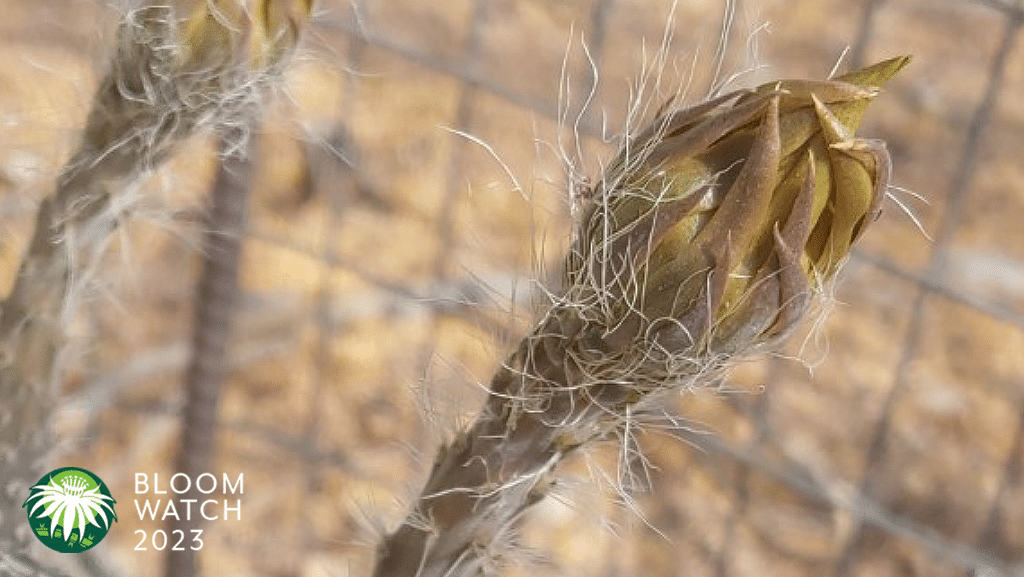
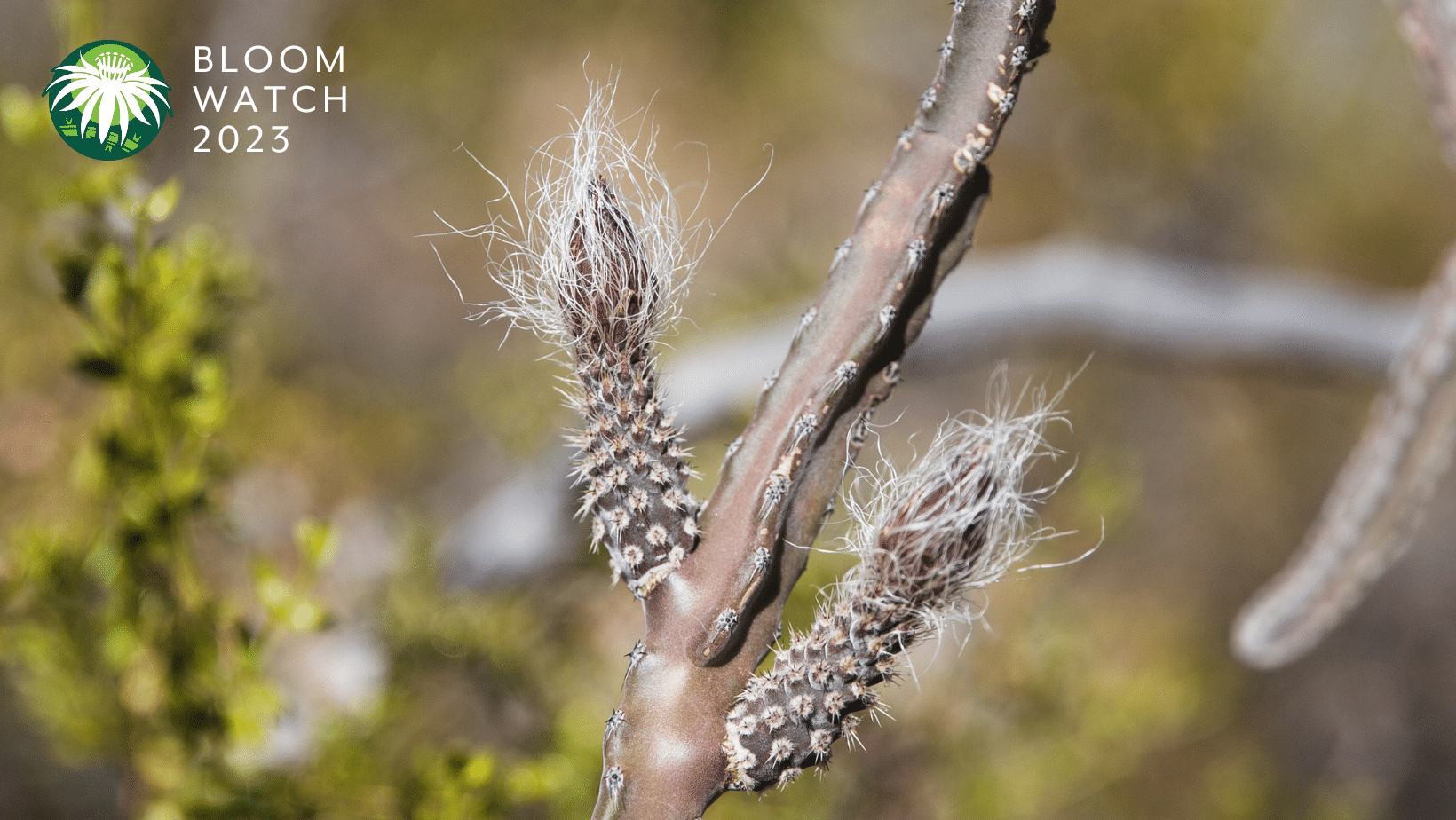
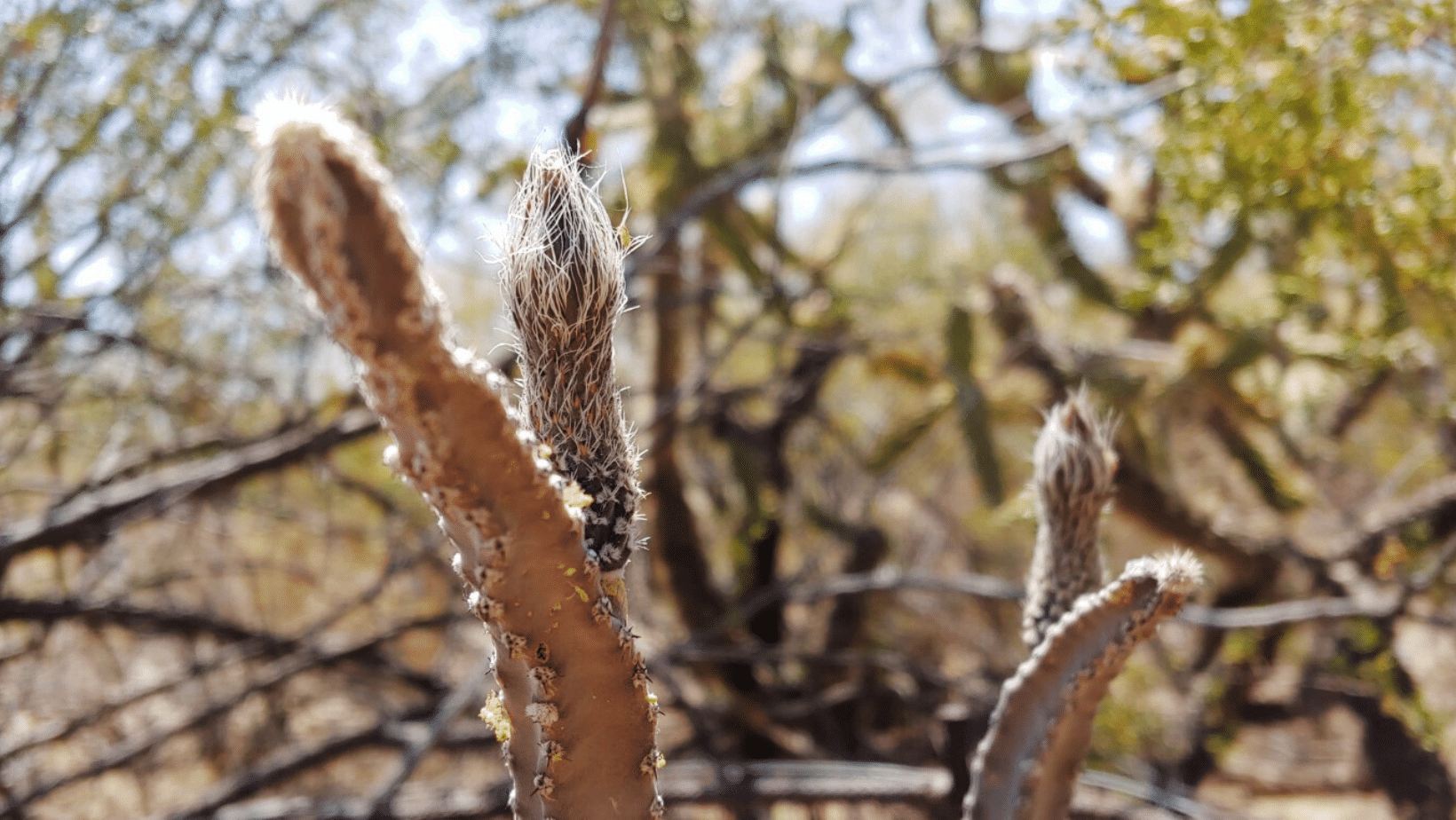
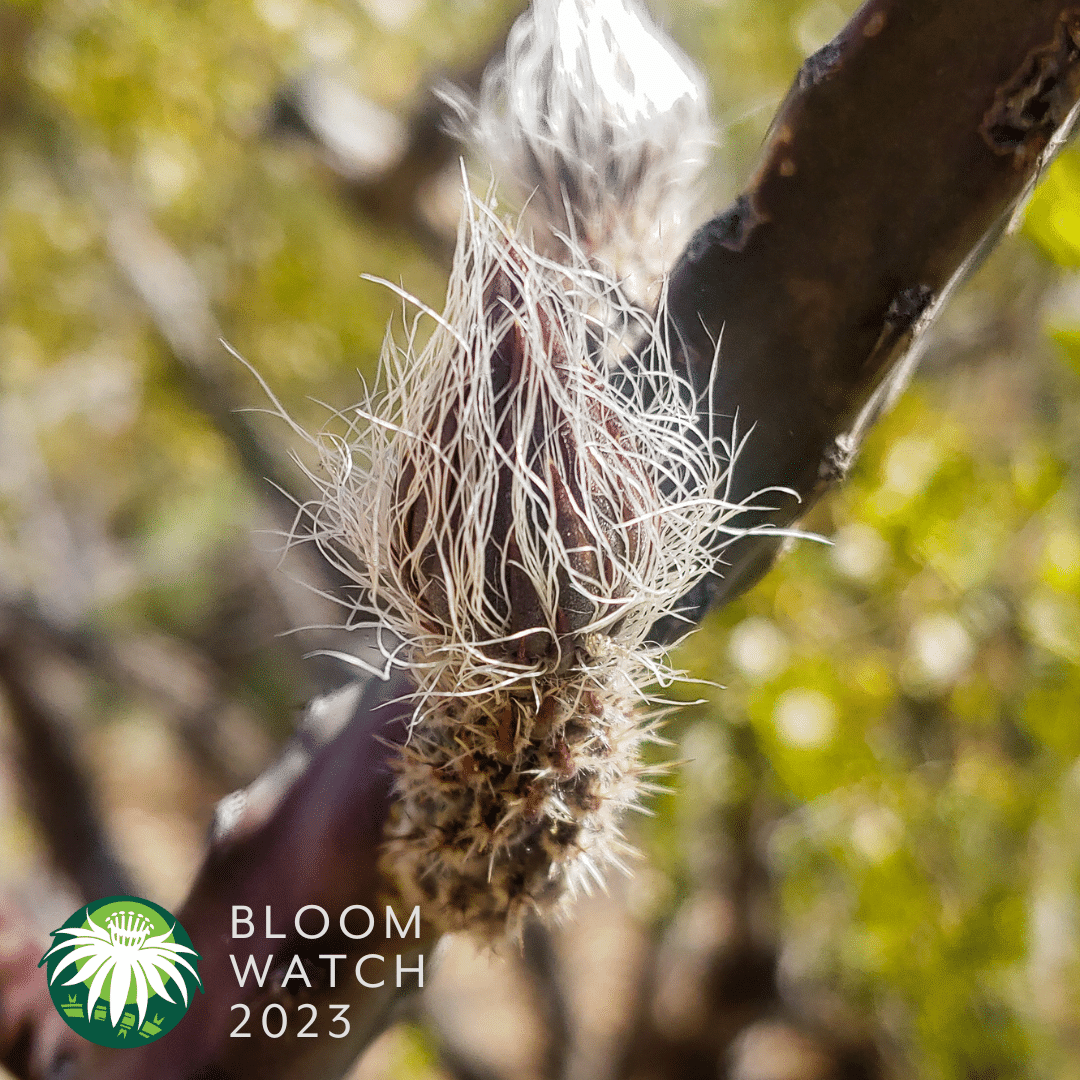
The sepals are starting to turn reddish in color and the white hair on the buds is more prominent. According to our botanical records, towards the end of a stall period in bud growth, the color and shape of the buds begin to change. This, along with weather predictions of an increased chance of rain and humidity next week, has lead Chris to anticipate a growth spurt soon! We could have bloom night as soon as sometime in the following 10 days! He is visiting the Queen’s every morning now. “They’re coming soon- I promise!!!” he says. 

I’ve had the privilege to look at our Bloom Night records that catalog the many attributes of the collection, including the condition, phenology, size, and care of the Queen, which were diligently written by stewards of Tohono Chul over the past 30 years. Notes from the past that were handwritten with care. This got me thinking. Who is this plant, not just to Tohono Chul, but to the rest of the people out there? What is the context of these relationships from the past? 

Escaping the task of watering in the hot sun, I happily jumped on my PC. According to SEINet, a reputable botanical resource, the queen of the night root has been used to treat many conditions, including heart and skin ailments, as well as diabetes. The fruit, roots, and stalk have all been traditionally eaten. (source: https://swbiodiversity.org/seinet/taxa/index.php?taxon=Peniocereus+greggii&formsubmit=Search+Terms) Interesting. But what else? 

The more I started to dig online, the more curious I became. Short blurbs in botanical descriptions stating its use as a food and folk medicine with no further explanation are easy to find. More in-depth articles are seemingly scarce. Some say that the tuber is edible, while others caution not to overconsume because of serious side effects. 

Sifting through google scholar, I discovered a scientific journal article published just last year from the Universidad Nacional Autónoma de México called “Antidiabetic Sterols from Peniocereus greggii Roots”! Here is a little summary:  

The university team studied a concentrated essence made from the roots of Peniocereus greggii and found that it contained six distinct chemicals with blood sugar stabilizing effects. In the scientific fashion, they tested these components on mice and muscle cells grown in petri dishes. Two of the chemicals were specifically found to promote insulin secretion and two others also hinted at improving mitochondrial function. (source: https://www.ncbi.nlm.nih.gov/pmc/articles/PMC9026134/

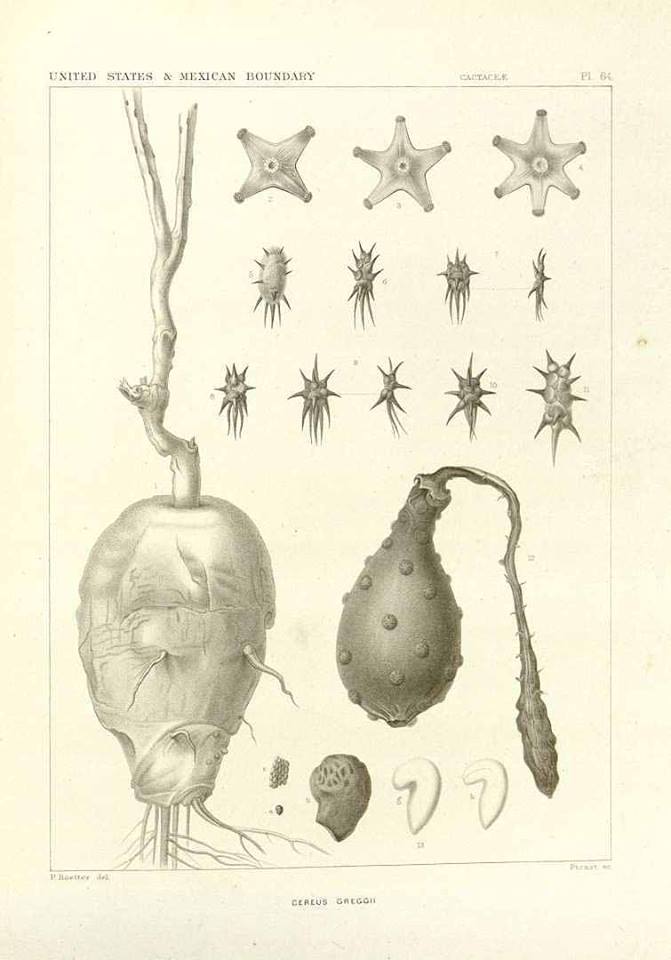
Botanical illustration which shows cross-sections of P. greggii stems, the tuberous roots, and other details. By Paulus Roetter.

The biological actions of the decoction from the root is complex, so I’ll leave you to read the article if you wish. However, it really exciting to see traditional folk medicine getting scientific recognition in Mexico and to discover some of the secrets that the Queen holds. I hope to come back to the topic of her herbal attributes in the future as I uncover more insights. Till then, know that a flower is always more than just a flower. 

By Tracey Till, Propagation Associate

Don’t miss the big night! Sign up for Bloom Watch emails here. 
Be sure you select “Bloom Watch” on the dropdown menu!

Bloom Watch #5

Cruel Summer

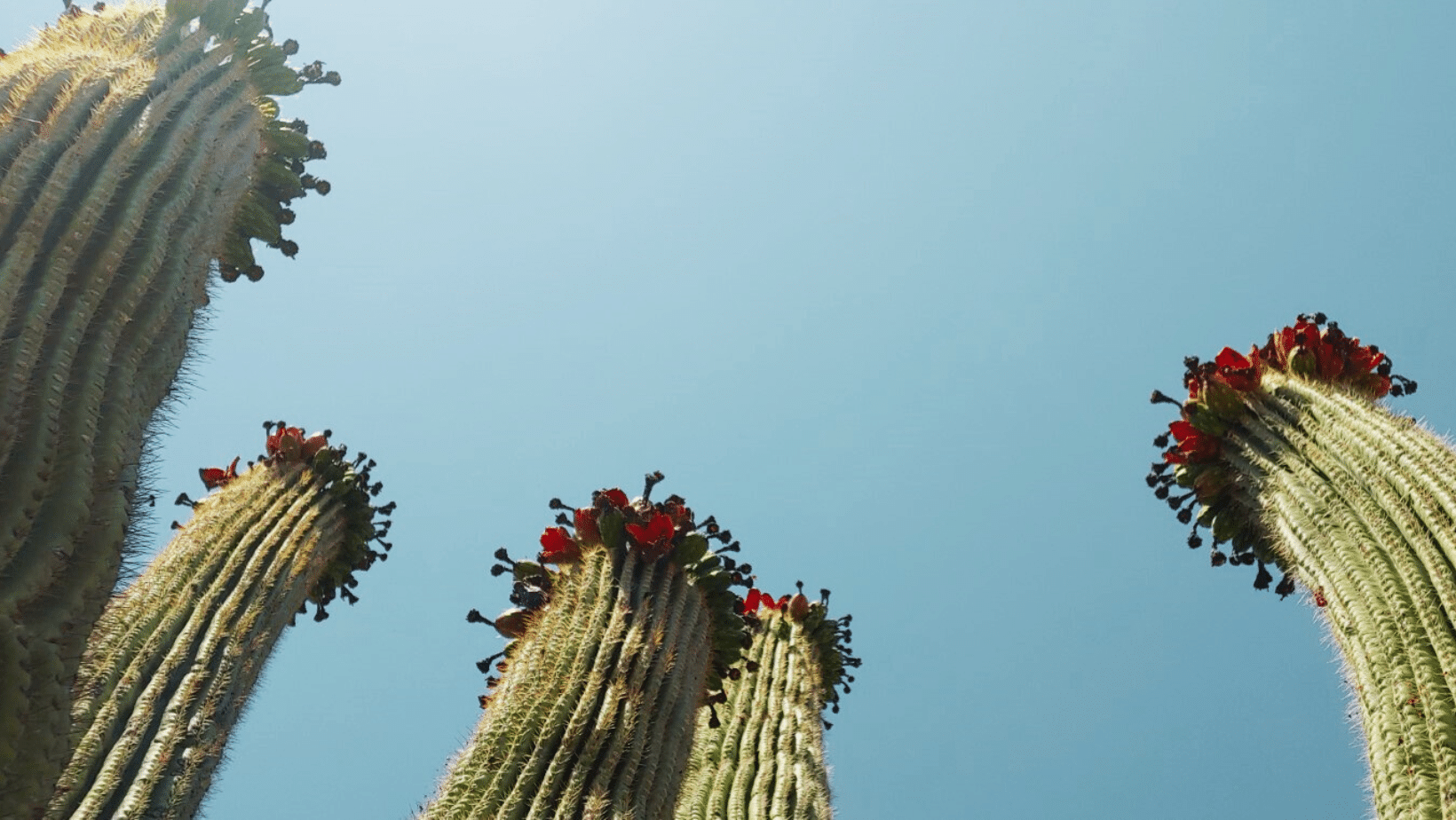
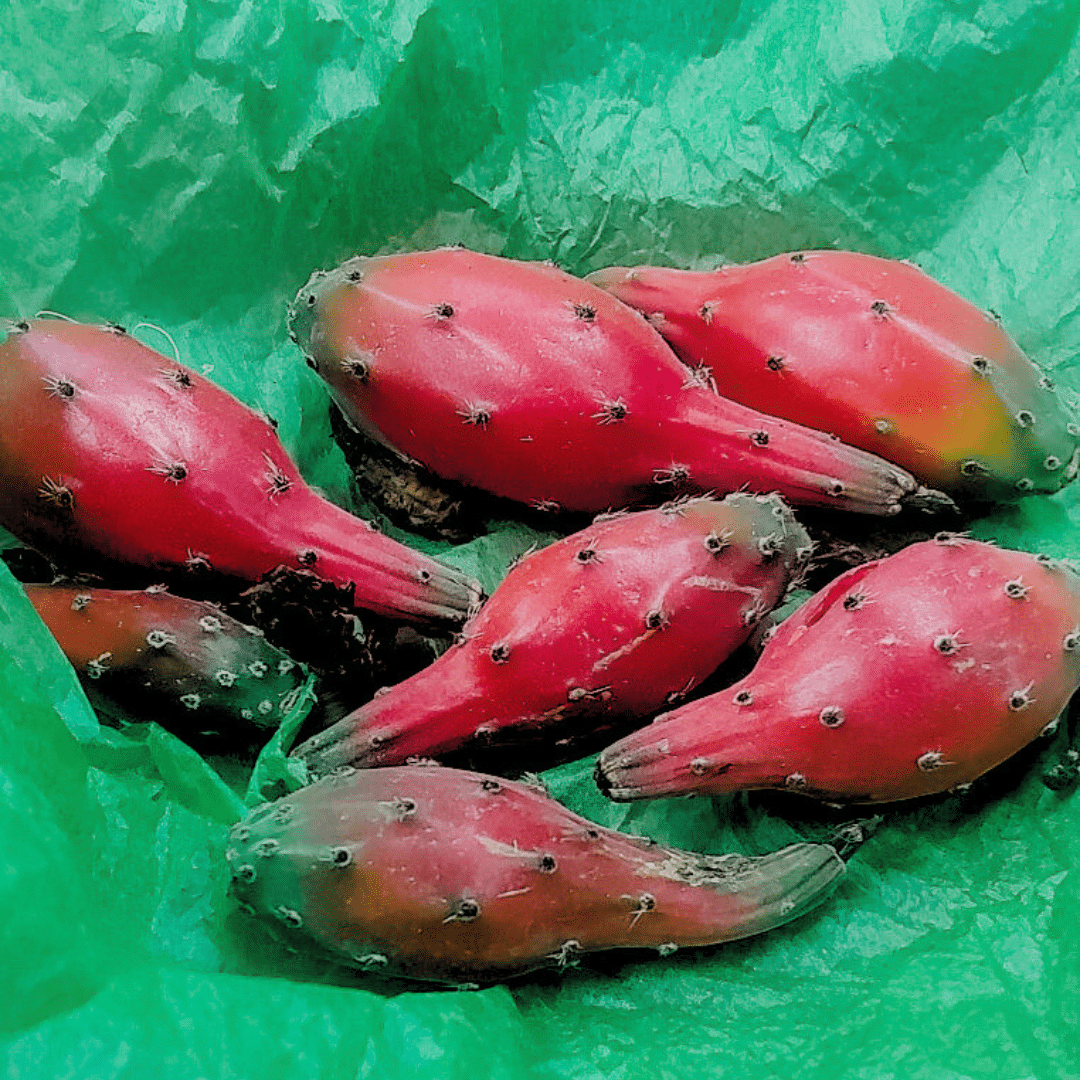
This is when we remember why it’s called the desert. The insects in the trees seem to imitate the sizzling Sonoran heat. Critters take refuge in the shade and their cool burrows. They drink from the fountains and hoses as we water the flowers. Days are long and the sunsets beautiful. Saguaro seeds disperse in the full bellies of birds. Prickly pear fruit turns color. 

Waiting for rain.

One of our dedicated gardeners, Shauna, performed her weekly duties of tending to the Queens by providing them with the necessary watering. Supplemental water ensures the vitality of these special plants during times of excessive heat and lack of rainfall.

“I’ve been watching, and the rain in the forecast keeps getting moved a day farther away,” she said. The buds we checked this week were between 40mm and 50mm.  

“No real change from last week.”  We are still approximately 1-2 weeks away from Bloom Night.


Cooking Up A Storm 

The University of Arizona’s CLIMAS has this to say about our monsoon season: 

“The monsoon is driven by the sun heating up the land and the Pacific Ocean at different rates, with land surfaces warming more quickly than the ocean. The warm land creates low-pressure zones as hot air rises… The moisture-laden monsoon air travels north to Arizona and New Mexico, encouraged by the pressure difference between the hot, parched southwestern air and the cooler Mexican air.” (source)

We might never know exactly why the Queen decides to bloom when she does, but from careful observations collected over the years in our little patch of desert, it seems to be closely linked with the occurrence of this pattern. 

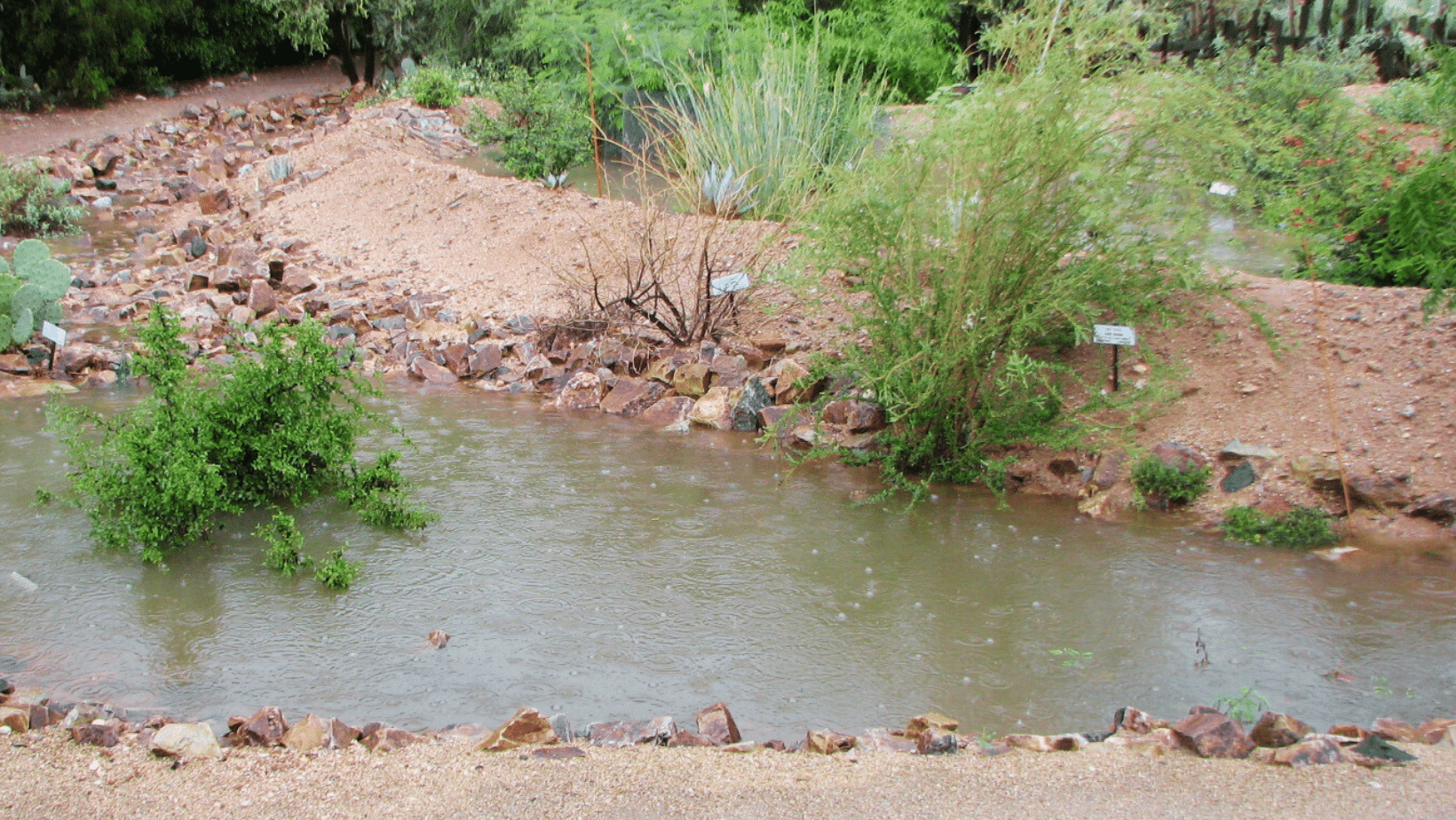
Tohoho Chul’s water harvesting garden, Sin Agua, in 2022

It’s a busy time and a slow time here in the desert. A hurry up and wait. Where there is water, there is abundant growth. In our nurseries and in the garden we are all trying to keep up with the vigor of our plants as they soak up this solar energy. But by mid-afternoon, there is a quiet in the garden. The desert has some time to herself. 


Rebel Flower Update

If you’ve been keeping up with Bloom Watch, then you know that last week we had a rebel flower on our hands. One of the Peniocereus greggii buds decided to bloom ahead of schedule, catching our gardening staff by surprise.

As always, the unpredictable nature of these special plants is keeping us on our toes. But fear not, nature enthusiasts! The rest of the buds are on track and expected to grace us with their beauty in approximately 1-2 weeks.

Stay tuned for more updates as we inch near the arrival of the Queen (the rest of them, that is)!

By Tracey Till, Propagation Associate

Don’t miss the big night! Sign up for Bloom Watch emails here. 
Be sure you select “Bloom Watch” on the dropdown menu!

Bloom Watch #4

Rebel Flower

Are you serious?! Oh, it’s cereus all right!

Gardens Manager, Chris Kibler, was taken aback with astonishment this morning when he discovered that one of the Peniocereus greggii had rapidly grown overnight, reaching its full bloom stage. Not to worry, the rest of the buds are on track to mass bloom in roughly 2-3 weeks. But as always, the unpredictable nature of these special plants is keeping us on our toes.

We’ve nicknamed this lone bud the “rebel flower” due to its unconventional blooming time compared to the other buds. This early bird bud stands as a symbol of unyielding resilience and individuality amidst the garden’s lush tapestry.

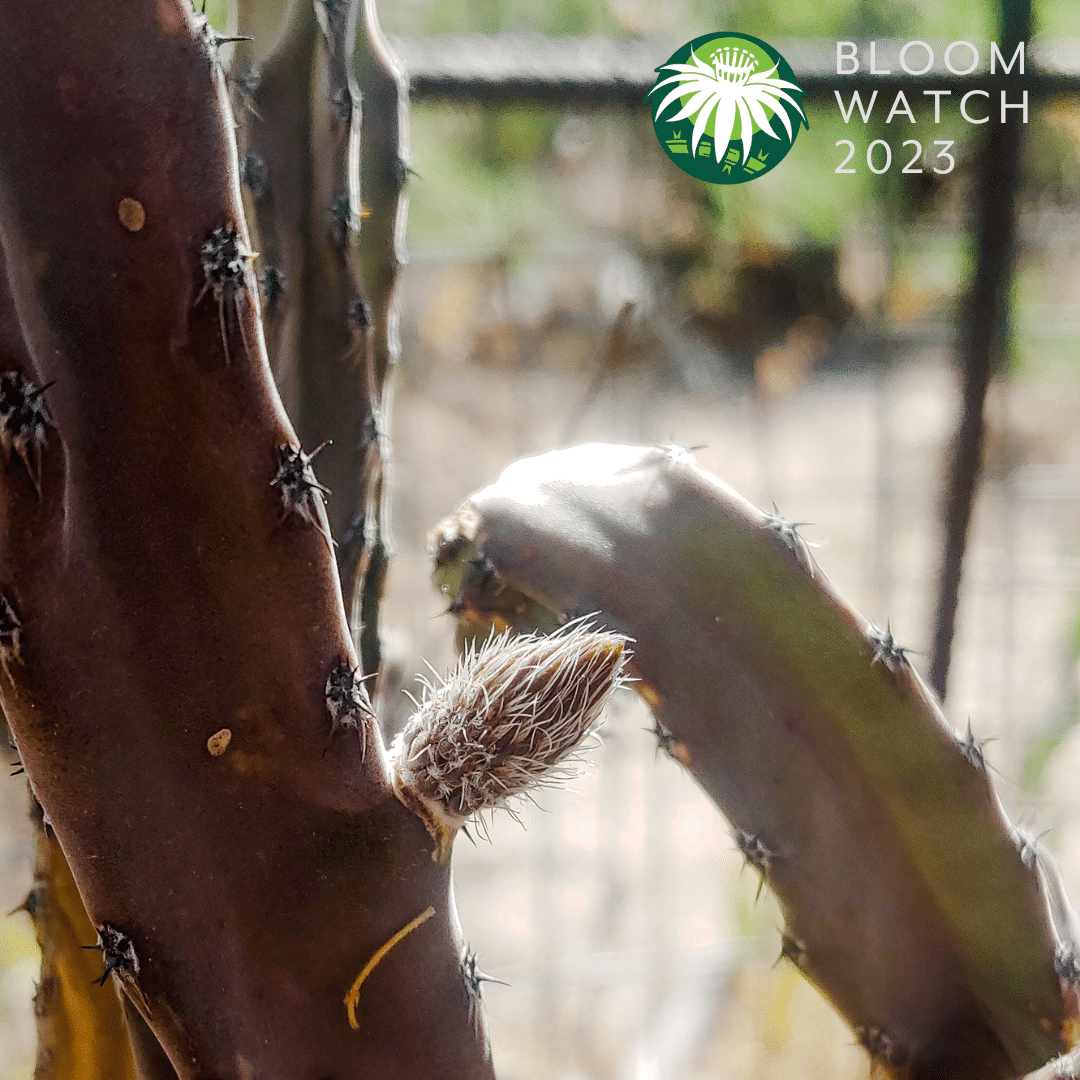
Having reached its max, this lone adventurer is ready to blossom this evening. Located by the Sundial Plaza, this bud has outgrown its neighbor as well as the other buds throughout Tohono Chul (in the image below, note the size difference between the two buds). The “rebel flower” will begin to open at dusk and will still be in bloom by sunrise Thursday morning. Be sure to take a look if you happen to be strolling through the gardens today or tomorrow.  

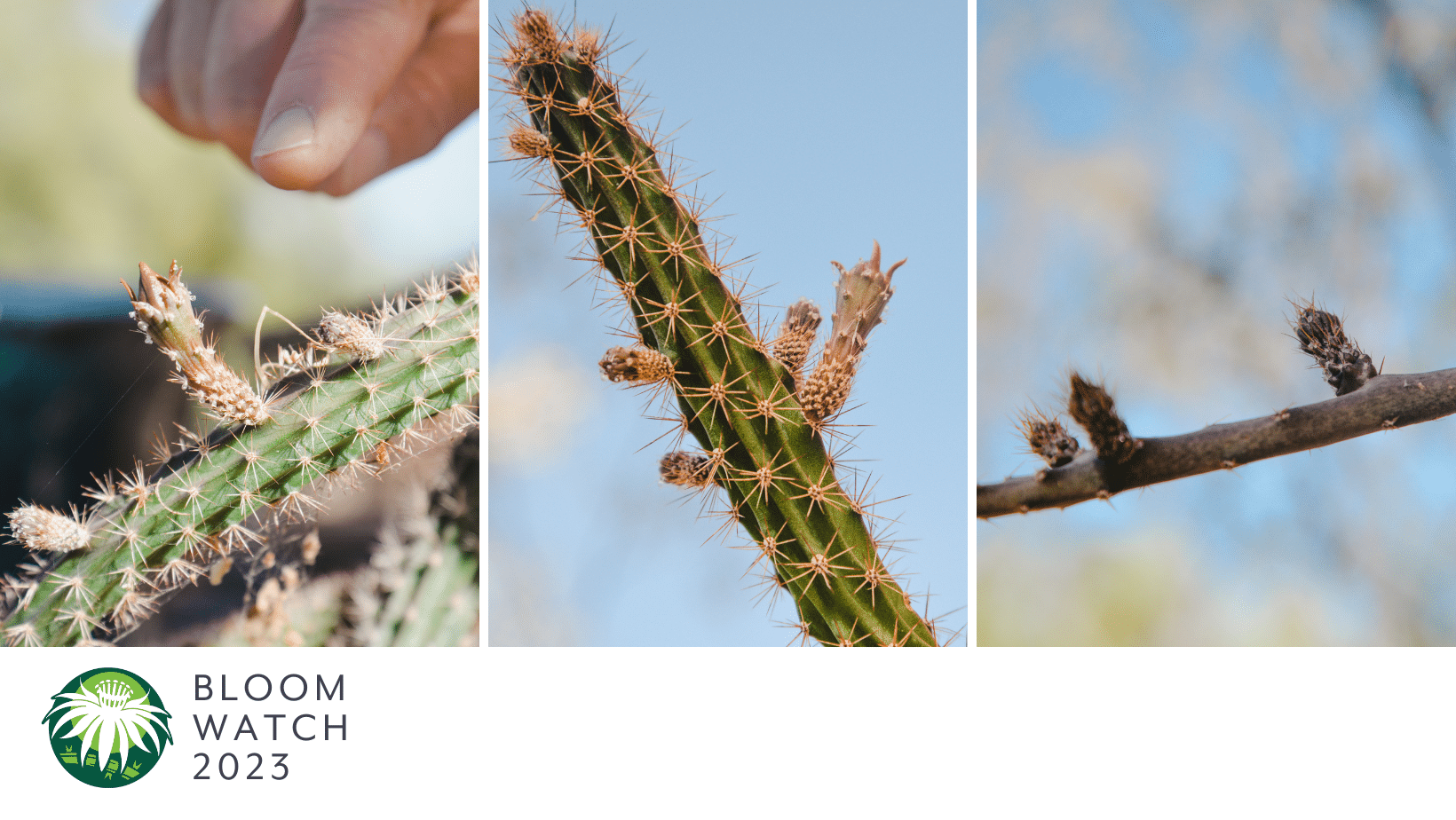
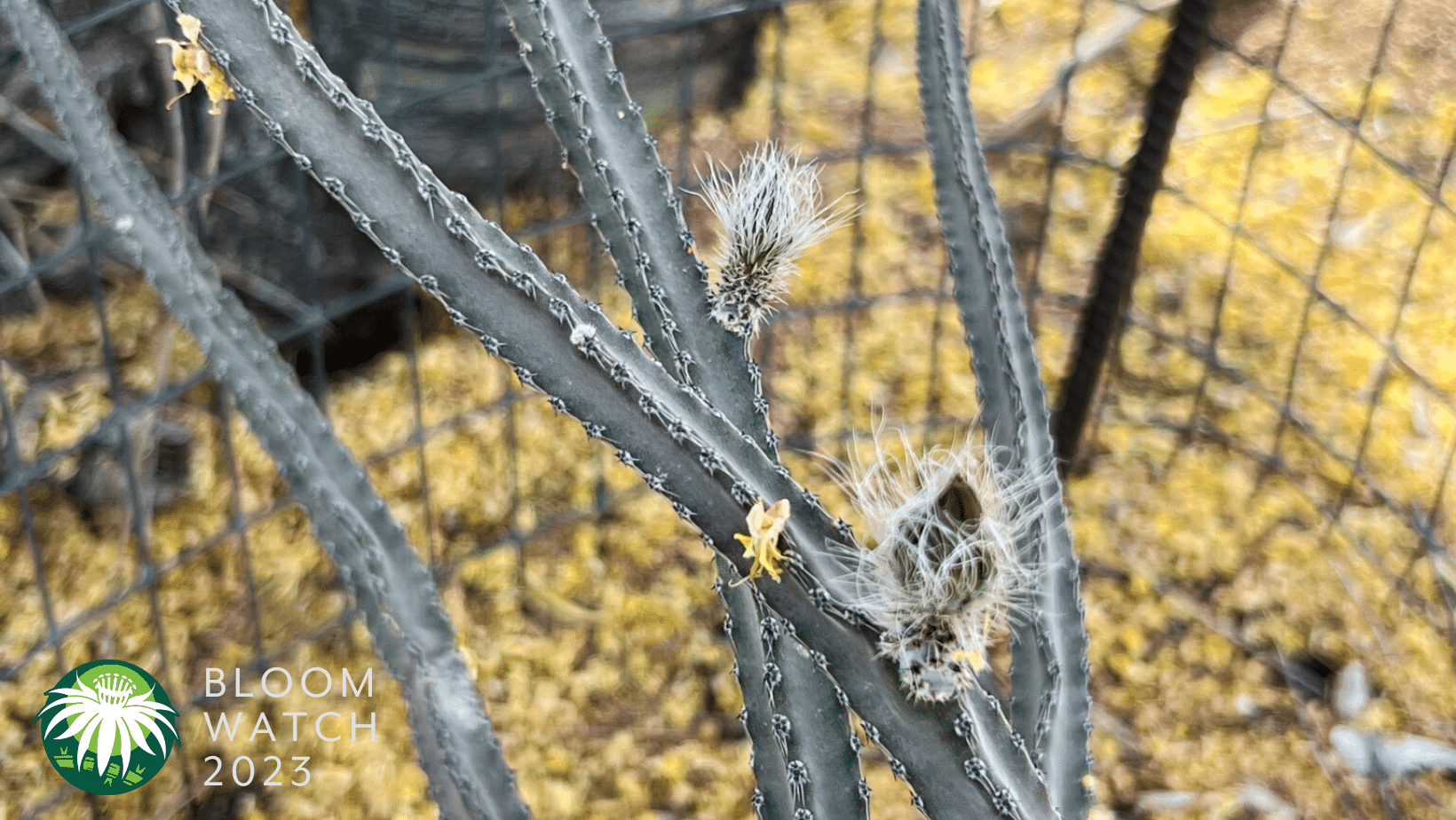
While the heat of summer and arid conditions have slowed down the other blooms, our dedicated gardening team is diligently watering them once per week, ensuring their vitality as they flourish into majestic Queens. Note their current sizes in the images below. As you can see, they have some growing to do!


Seeking Royal Seeds Update

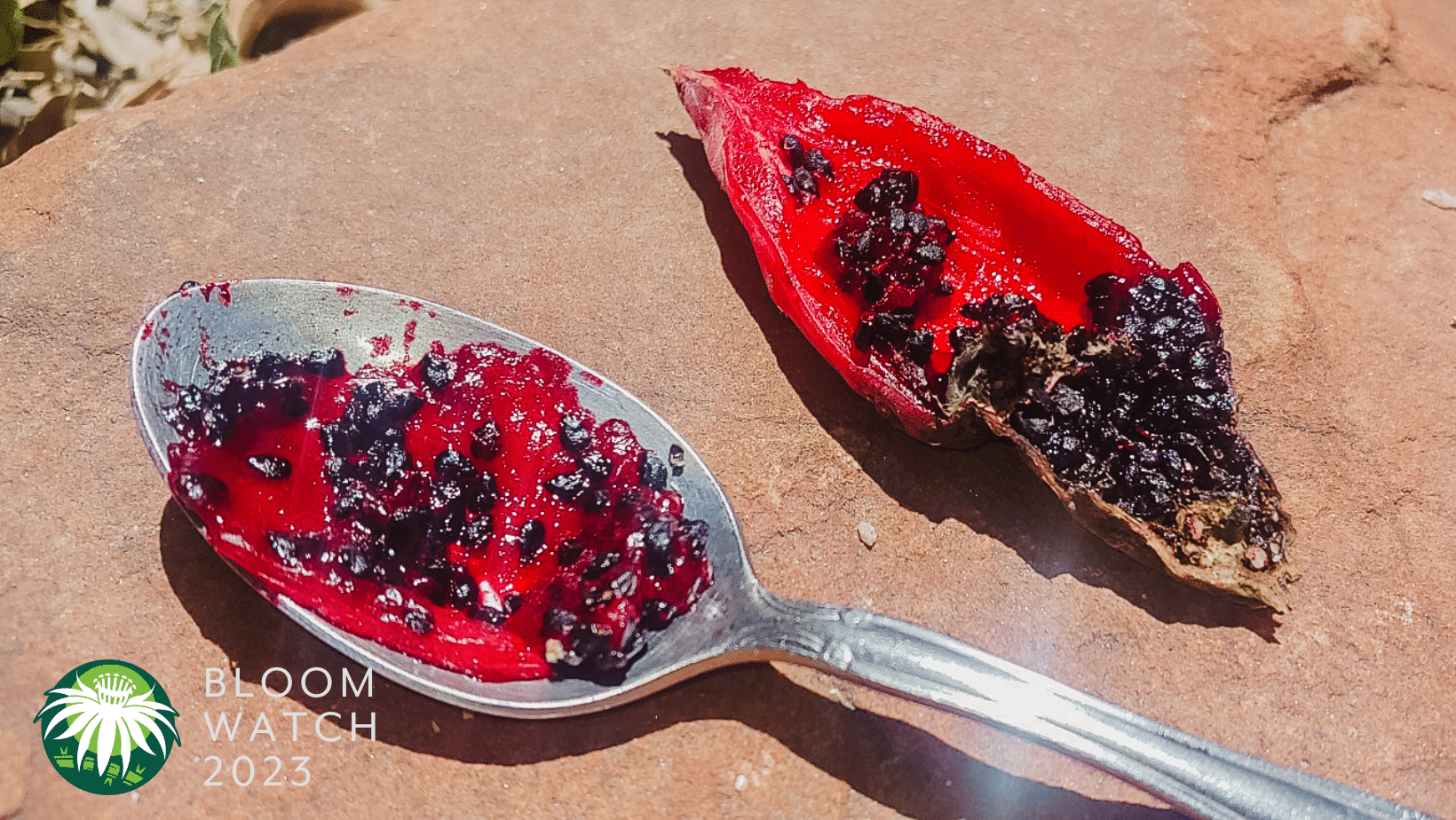
Last August we put the call out to the community asking for donations of ripe fruit from local Peniocereus greggii. Six different people brought us bags of this special fruit. They came from all around town, adding to the genetic diversity of our grow outs. To our amazement, we received thousands of fresh seeds. We want to say thank you! 

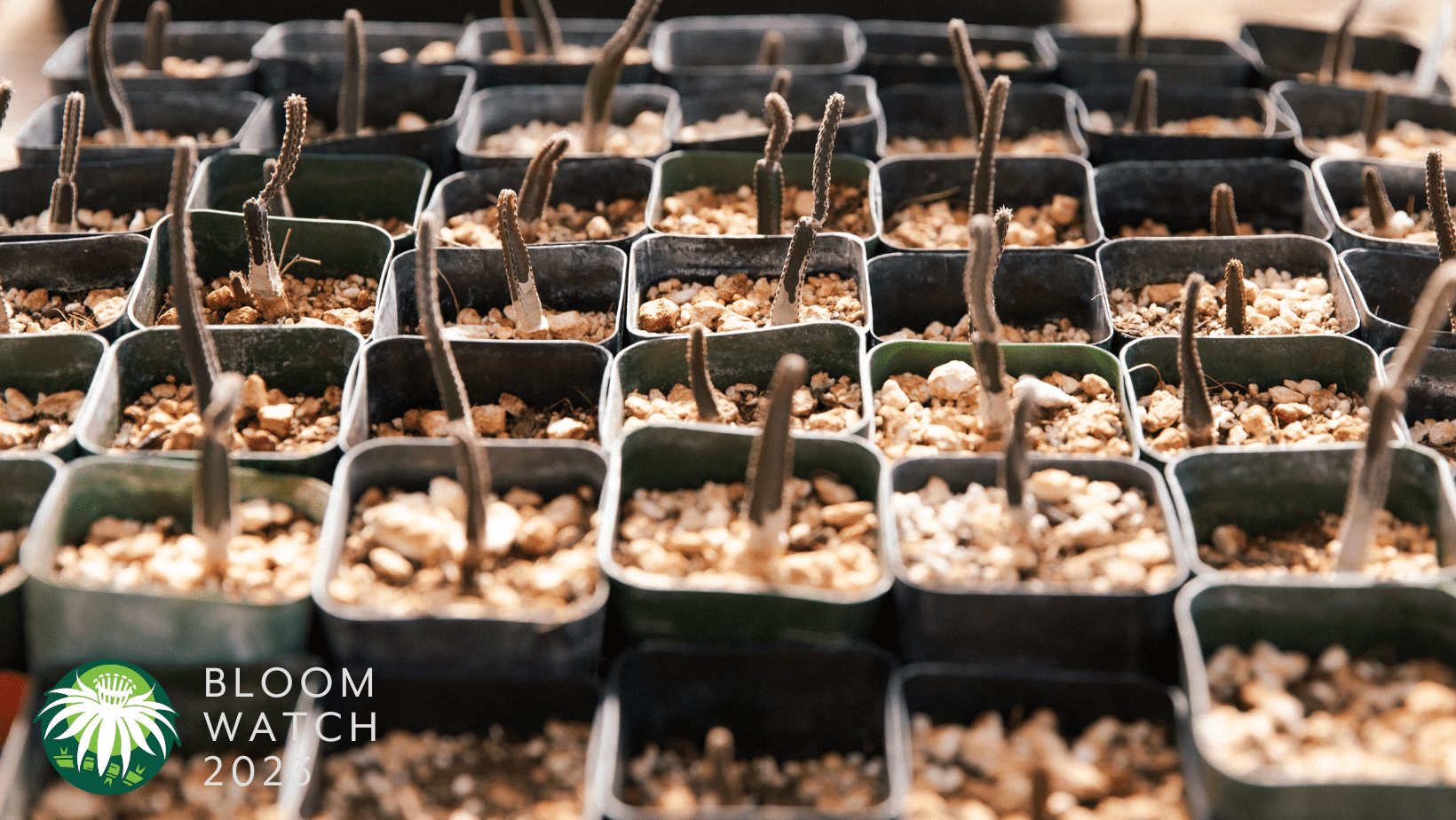
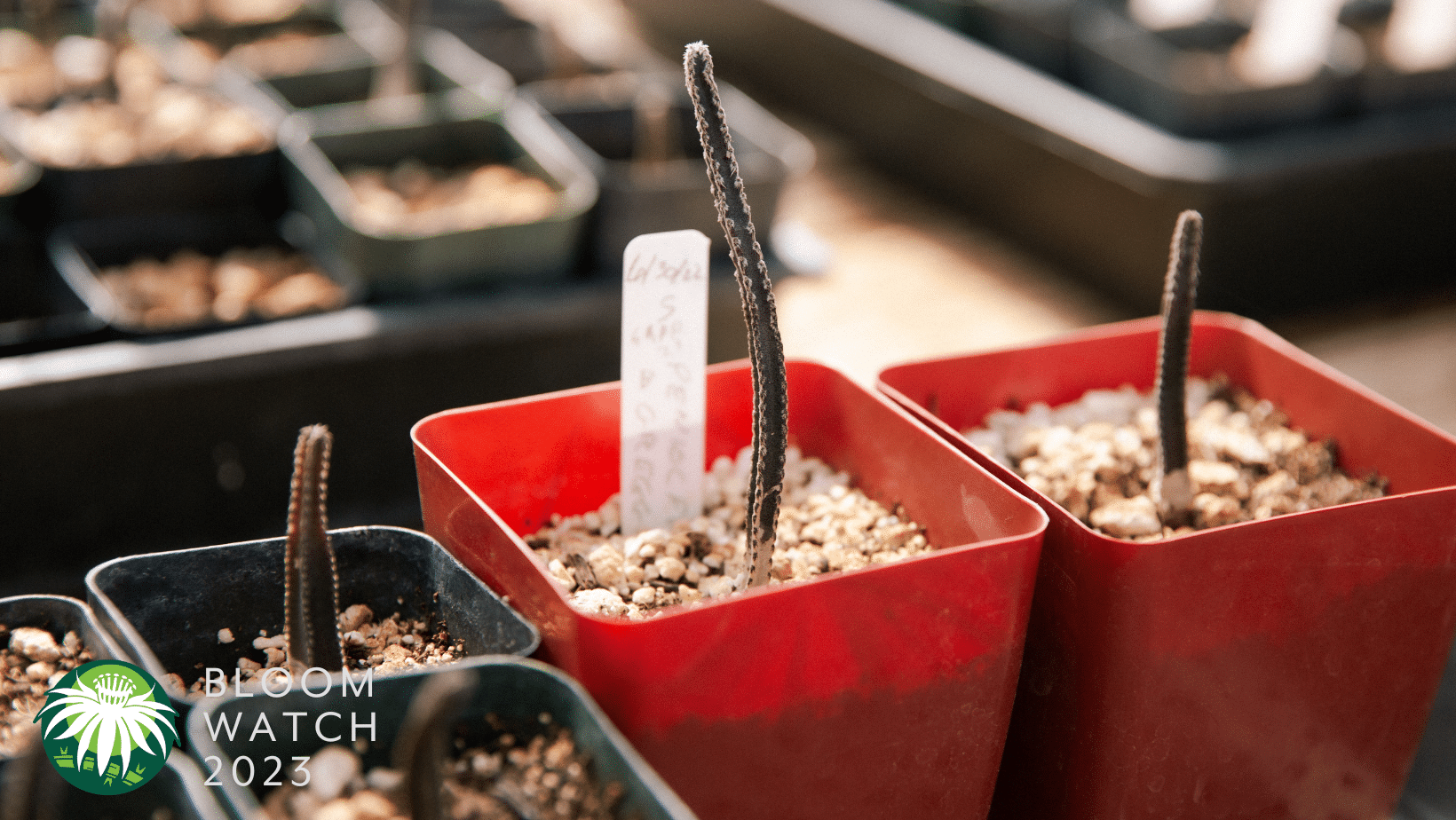
We are beginning to plant last fall’s donated seeds right now! On May 31st we planted the first batch of donated Peniocereus greggii seeds. We find that spring and summer are the best times to start our cactus seeds in the greenhouse. They like it warm! You can use a heater or plant them indoors by a window as well, but waiting till the warm season saves resources and can prevent overwatering that might cause cactus seeds to rot. 

We’re keeping seeds from each donor in separate seed packets and tracking which donated seeds we plant out. This way we may observe unique traits as they grow and potentially attribute them to where the seeds were collected. After a few years of nurturing, we’ll be able to provide them to Tohono Chul’s Gardens Team and offer them back to our community! 

By Tracey Till, Propagation Associate

Don’t miss the big night! Sign up for Bloom Watch emails here. Be sure you select “Bloom Watch” on the dropdown menu!

Bloom Watch #3

The Queen’s Court

On the Desert View Trail, the Peniocereus greggii flower buds are stalling growth as the dry heat of June arrives.

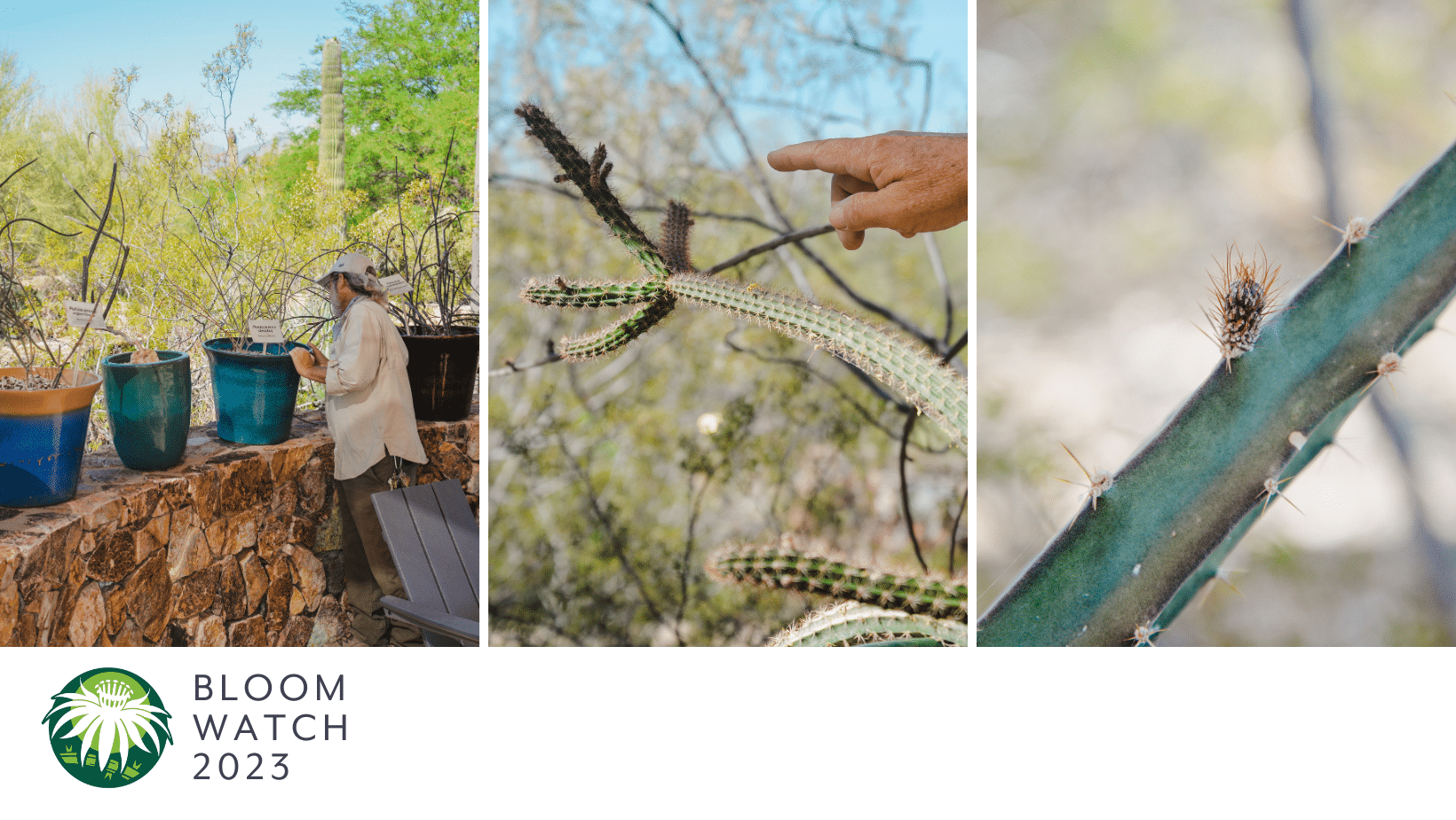
On the other side of the garden, the Queen’s Court is growing flower buds! Gardens Manager, Chris Kibler, says a few weeks ago they had no signs of buds and was pleasantly surprised this week. They were recently moved to a new, brighter location at the Overlook and are starting to put on good growth in response!

The Queen’s Court is comprised of several mature Penoicereus of various species that are native to regions of Mexico, Central America, and South America that showcase the diversity of the genus. We will be watching them closely over the next few weeks for blooms.


A Peek Behind the Scenes

Last June of 2022, we shared in Bloom Watch #4 that our propagation nursery had planted Peniocereus greggii seeds which had germinated and were little seedlings. We’re happy to report they have grown a lot since then! We counted 236 that our propagation volunteers have lovingly planted, tended, and transplanted.

The smallest of those plants are in 2 ½ inch wide pots and the oldest batch is in quart-sized pots. They’ll need to continue to grow before they’ll be ready to plant in the ground or offer to the public, so they won’t be ready this year. We’ll wait till they’ve been able to store more energy in their starchy underground tubers. If a woodrat comes by for a munch or the rains come late, they’ll have a chance of persisting.

By Tracey Till, Propagation Associate

Sign up for Bloom Watch emails here. Be sure you select “Bloom Watch” on the dropdown menu!

Bloom Watch #2

Slow & Steady

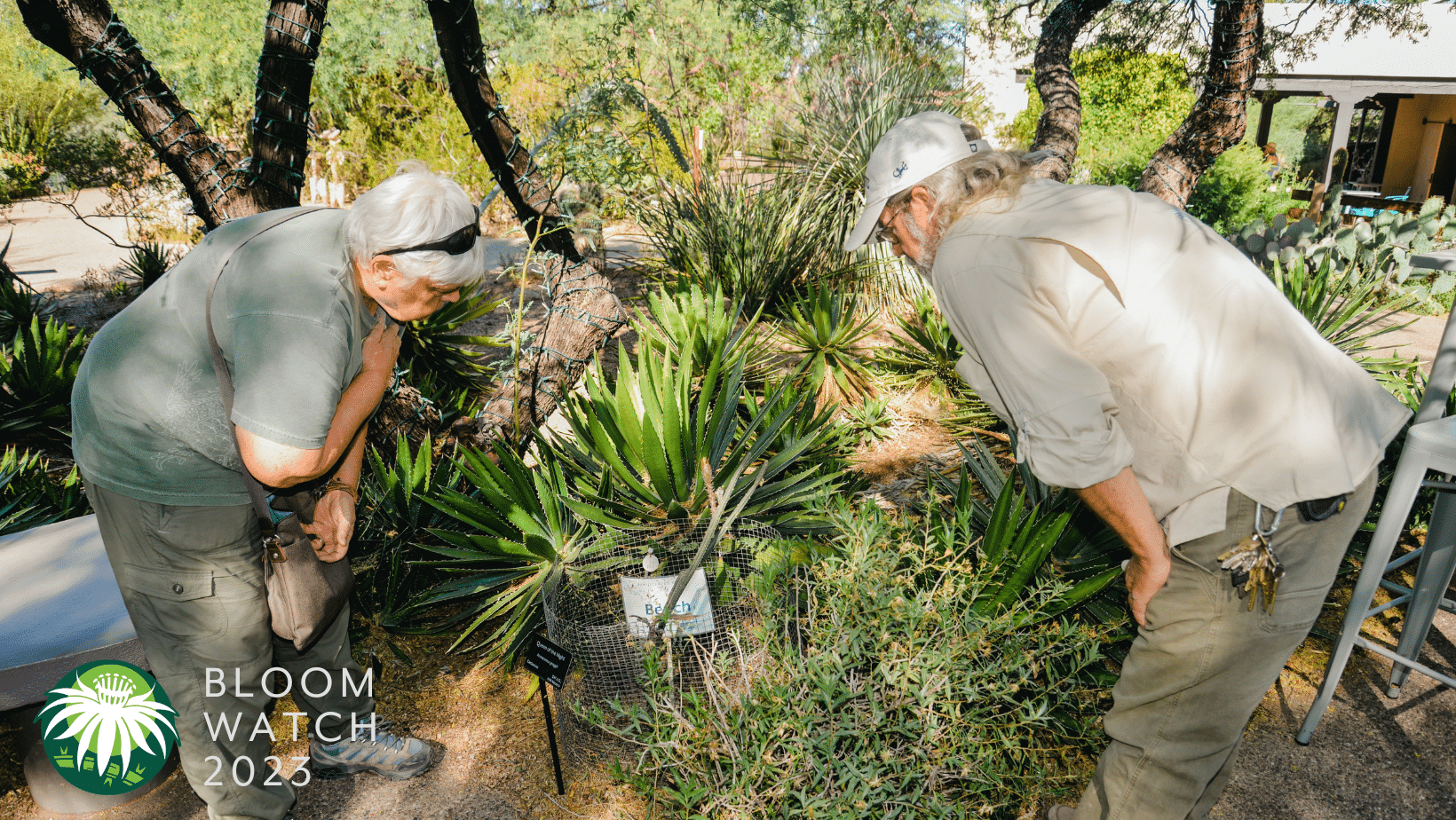
Garden member Beverly’s, Queen (pictured below) surprised her when it bloomed last Friday night; a few weeks earlier than last year. She says she’s going to watch closely as the fruits develop over the following months. Every year there are early birds like this that bloom and remind us that summer is nearly here. 

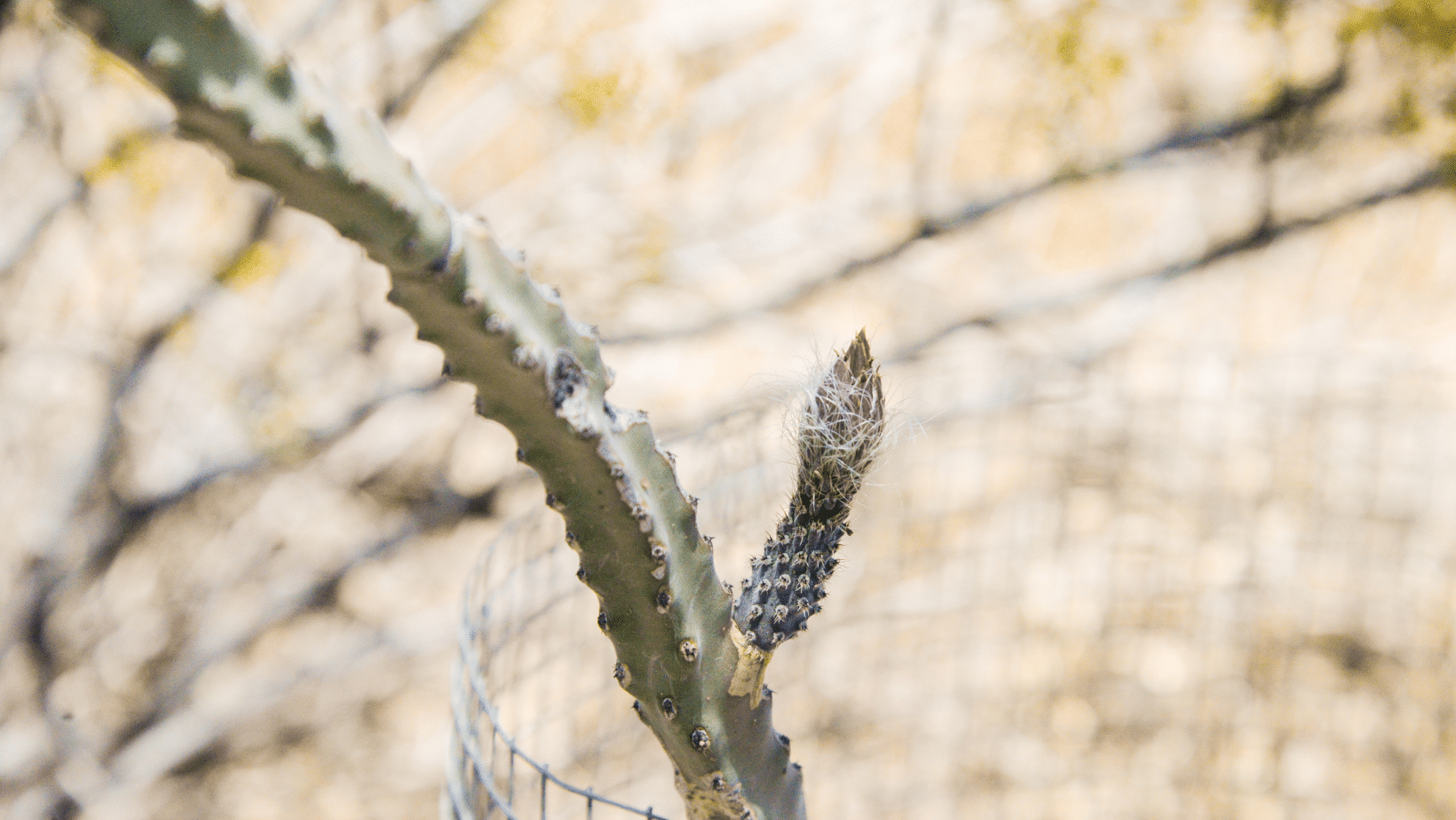
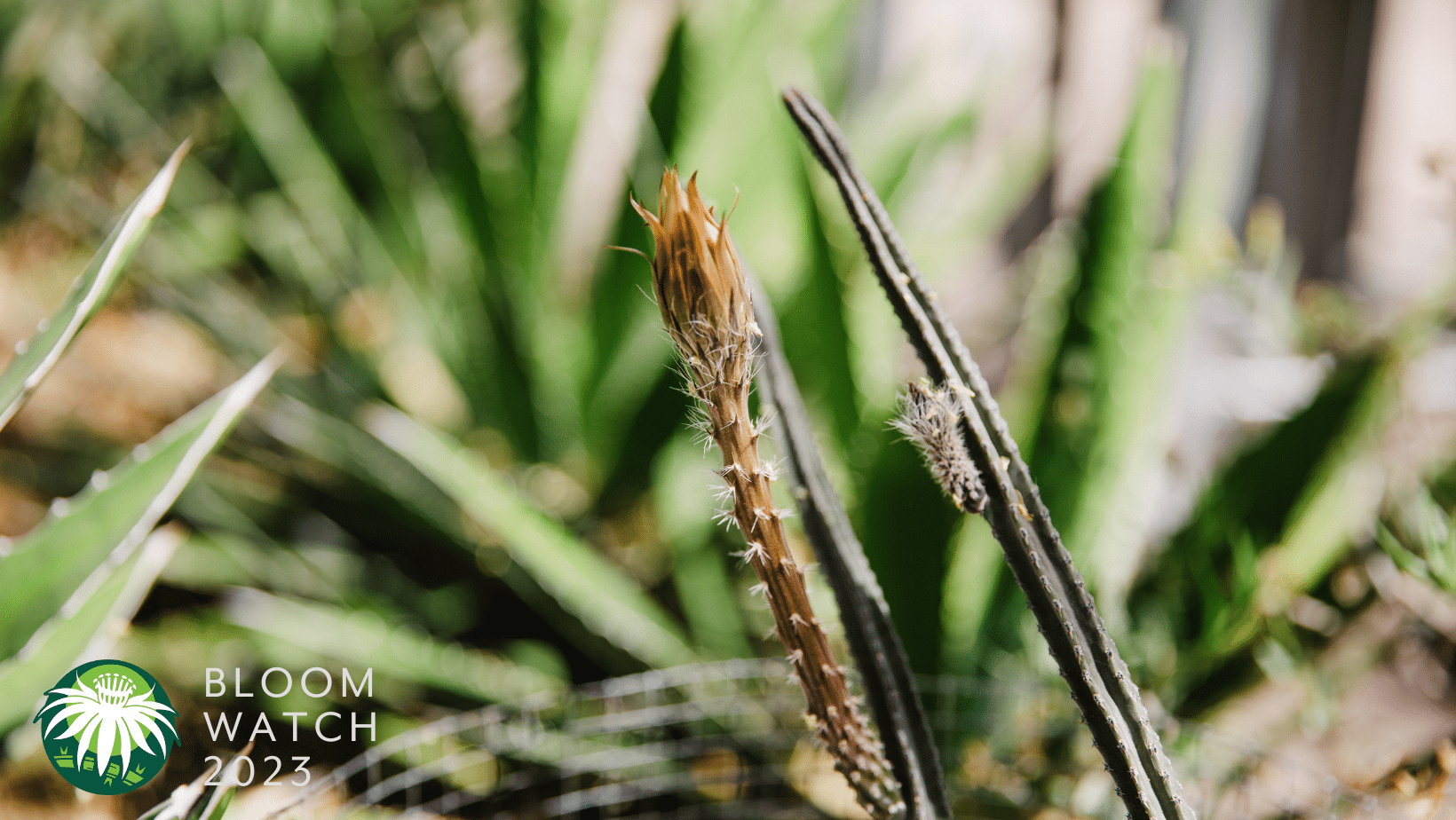
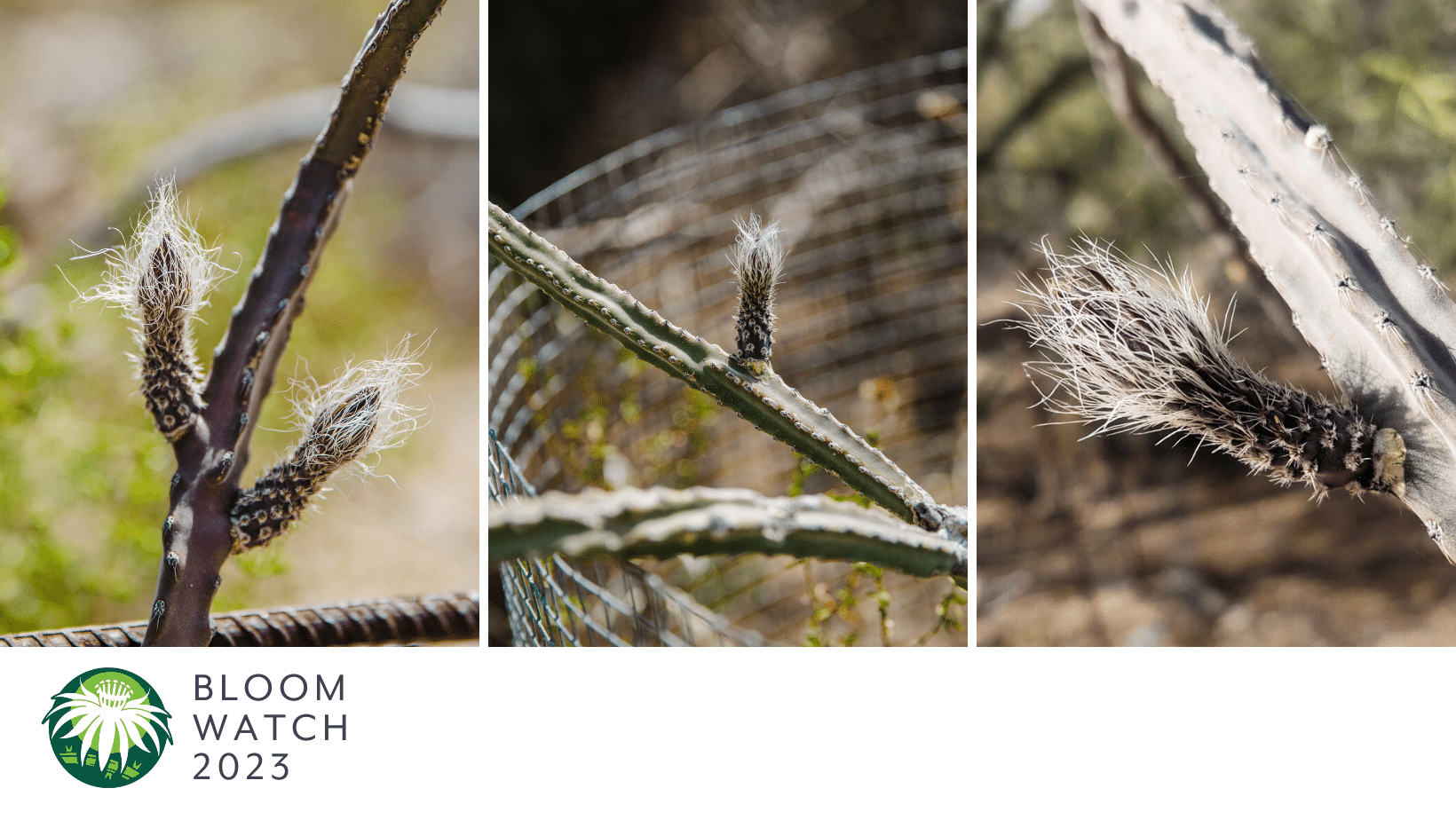
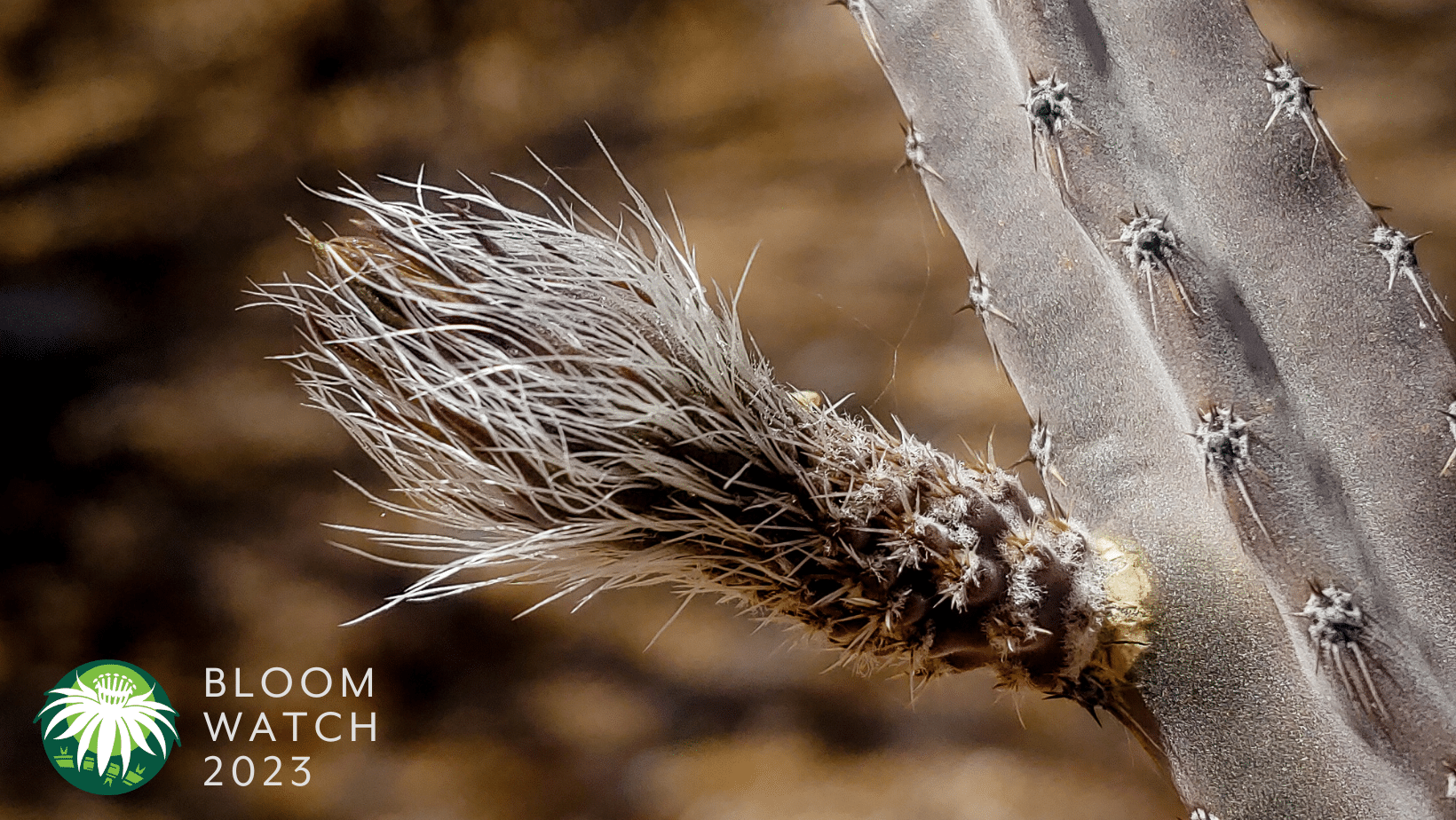
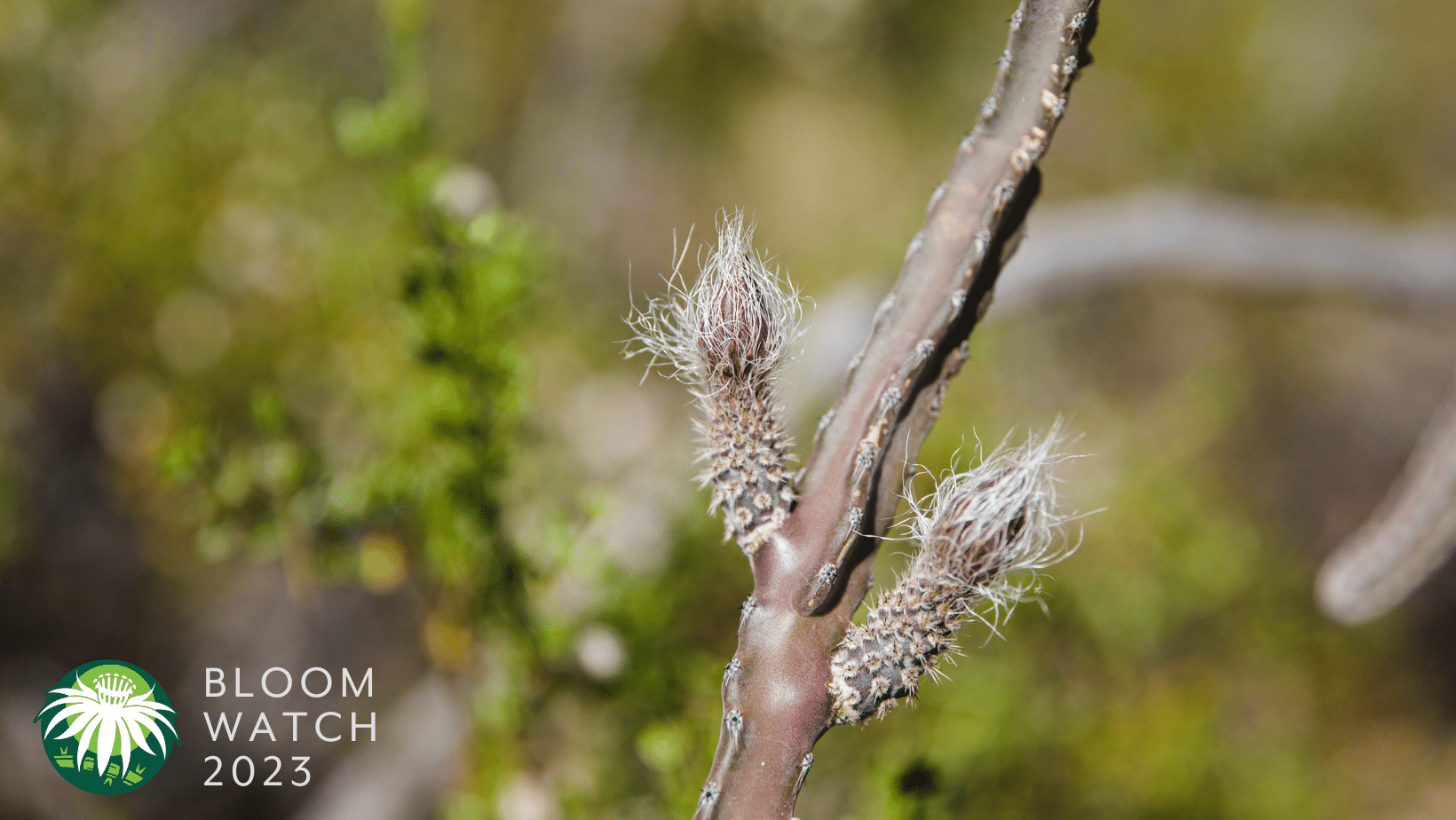
Back at Tohono Chul, the Queens are growing incrementally. Some of the tiny, fuzzy buds are becoming cylindrical as they become new cactus arms while other buds are becoming delicately pointy and growing long white hair as they prepare to become regal flowers.   

Bloom Watch is a delightful chance to take a magnifying glass to these plants. But doing that alone wouldn’t give you the whole picture of who they are.  

The Queen of the Night, Peniocereus greggii, is more than just a species, but a plant community, or more specifically, a population. A population is made up of organisms of a species that live in the same place at the same time and interbreed. We can reflect on this as we prepare to observe the communal adaptation of synchronous flowering.

If you look closely, you can see in the photos below of flower buds from different Queens taken throughout the garden at the same time that the buds are at different stages of development. However, the plants with bigger buds need to wait for most in their area to catch up. At least if they want to be successfully cross-pollinated by desert insects and bats. But why? In the wild, these plants can be growing miles apart. By synchronizing their efforts, they can increase the likelihood that a pollinator will make it from one individual to the next.  

But this begs the question, why not just self-pollinate in that case? Then you’d be sure to produce seeds right?  

There’s no conclusive answer. However, the benefits to the plant population might outweigh the benefit of an individual’s success. Cross-pollination produces genetically diverse seeds that may be more likely to adapt to variable environmental conditions. If you walk along the Desert View Trail and see the Queens, their diversity is evident in their distinct branching patterns and shapes of their stems. When Bloom Night comes, you may notice the subtle differences in flower color, size, and shape between individuals.  

In addition to genetic diversity, the higher number of seeds produced at once can increase the chance of their successful germination the next time the weather is just right. Humidity in the desert is rare and it’s necessary for cactus embryos to pop out of their seeds and start to grow. The synchronized bloom events may have evolved to give the next generation of cacti a better chance. 

Sign up for Bloom Watch emails here. Be sure you select “Bloom Watch” on the dropdown menu!