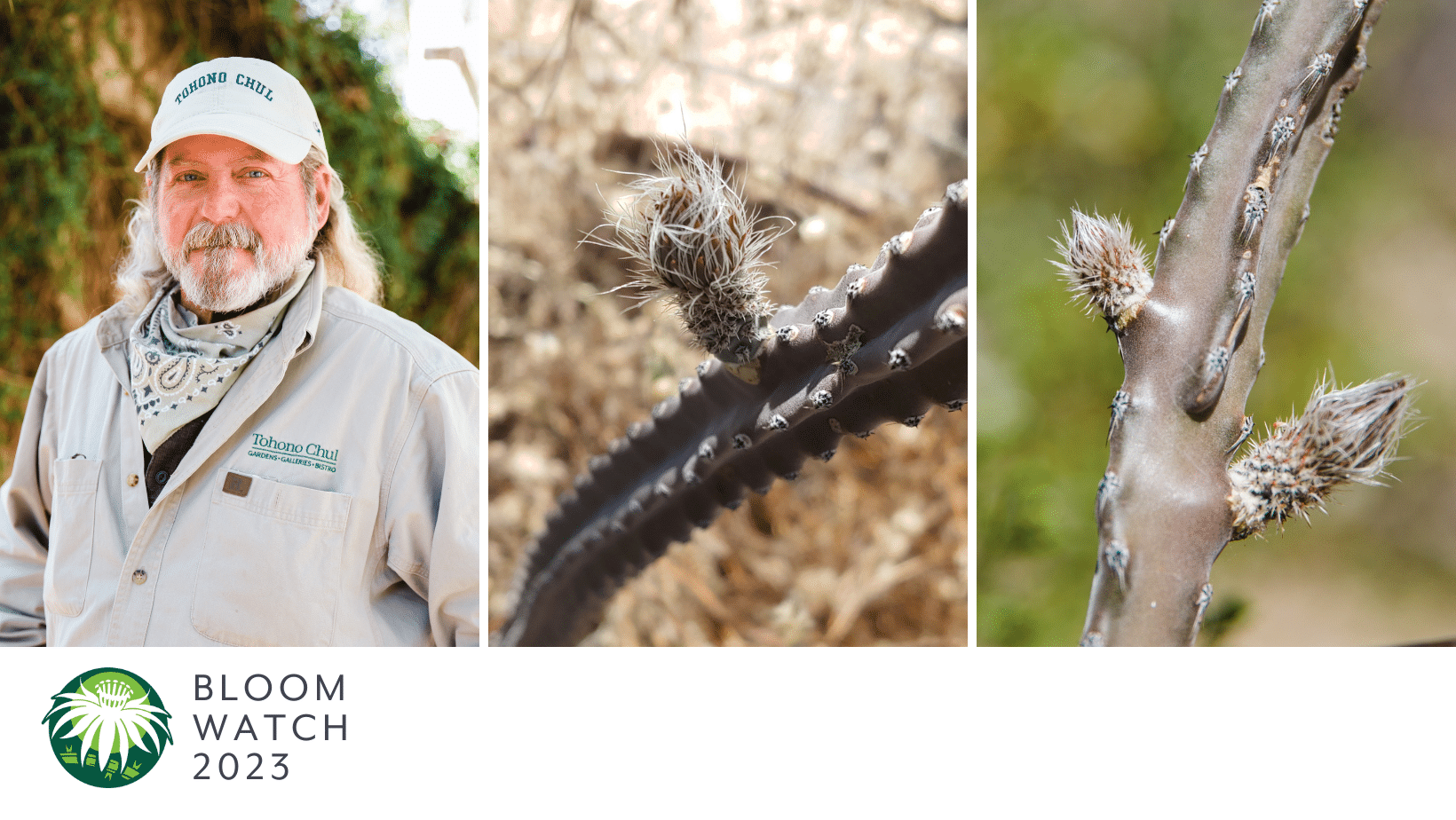
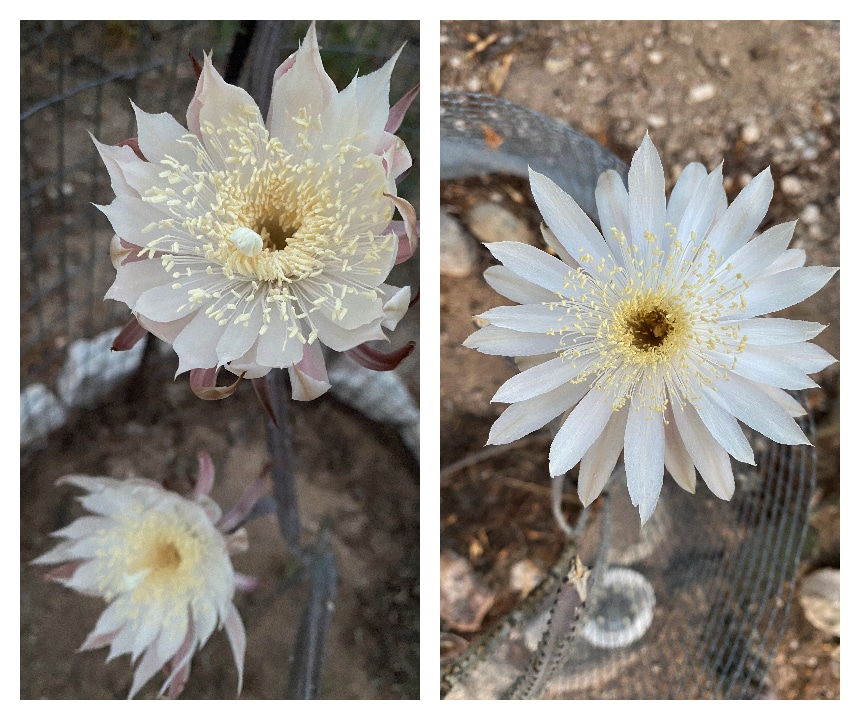
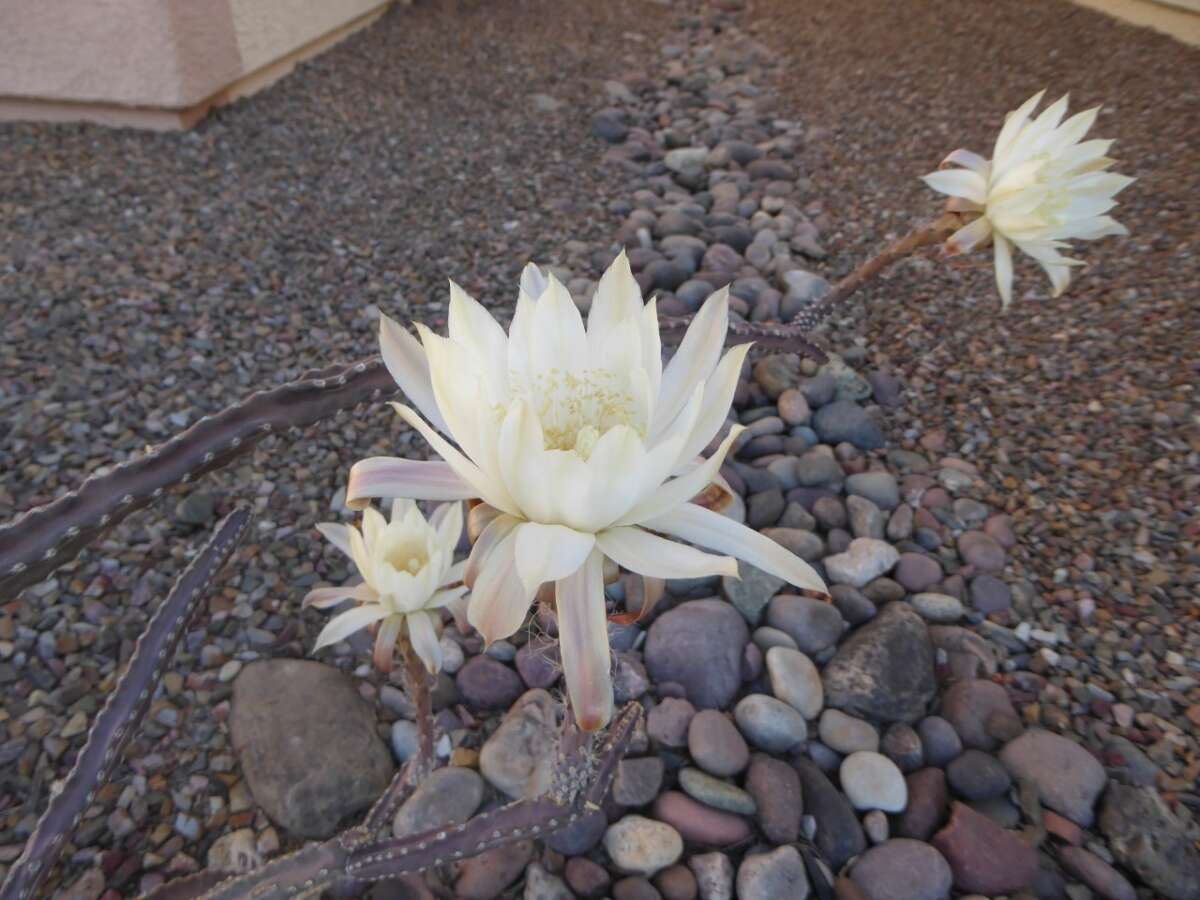
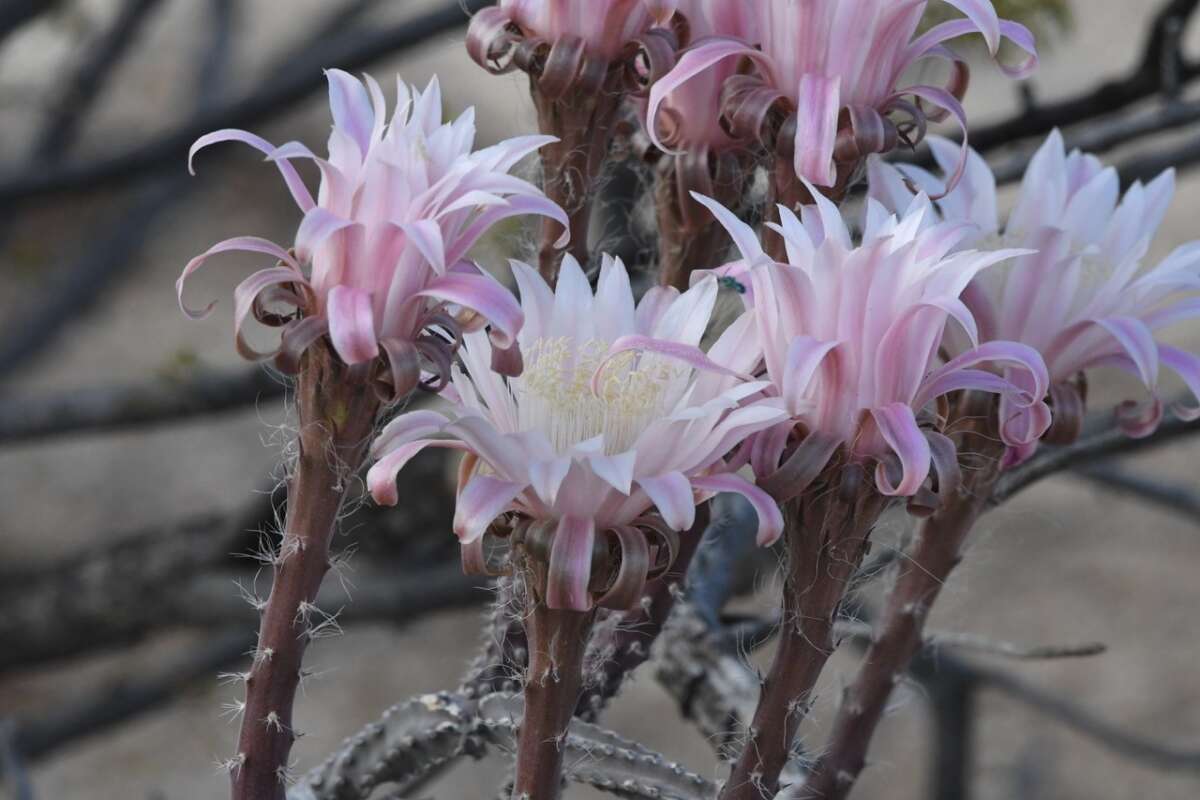
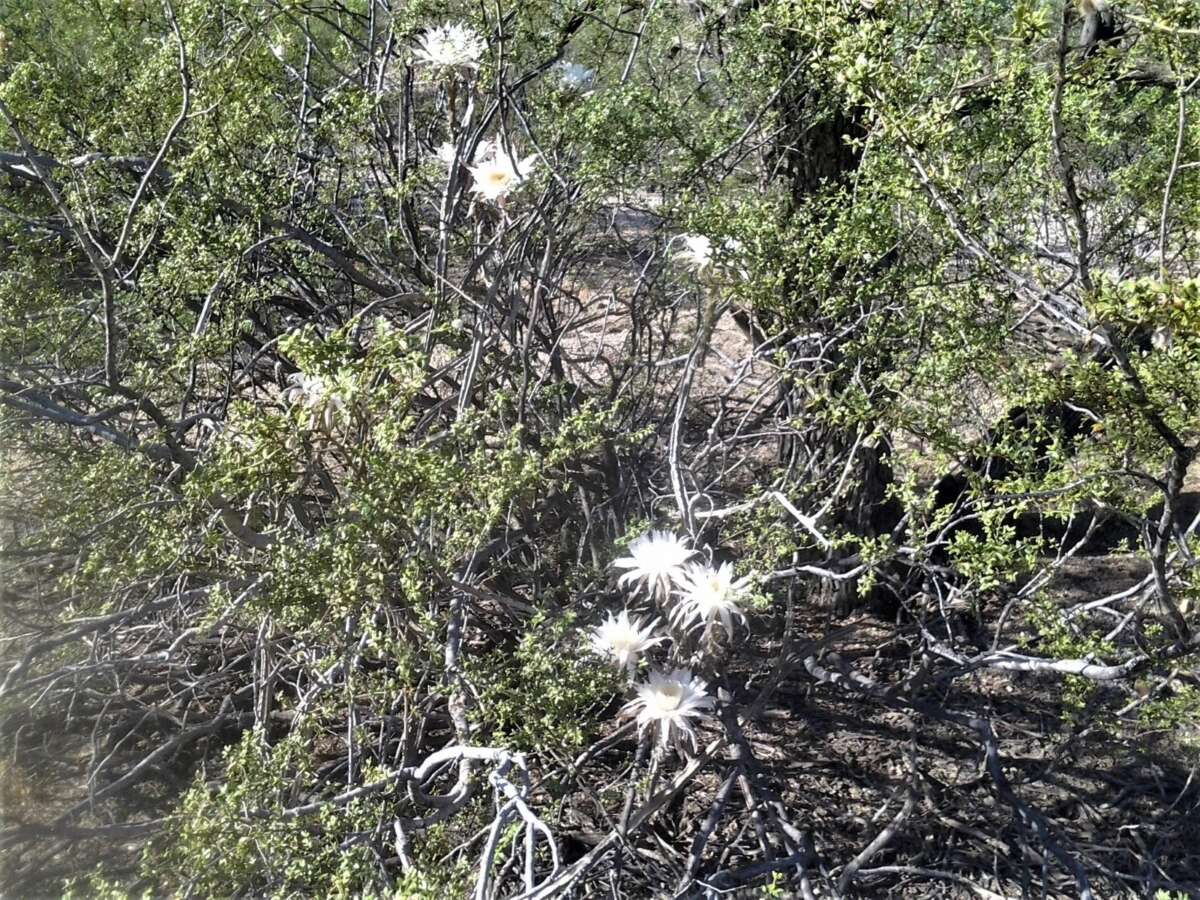
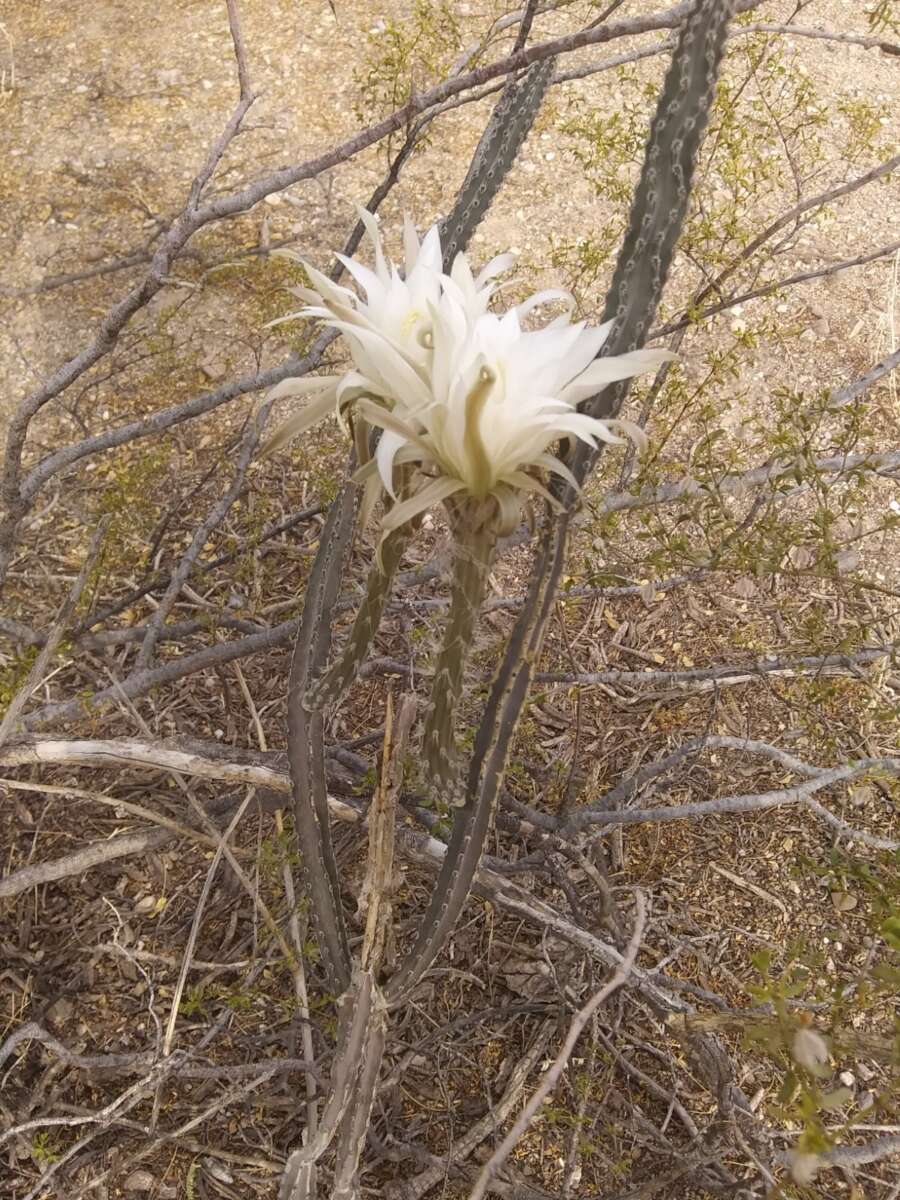
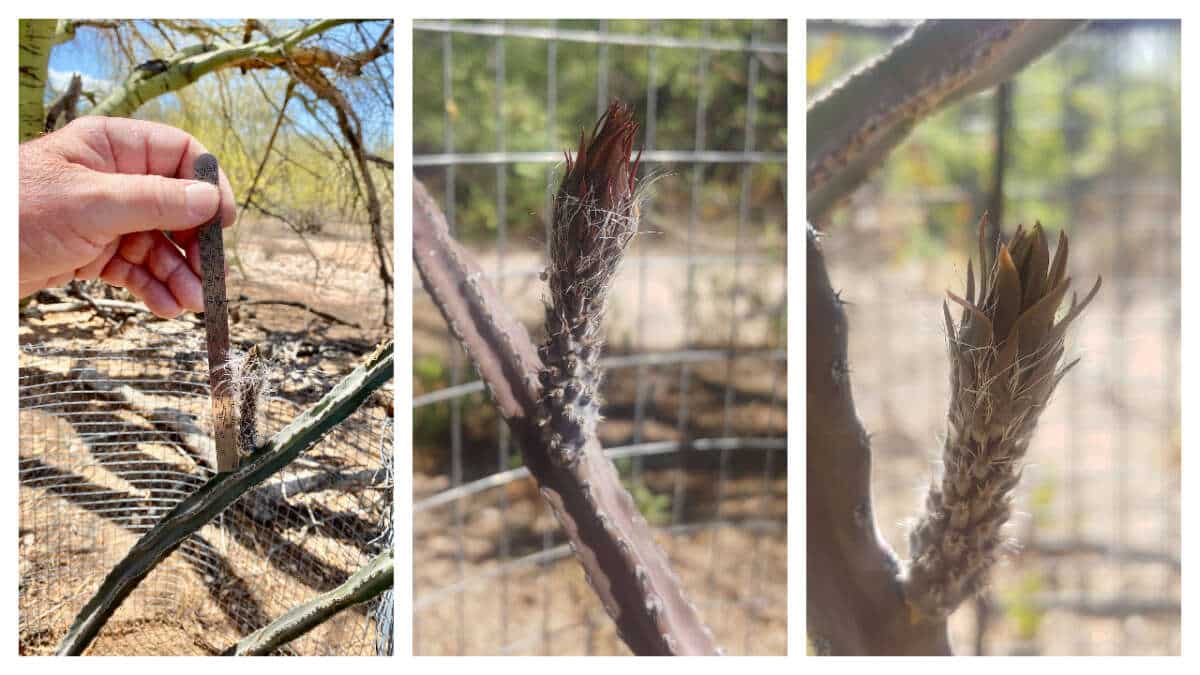
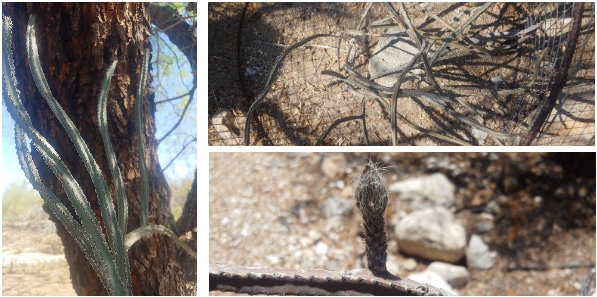
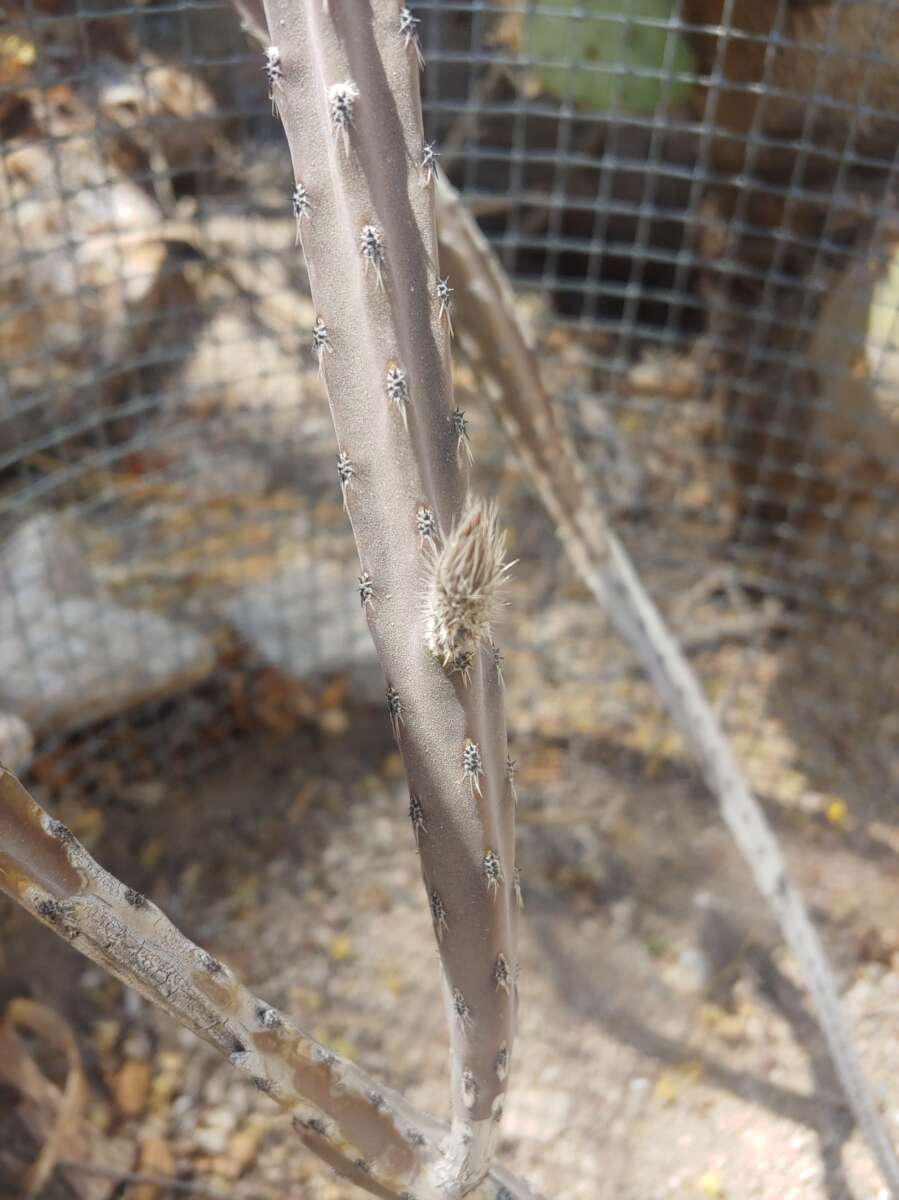
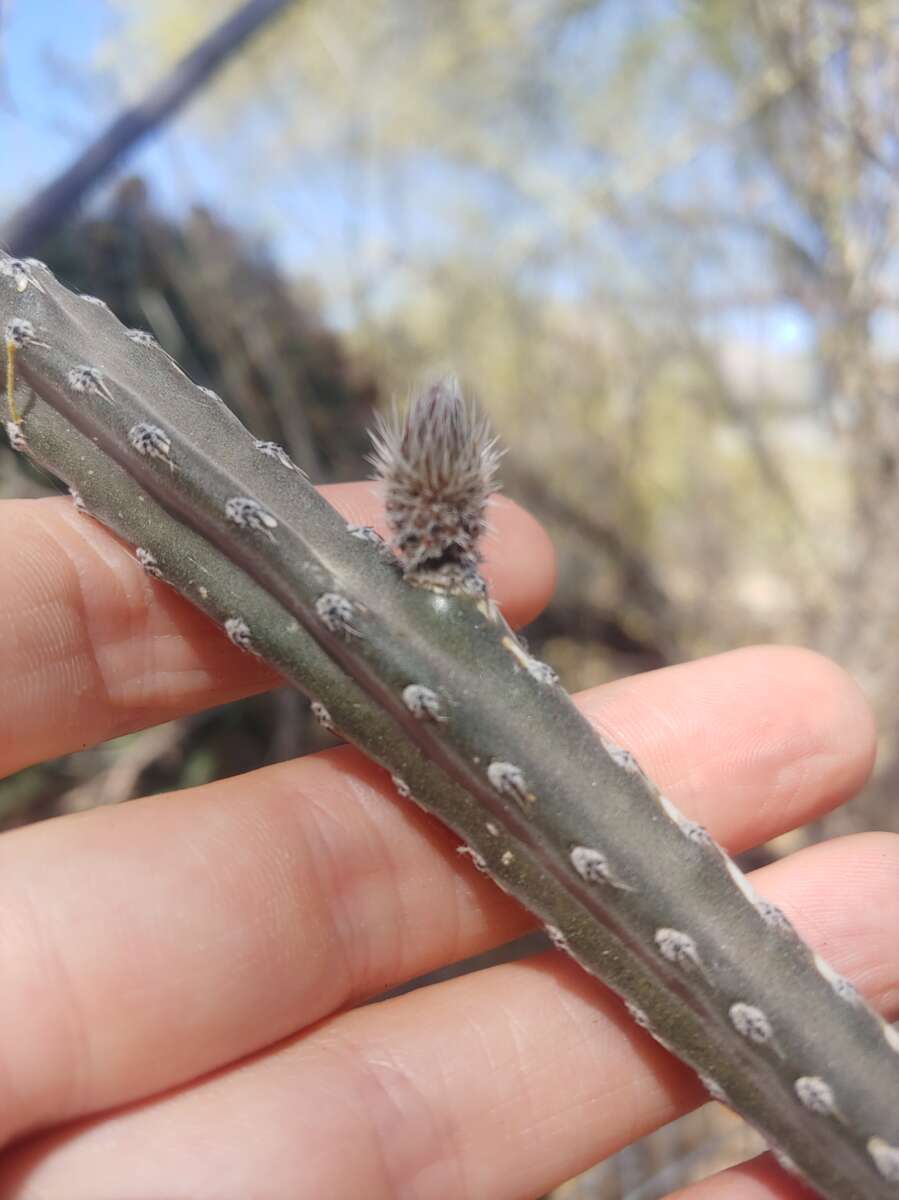
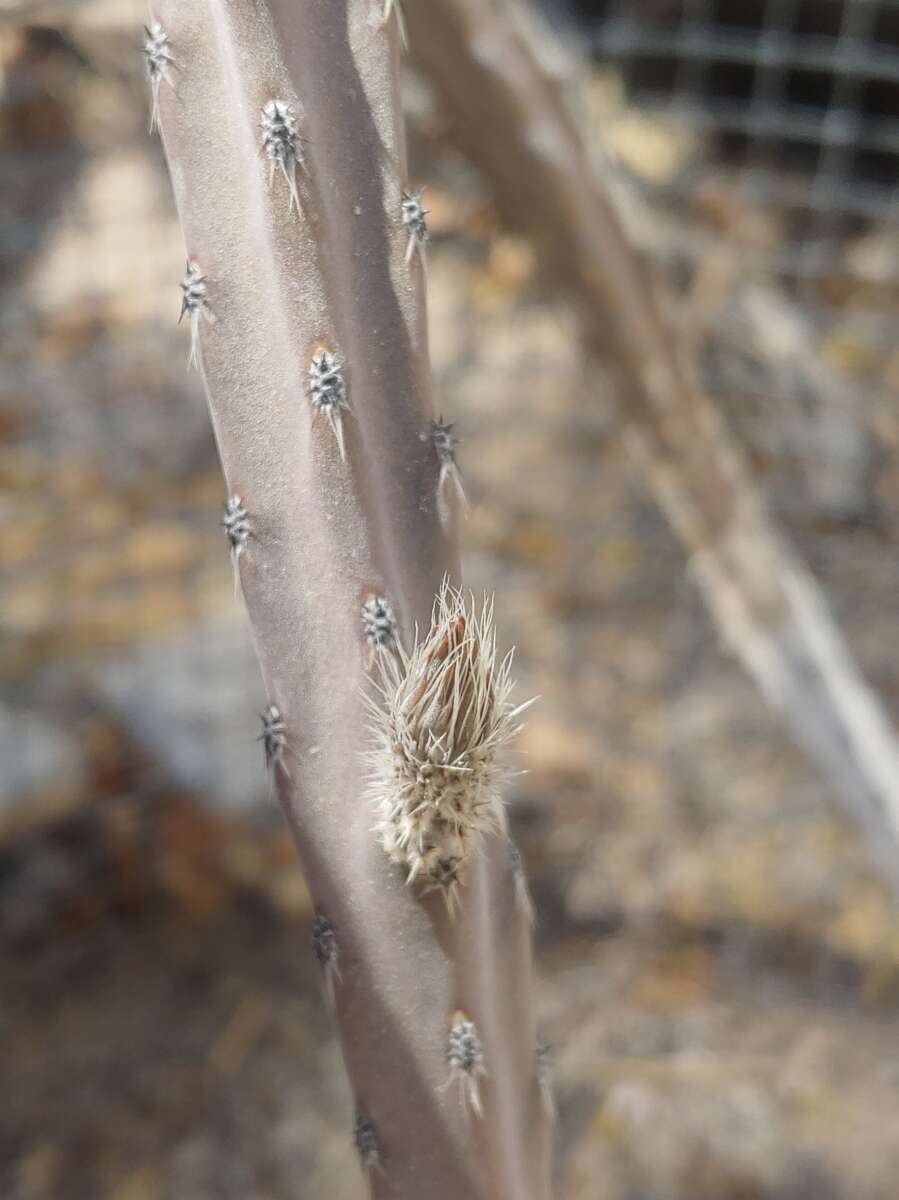
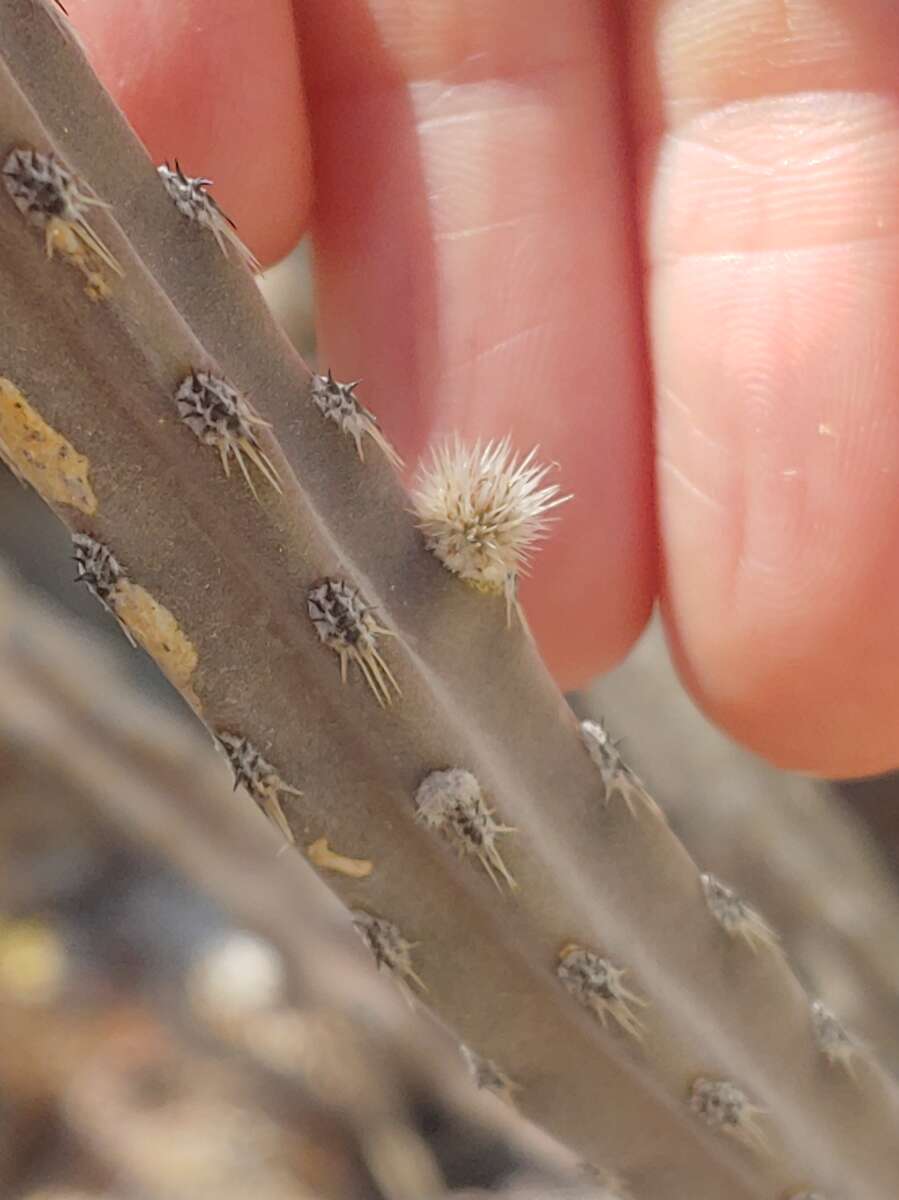
Chris Kibler, Gardens Manager at Tohono Chul, is watching the Queen of the Night cacti and measuring the flower buds at least twice a week now. Most of them are showing new growth thanks to the plentiful winter rains we received. As of today, Chris has found fifteen Peniocereus greggii flower buds; some others are too small to tell. Four of the buds are located right outside the Children’s Garden near the Desert View Trail.
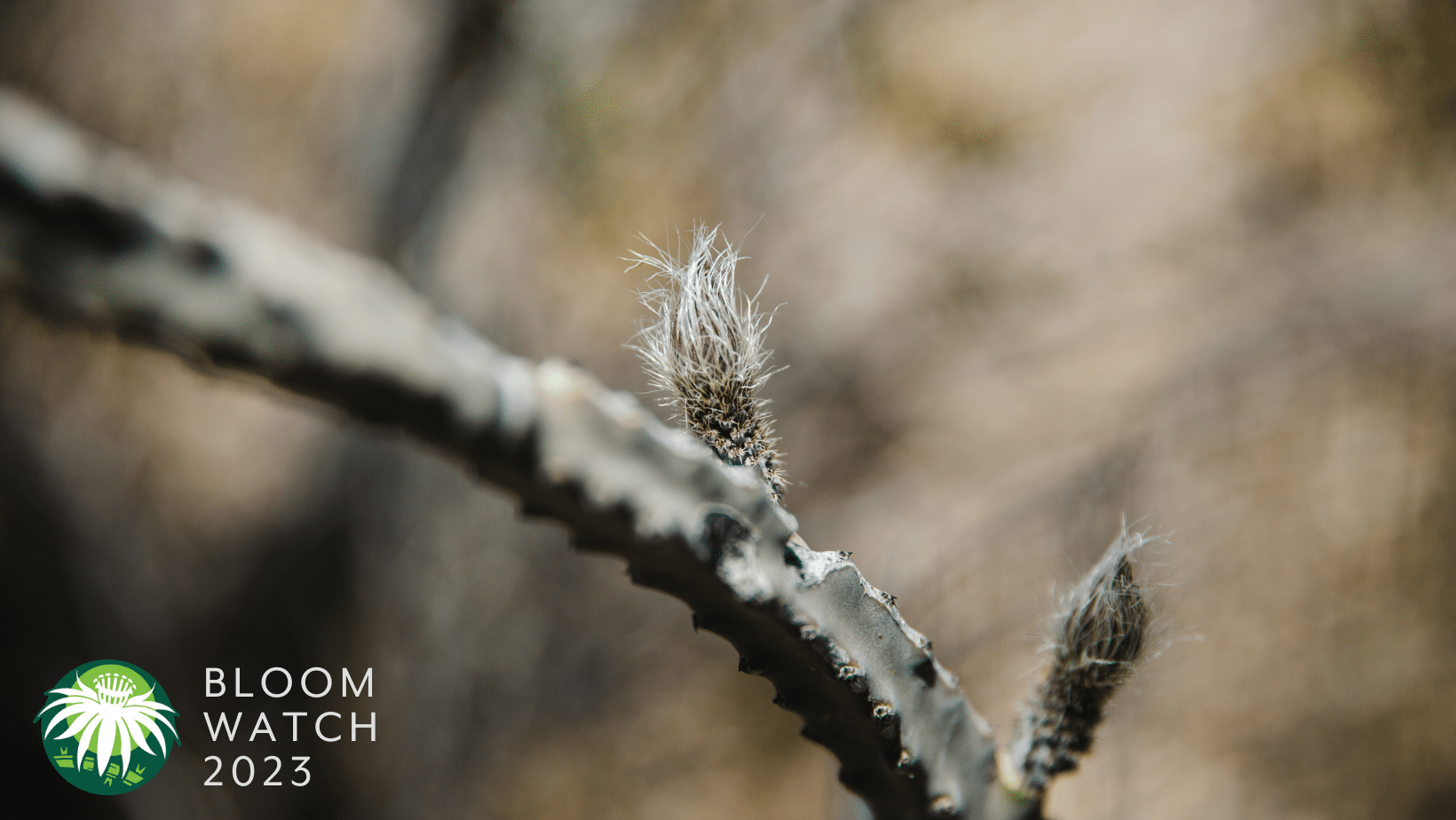
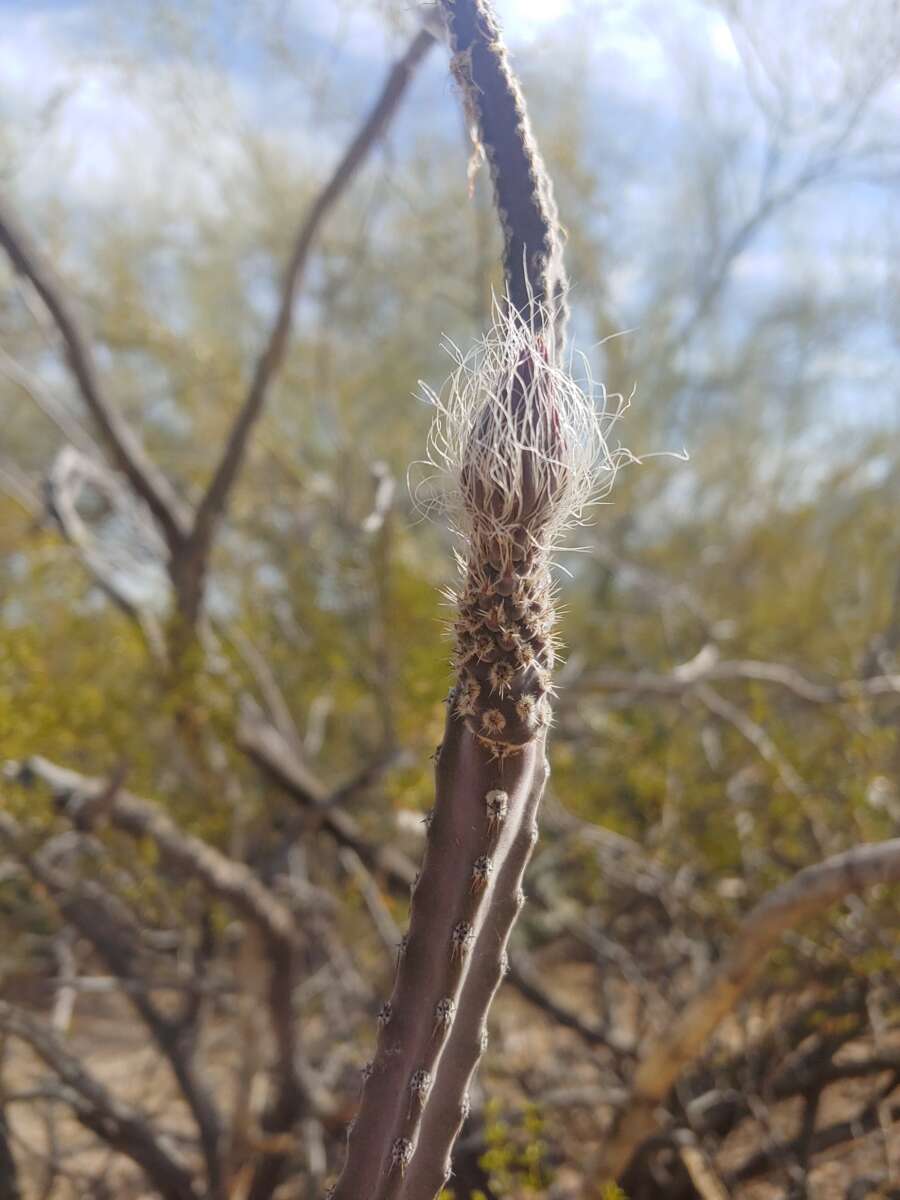
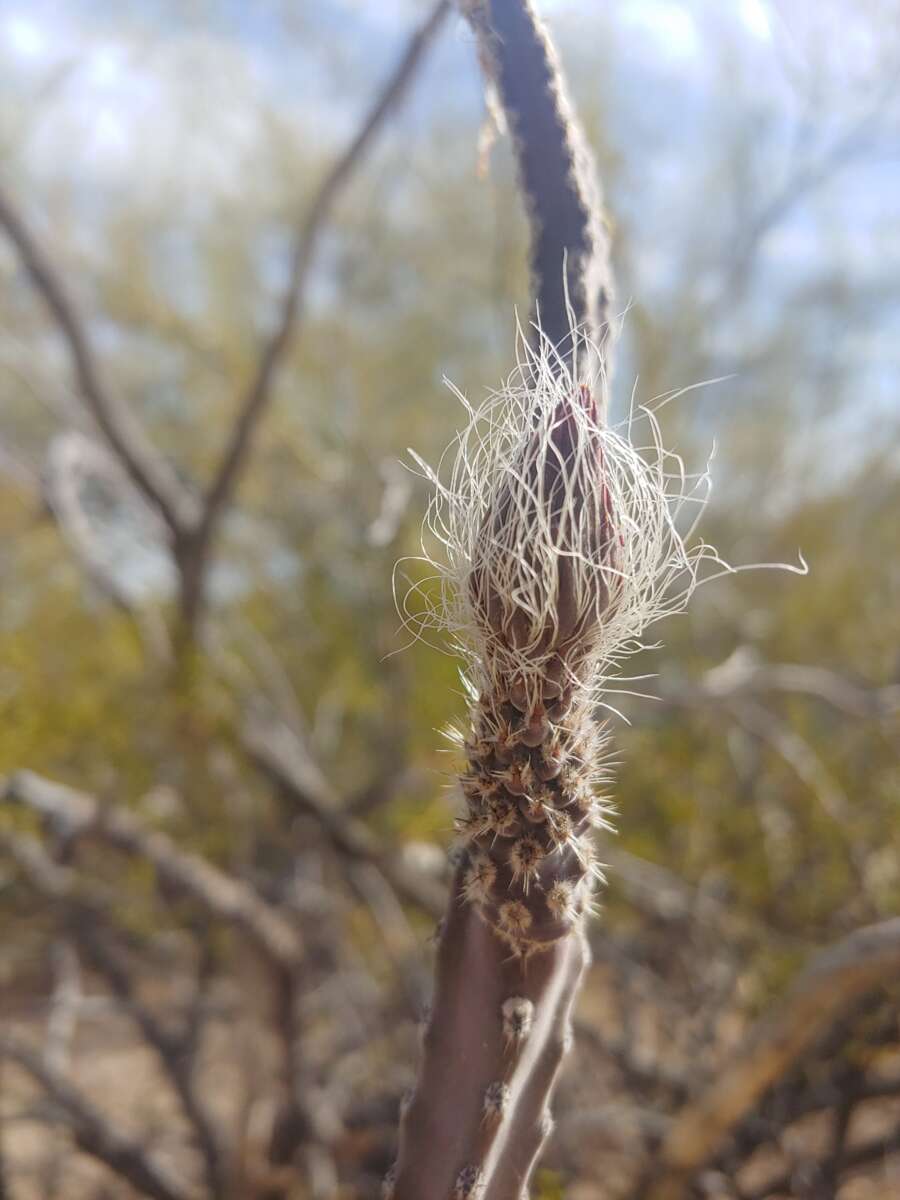
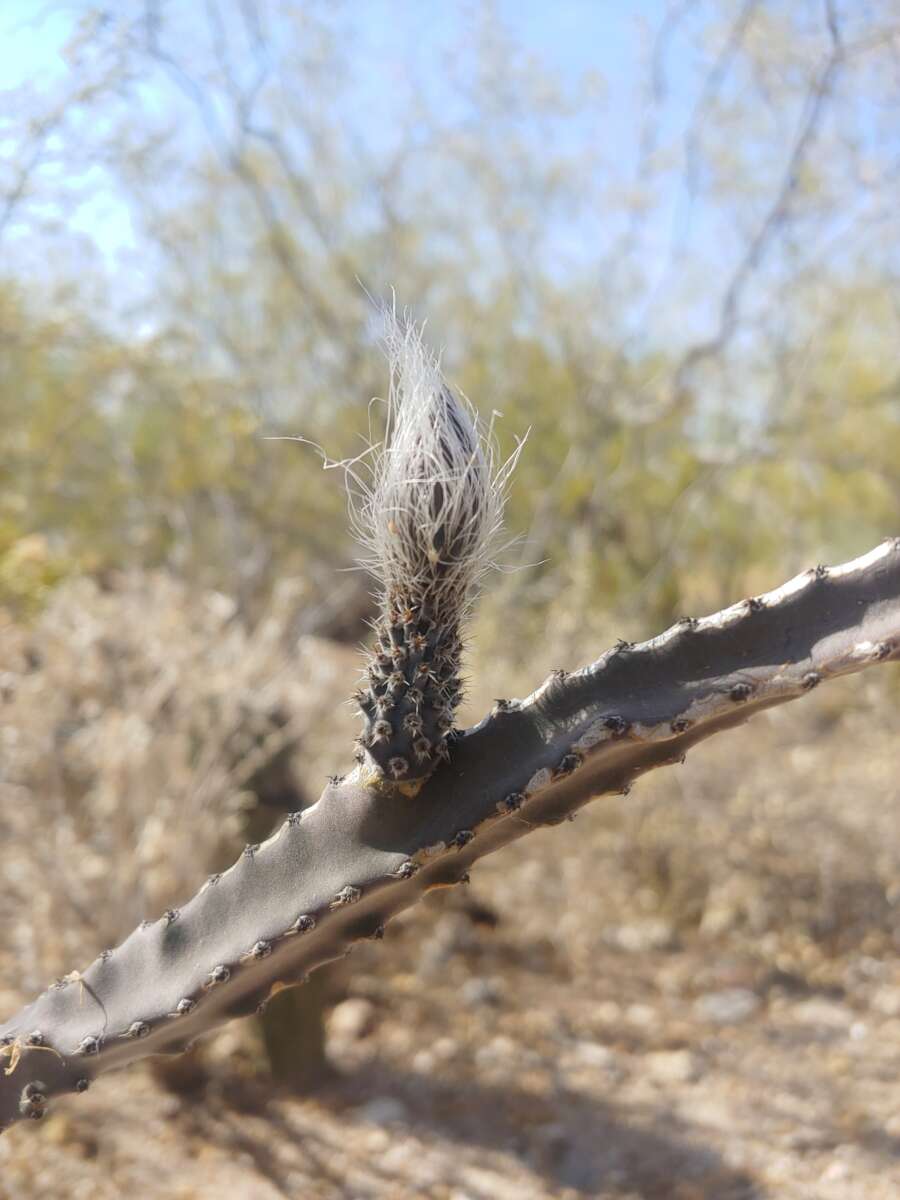
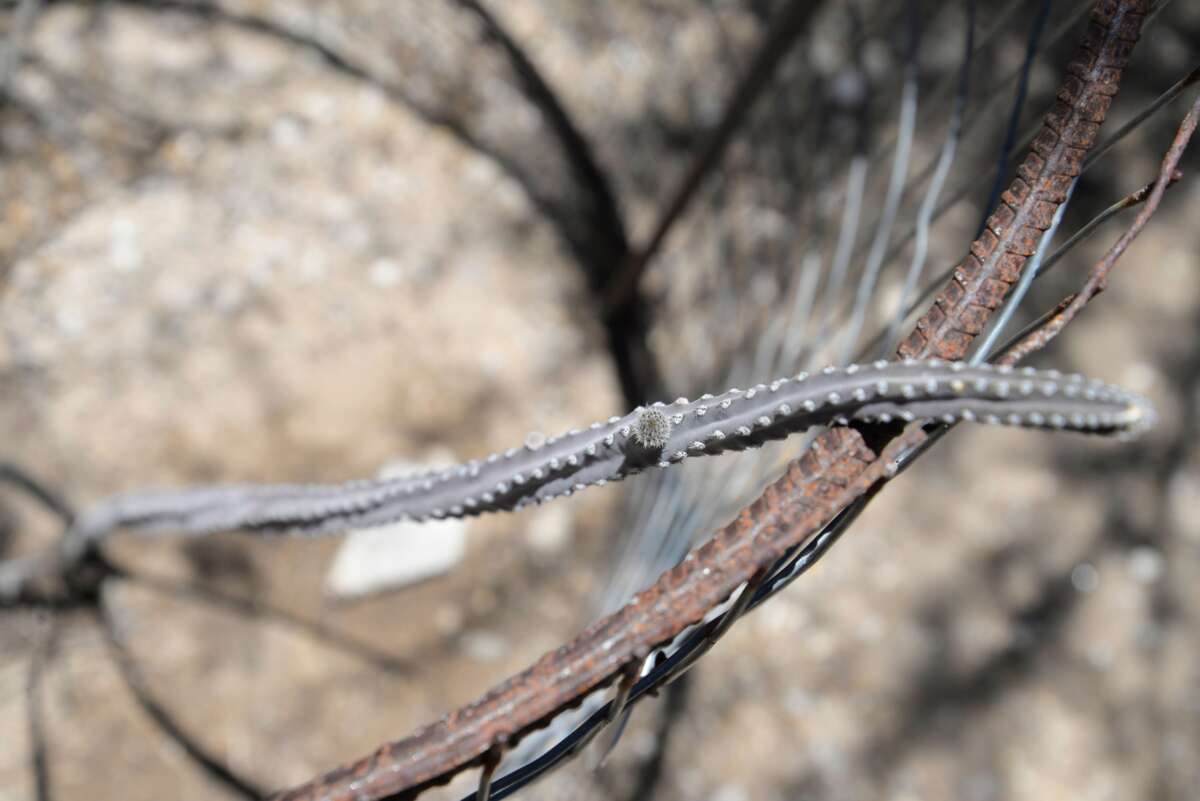
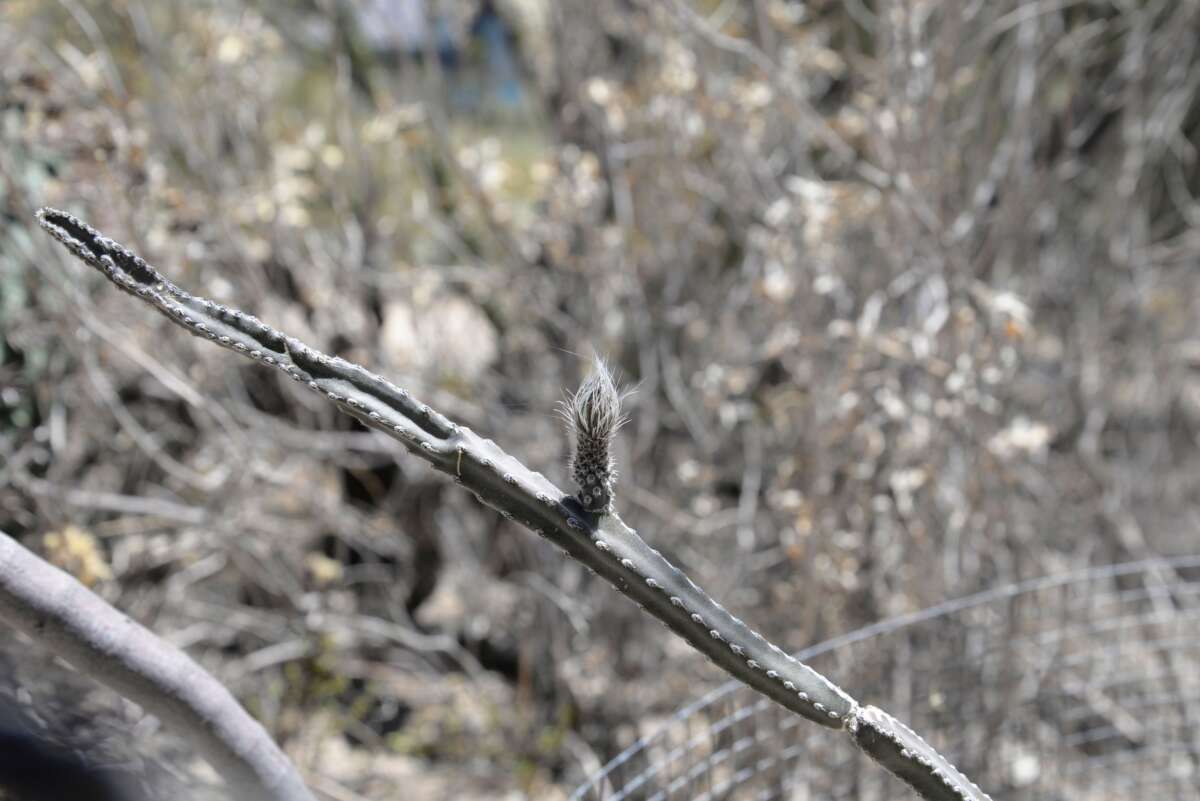
The fuzzy white branch tips and buds are the telltale signs of new growth beginning. The Queen is waking up.
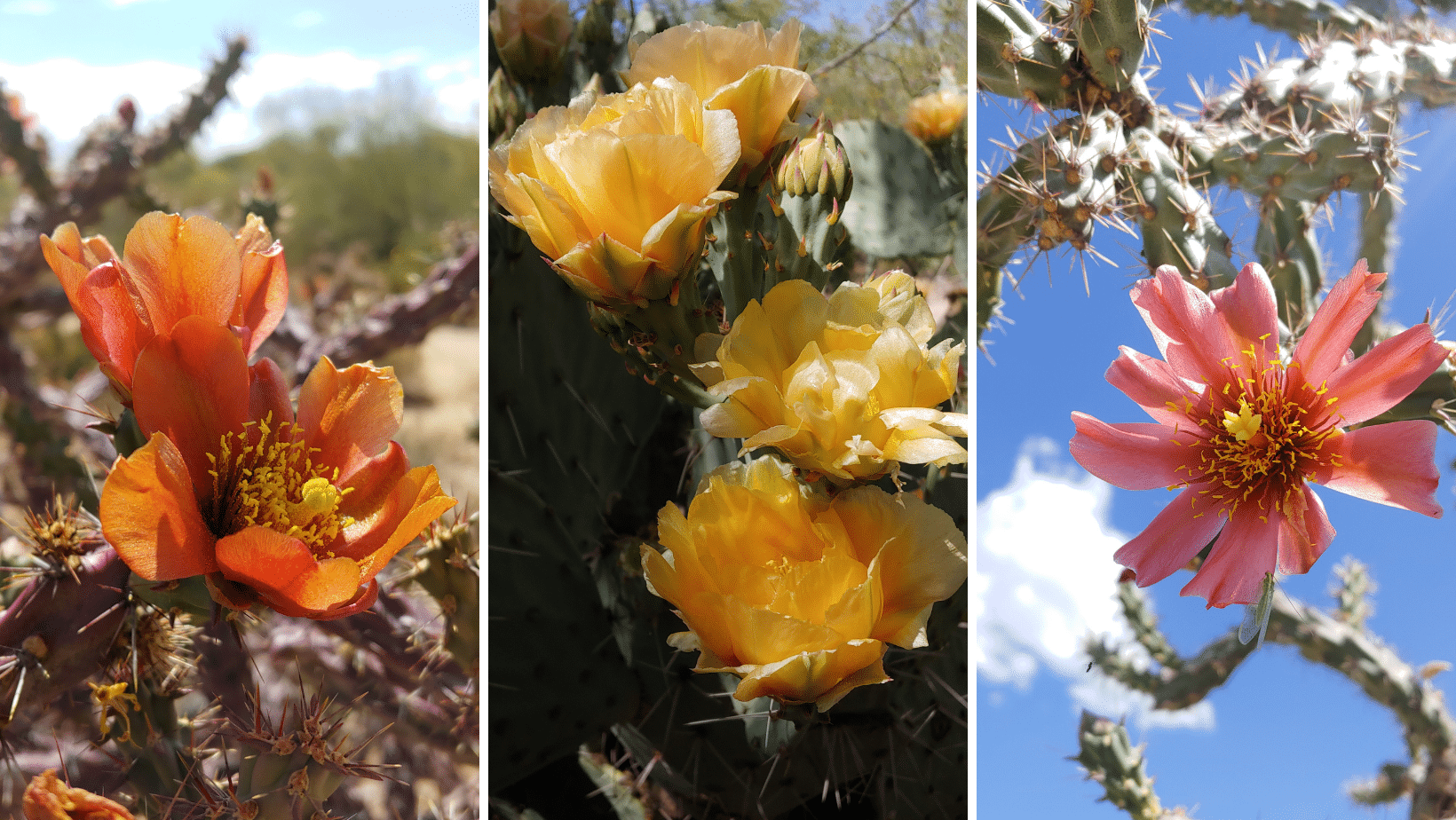
Aside from these night-blooming cereus buds, The North Loop is brimming with a vibrant spectrum of cactus blossoms. We highly advise taking a leisurely stroll while you await the arrival of The Queen!
Rain, surprise. Snowy fruit. Bathing in the scent. Beetles hide in prickly pear blossoms, Goldfinch gather chia seeds. Quails hurry, lizards lounge. The Queen stretches; her white hair begins to grow.
By Tracey Till, Propagation Associate
We are estimating about 4 to 6 weeks away from the big night! Stay tuned for weekly updates.
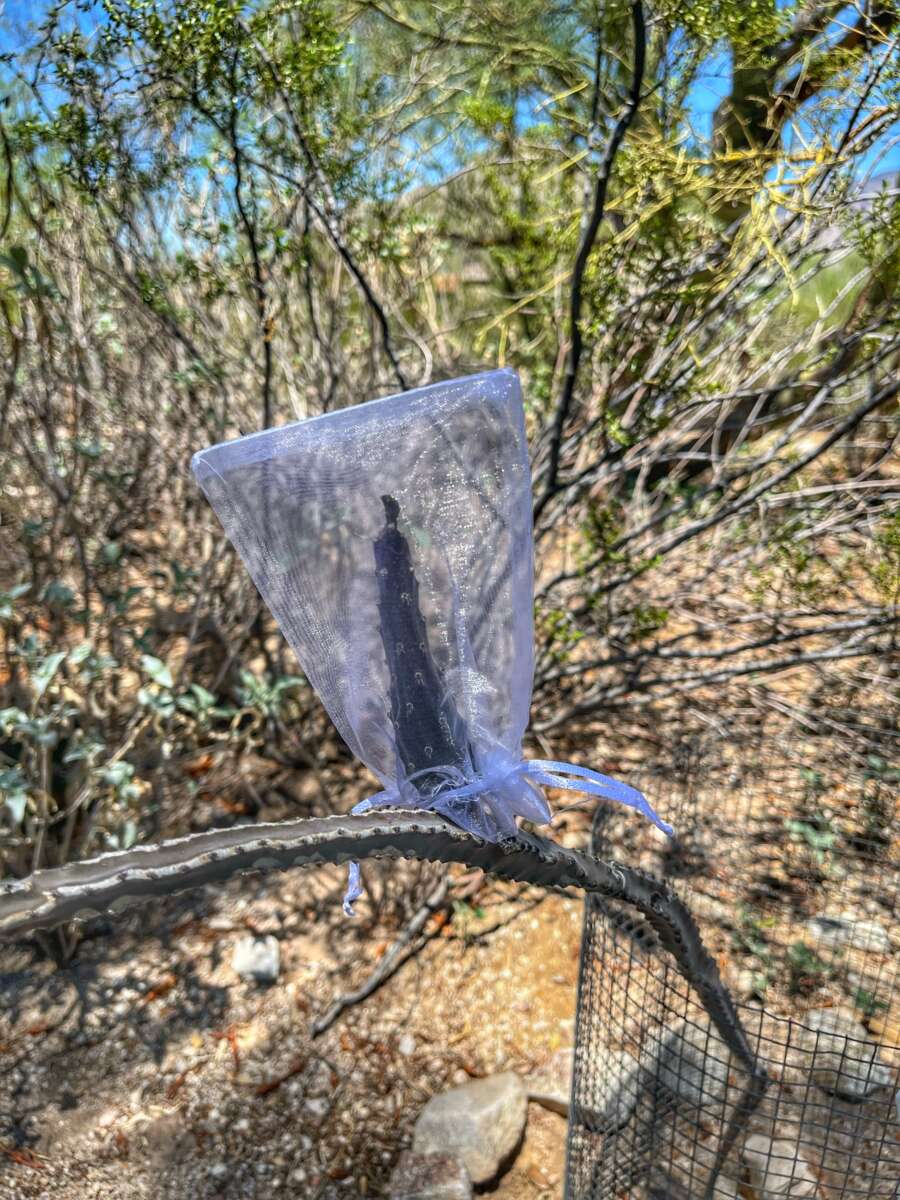
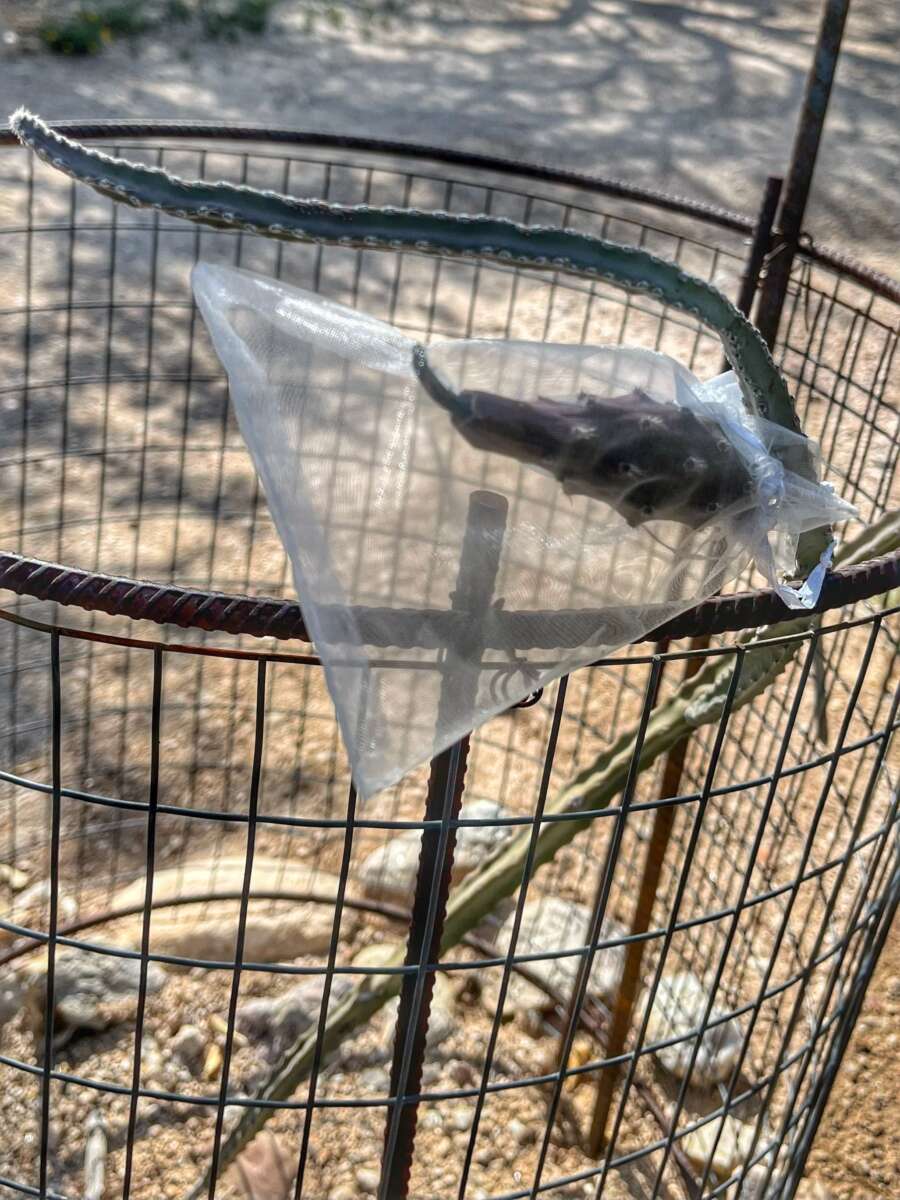
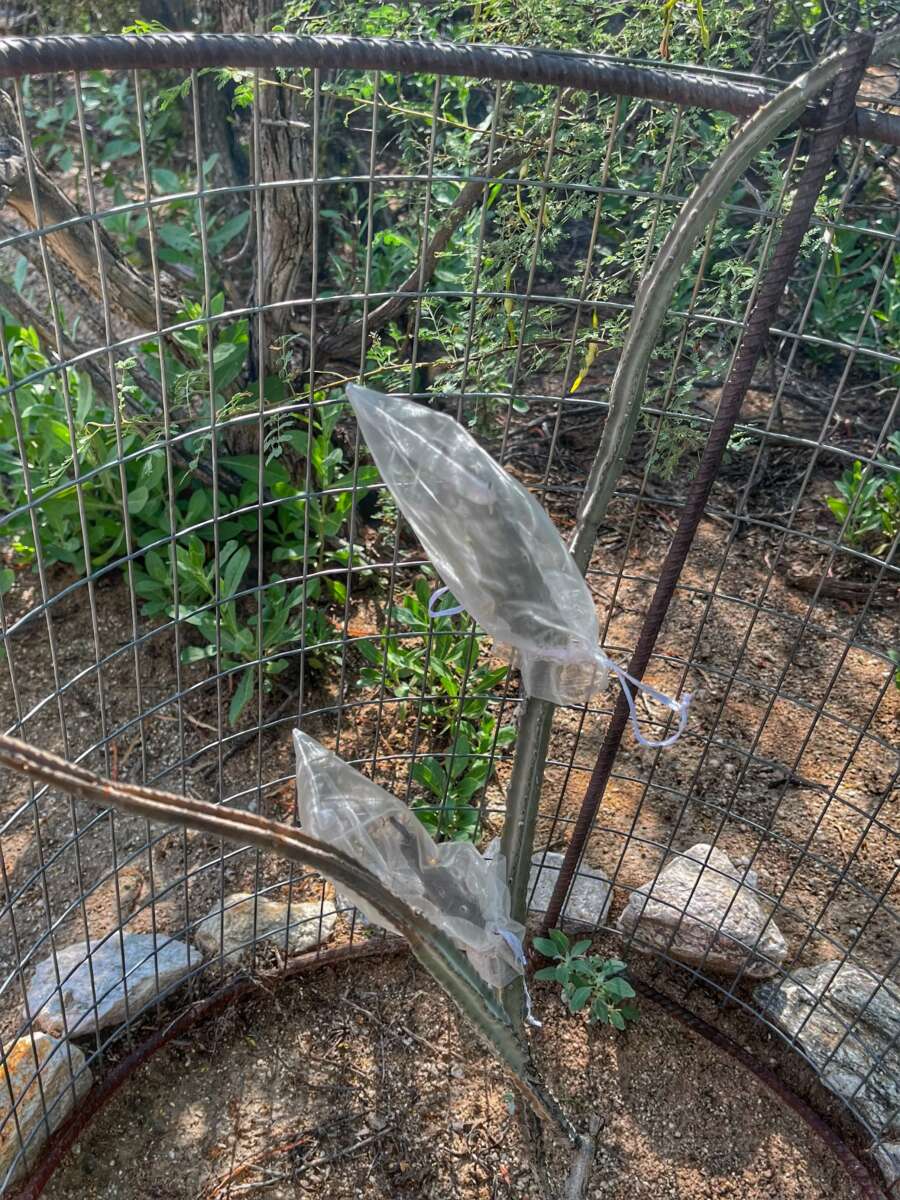
We take our Peniocereus greggii quite cereusly, but rest assured we are not dressing up The Queen for her coronation! The white organza bags you see covering The Queen’s ripening fruit allow sunlight and air in while keeping pests out. This simple protective measure will ensure we harvest the fruit before hungry packrats beat us to it. When it’s time, the Propagation Team will harvest the fruit, then cut it in half to scoop the seeds out of the interior. The seeds are then rinsed in a sieve, dried, and finally stored in our seed collection until it’s planting season.
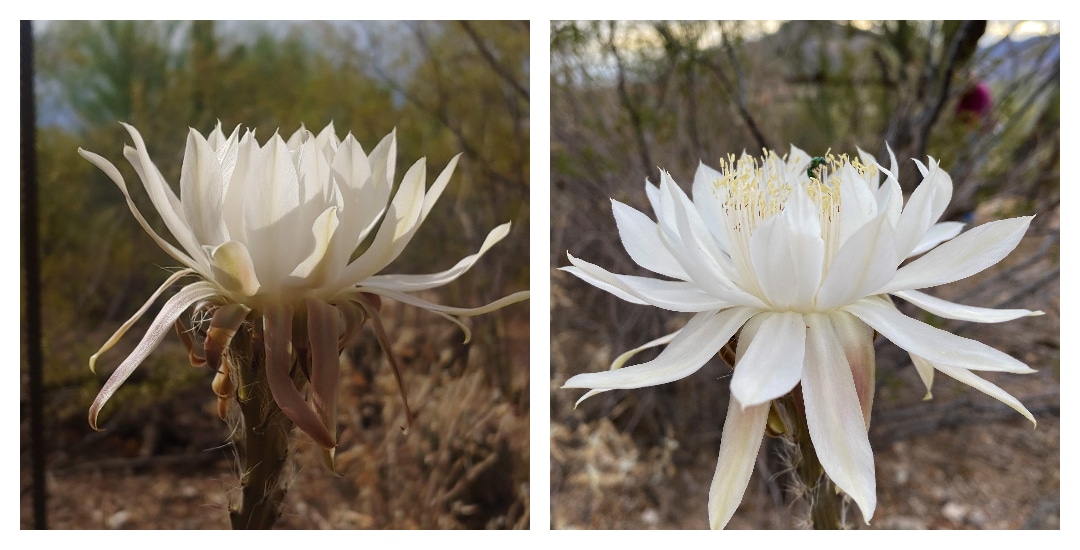
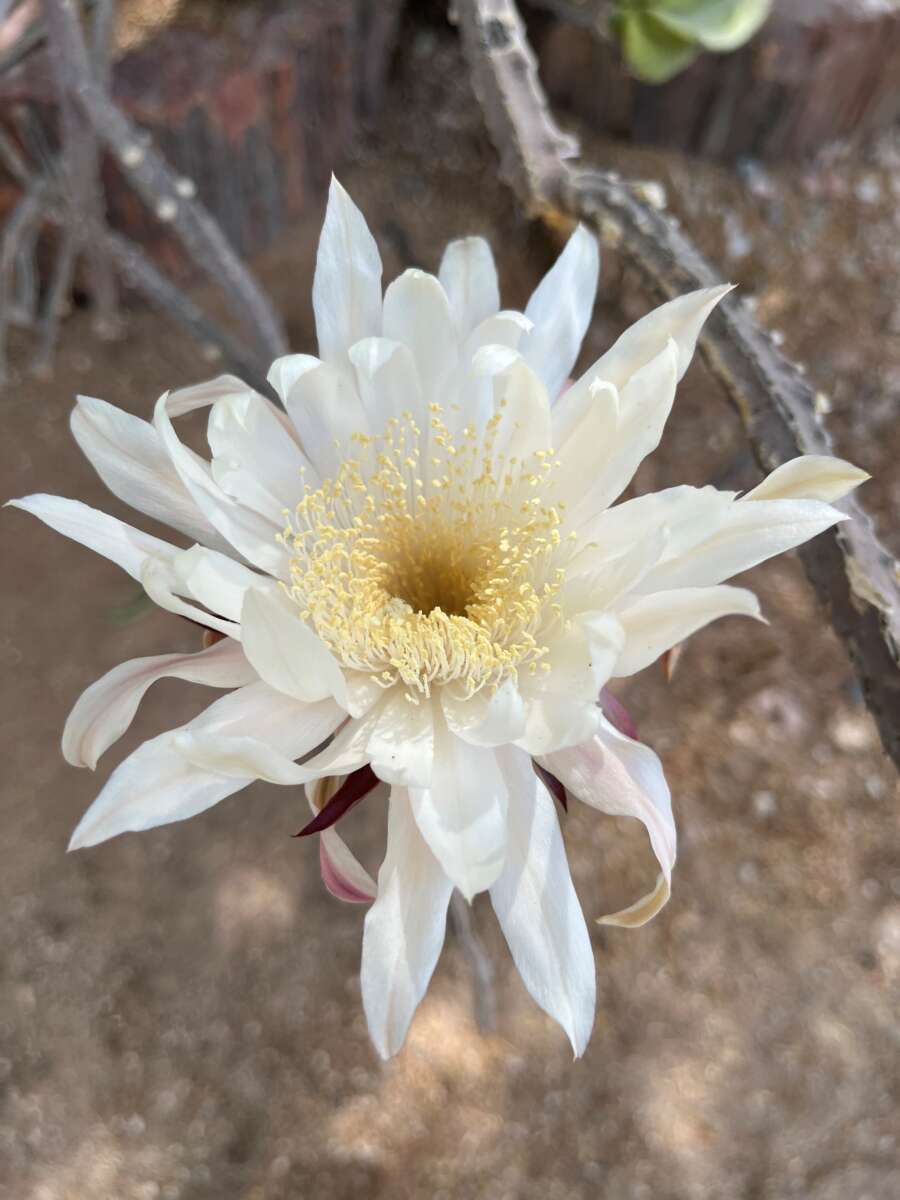
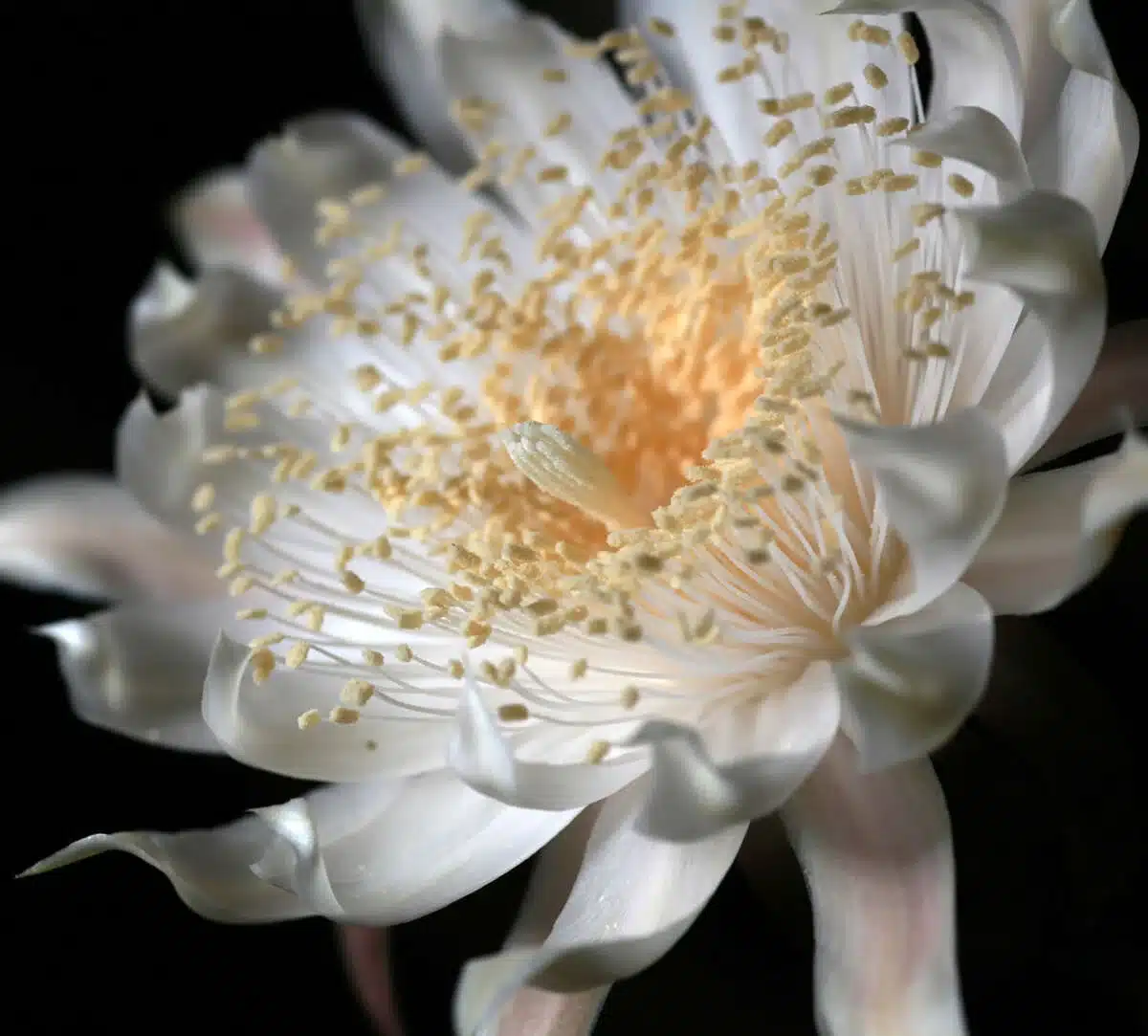
Peniocereus greggii bloom in mass for one or two nights only. The mass-blooming increases chances of pollination. The highly aromatic blooms attract pollinators like the white-lined sphinx moth (Hyles lineata) who use their remarkably long proboscis (tubular organ for sucking) to extract nectar from flowers while transferring pollen from one flower to another.
After pollination, ovoid fruits form. The fruit is typically three inches long and turns bright red to orange when ripe. Ripe fruit attracts birds who savor the fleshy fruit and disperse the tiny black seeds in their droppings. Since germination in the wild is never guaranteed, we are proactively collecting the ripe fruit in the next couple of weeks to ensure future generations of Queens and the survival of our unique living collection.
Here’s How You Can Help!
We are asking you, our plant-loving community, to help ensure the survival of this extraordinary living collection! But before you do, ask yourself:
Do you have a Peniocereus greggii?
Did your Peniocereus greggii get pollinated this summer?
Not all night-blooming cacti are Peniocereus greggii, so are you sure it’s a Peniocereus greggii?
If you answered “yes” to all of the above, please send images of your plant and its fruit to info@tohonochul.org so we can confirm the identification and coordinate acquisition.
Not Sure If Yours Is A Peniocereus greggii?
Here’s how you can tell:
5-face, sometimes 4 on the main stem of the plant
Areoles (place where spines grow out) are just over 1/16 of an inch (~2 mm) in diameter, just under 1/2 inch apart (~10 mm), oval in shape with spines sticking out along the length of the stem with more spines pointing downwards than upwards
Stems are 1/2 inch to 3/4 inches in diameter. If 1 inch or wider, then it is likely not Peniocereus greggii
Peniocereus marianus, Peniocereus maculatus, Peniocereus johnstonii are similar, however they are not found naturally in the wild here (originally from Southern Sonora, Oaxaca, and Baja California respectively), and tend to be wider than greggii, 1 inch to 1 and 1/2 inches in diameter
The more fruit we receive means the more seeds we can collect and propagate. And, if you would like to keep your seeds to further your special collection, be sure to use the organza bag technique to safeguard the fruit until harvest time.
As is her sovereign nature, 20 of the Queen’s blossoms bloomed this past Saturday night with the last two following suit Sunday night. Unfortunately, after months of watching and measuring, we were not able to tell the mass blooming was imminent until it was too late to call it for an in-person Bloom Night. We apologize we were not able to share the Queen with all of you. We have a deep respect for these mysterious plants and for all who have closely observed them over the years.
“I am very disappointed, to say the least. But I’m trying to think of the positives. I can only hope the pollinators took full advantage of the quiet night to do their ‘magic’ of pollinating our blooms, so that we may have seed for the next generation of Tohono Chul Queens.” -Shauna Smith, Gardener of Tohono Chul.
We are sharing what we captured of the big bloom on camera. Check out Tohono Chul’s Instagram and Facebook pages for photos as well as to access our first Instagram Live Bloom Night video recorded on Sunday, June 26th.
Community members have shared their own bloom nights with us as they watched blossoms unfurl in yards and parks.
courtesy of Flora Yeecourtesy of John Williams at Arthur Pack Regional Park
Late Monday morning Gardens Supervisor, Chris Kibler along with Gardeners, Shauna, Aaron, and myself went for a drive in the carts to take a look at what’s happening out on the Desert View Trail. The rain from the previous Friday had left a visible path that the water took as it sifted through the pebbles and sand, forming little rivulets. The haze was gone from the blue sky.
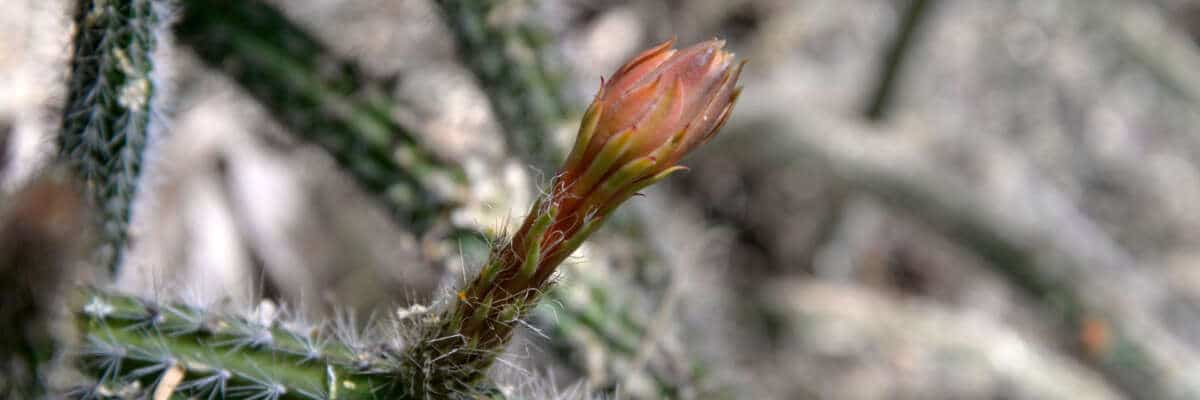
Shauna has been giving the Queen supplemental water and has found a total of 24 flower buds. Chris has been taking their measurements every day. A handful are ahead of the rest measuring about 70 millimeters long, while most are somewhere between 50-60 millimeters (about as long as my pinky). They’ve been changing – the reddish tepals, petal-like sepals, have become more distinct. When buds reach 60 millimeters they can be as little as one week away from blooming! We’ll keep you posted!
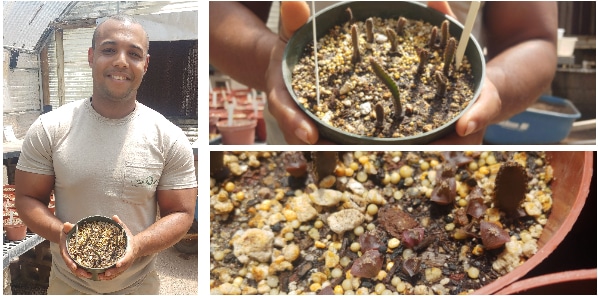
Tohono Chul has our very own plant nursery. Jordan Collins, Propagation Greenhouse Supervisor, is leading the volunteers in growing Peniocereus greggii from seeds of fruit harvested last fall right here on the grounds in addition to some Peniocereus marianus from the seed collection. According to some sources, seeds can take up to 180 days to germinate. It’s exciting to have had some good luck with the seedlings! Nature can deal us so many challenges growing in the desert, it’s important to savor success.
Bach’s Cactus Nursery’s resident Queen bloomed early last week. Tohono Chul volunteer and Bach’s Cactus employee, Astrid Randall, snapped a photo.
Chris Kibler, Tohono Chul Gardens Supervisor, says The Queen may bloom one week from now if the flower buds continue to grow at their current rate. He says the high heat and increased humidity is encouraging them. The buds are 40-50 mm long now. And yet, they could stall growth if it’s not the right time.
“If they are going to bloom, I will let everyone know,” says Chris.
We will share weekly updates with you all until Bloom Night.
Peniocereus greggi bloom at Bach’s Cactus Nursery
Desert View Trail Observations:
An orchestra plays,
Loud cicada trills in percussion and soft woodwind doves float on the breeze.
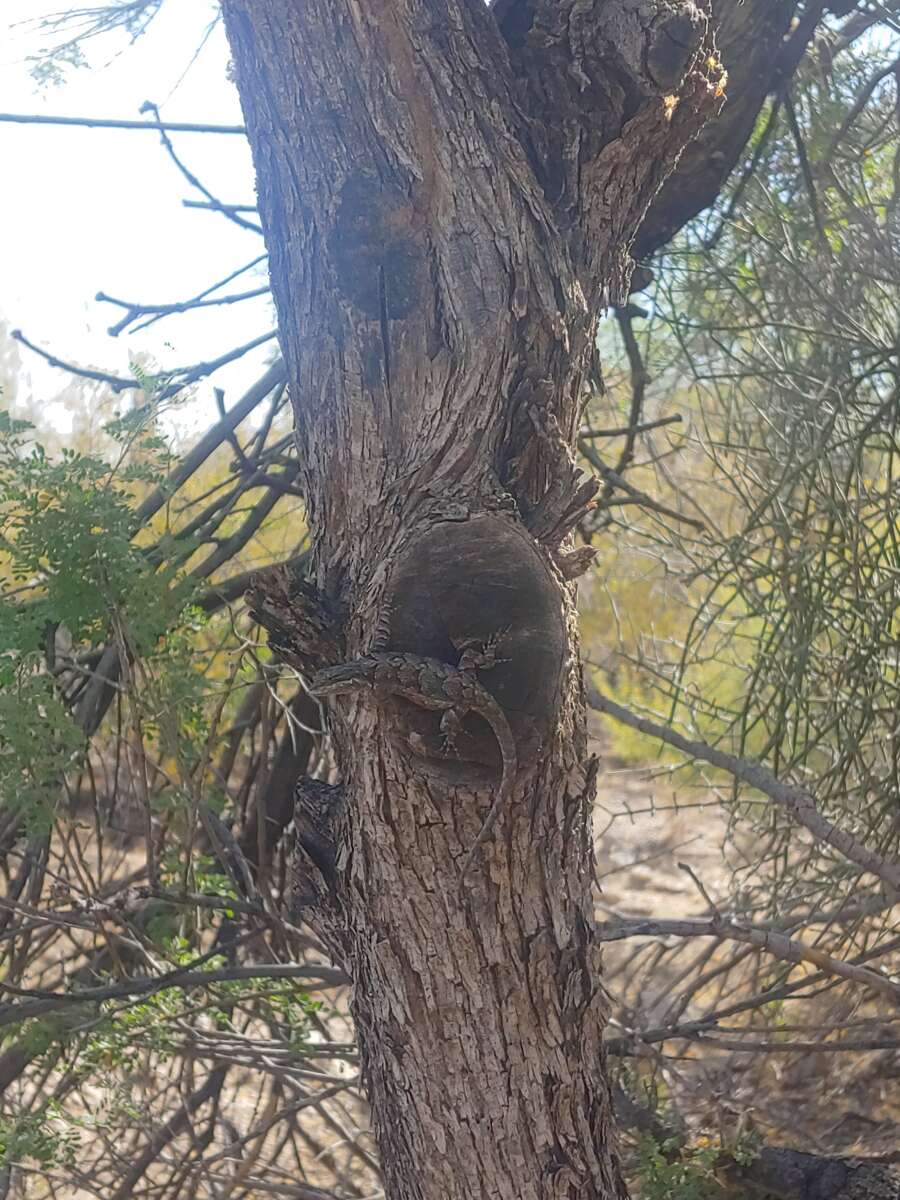
Palo verde, a twisting trunk chiseled by beetles, shelters the Queen from the bombardment of photons.
Fuzzy flower buds have grown. Almost ready.
Going farther along the sizzling trail,
Burrow refuges abound.
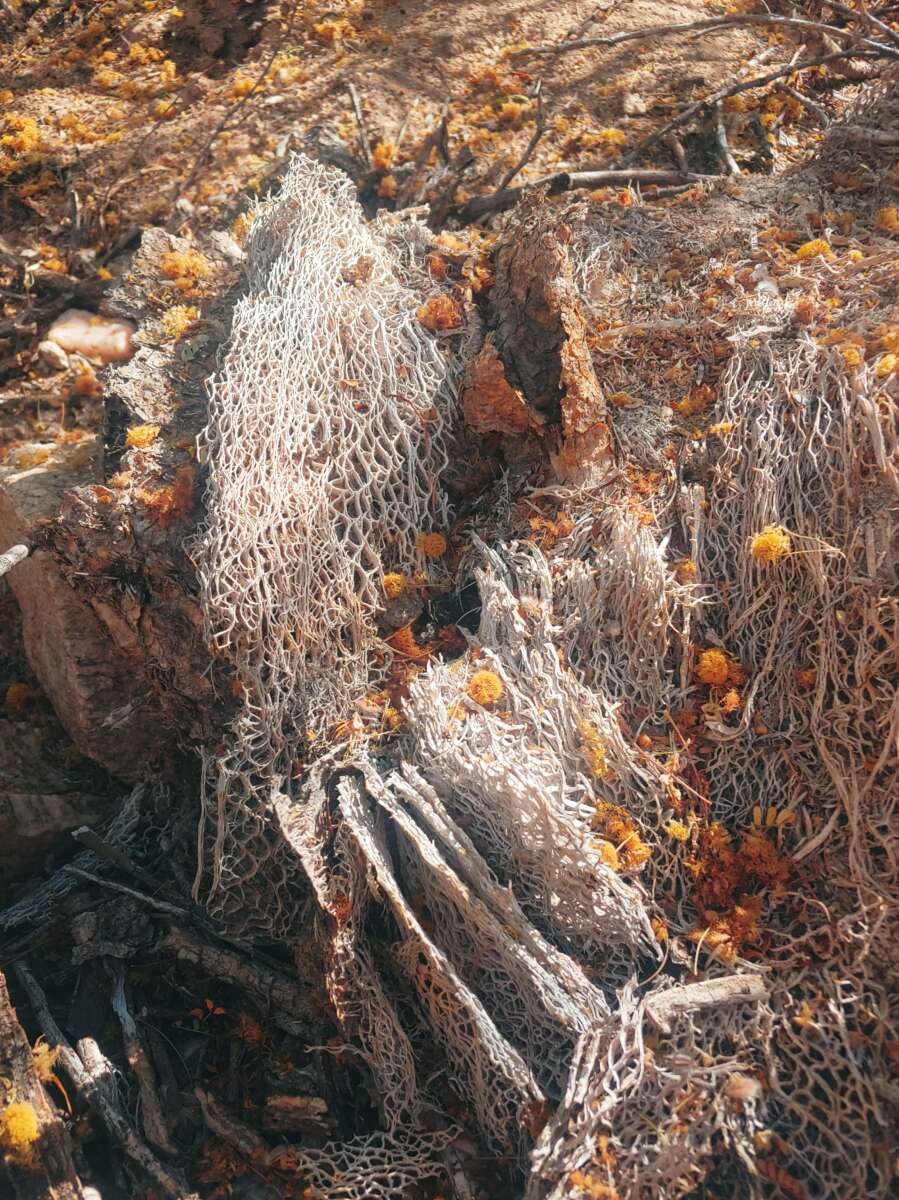
The lacy skeleton of an old prickly pear rests in the dust.
Beyond the silver and tan,
The green glow of acacia trees hints at an underground river. It hasn’t rained in 80 days here after all.
We must wait just a little bit longer.
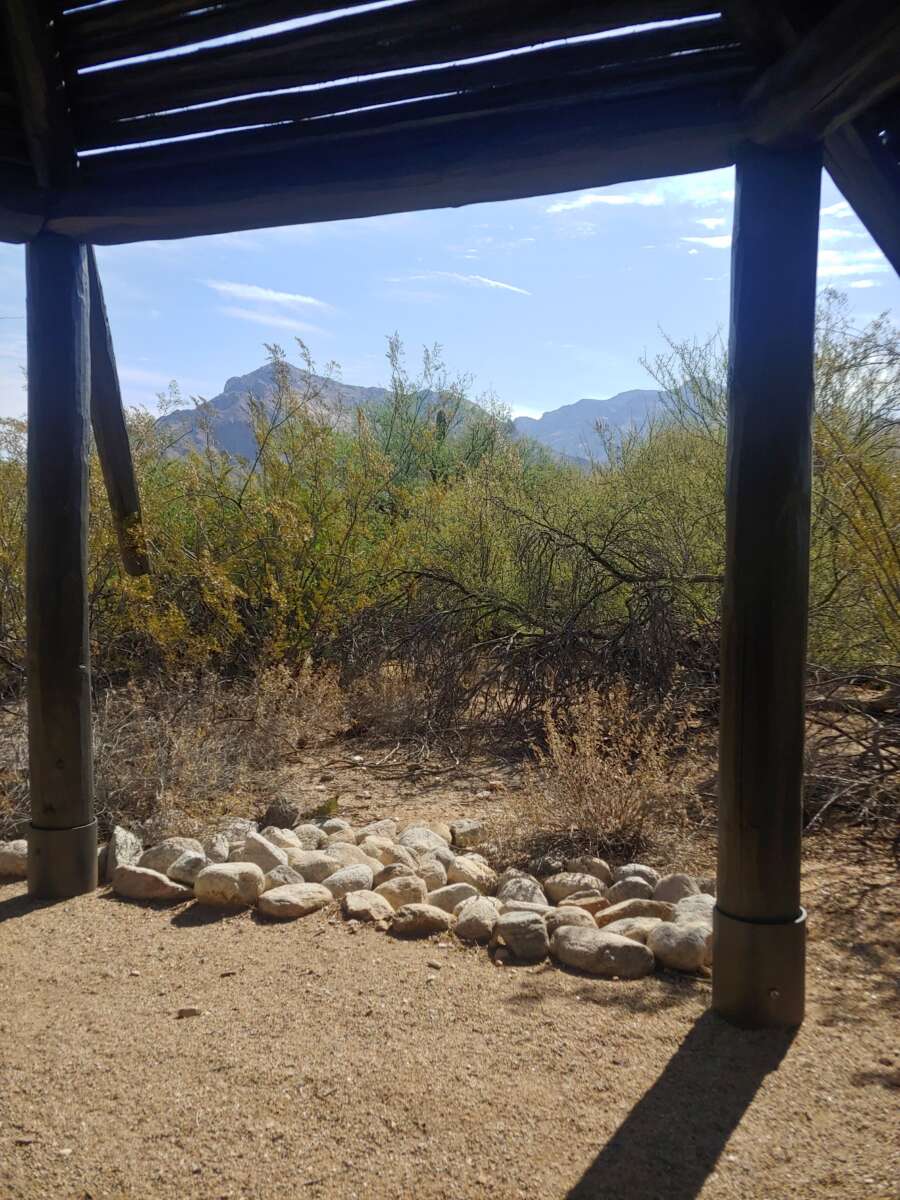
A desert cottontail grooms in the shade of the log ramada.
It’s 4 o’clock in the garden, and the hustle and bustle of early afternoon is over. I relinquish my post at the greenhouse and head for the Desert View Trail. Startled by my sudden presence, a quail family scampers single file across the path. The landscape is painted with chartreuse creosote bushes. They’re covered in fuzzy ripe fruits that split into segments at the touch. The yellow of spring palo verde flowers have given way to plump bean pods. Burs stick to my shoes as I crouch near a night-blooming cereus (Peniocereus greggii) nestled under a tree. I’m looking to see what our Garden Supervisor, Chris Kibler, is talking about.
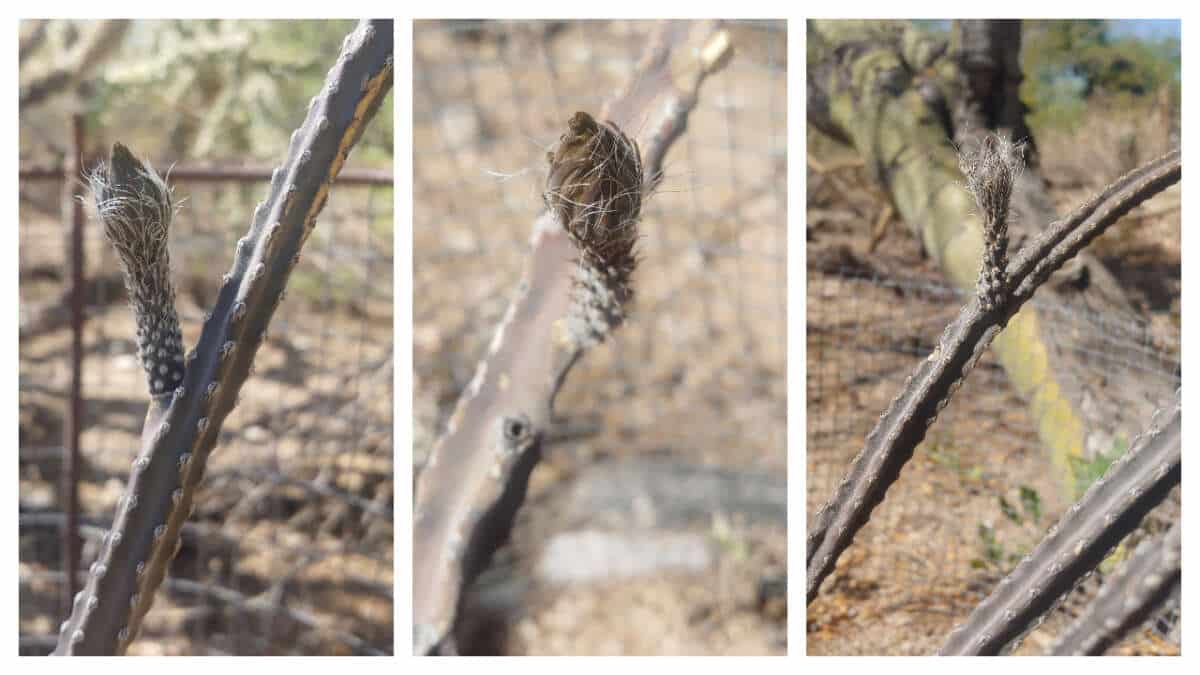
Chris has watched and deciphered the progress as the pointy buds have grown up to 3 cm – just over an inch. He explained that if buds are clearly rounded (left) this is a characteristic of new branches, while pointed buds (right) become flowers. The twelve special plants that have held onto their buds despite herbivory from woodrats and squirrels are scattered throughout the trail. There is no sign of blooming yet – the big night is at least two weeks away. The Queen is waiting patiently for the right time.
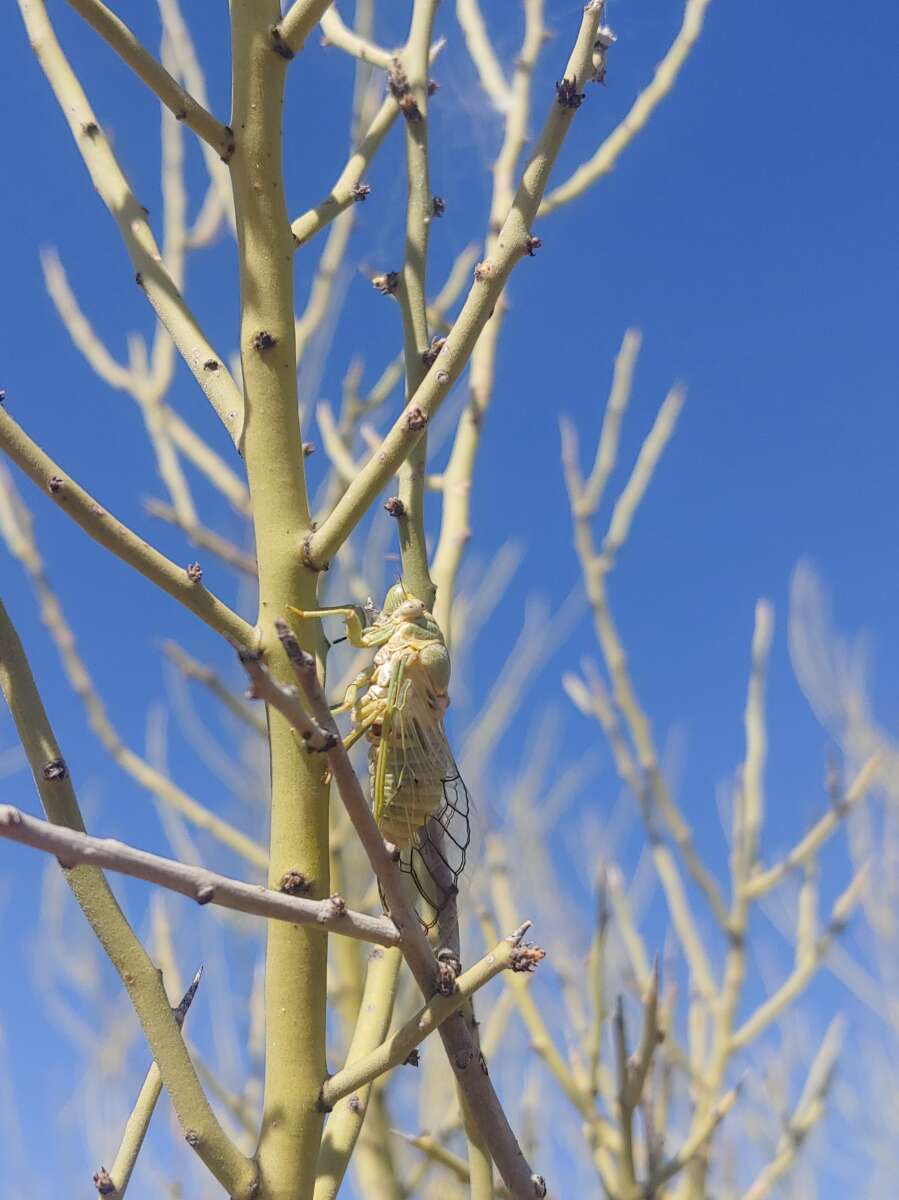
As I walk through the desert, I hear a buzzing… tch tch tch tch tch tch. The sound strangely seems to be coming from more than one direction. As I get closer, it pauses until I stop moving. After a while, I discover that cicadas are taking turns calling from the same palo verde tree. They blend in perfectly with the pale green bark.
Okanagodes gracilis is one of four dozen species of cicada that can be found in the state of Arizona.
My water bottle is empty now, which means it’s time to turn back. This time of year, water takes on an importance like that of oxygen on the moon. A precious thing.
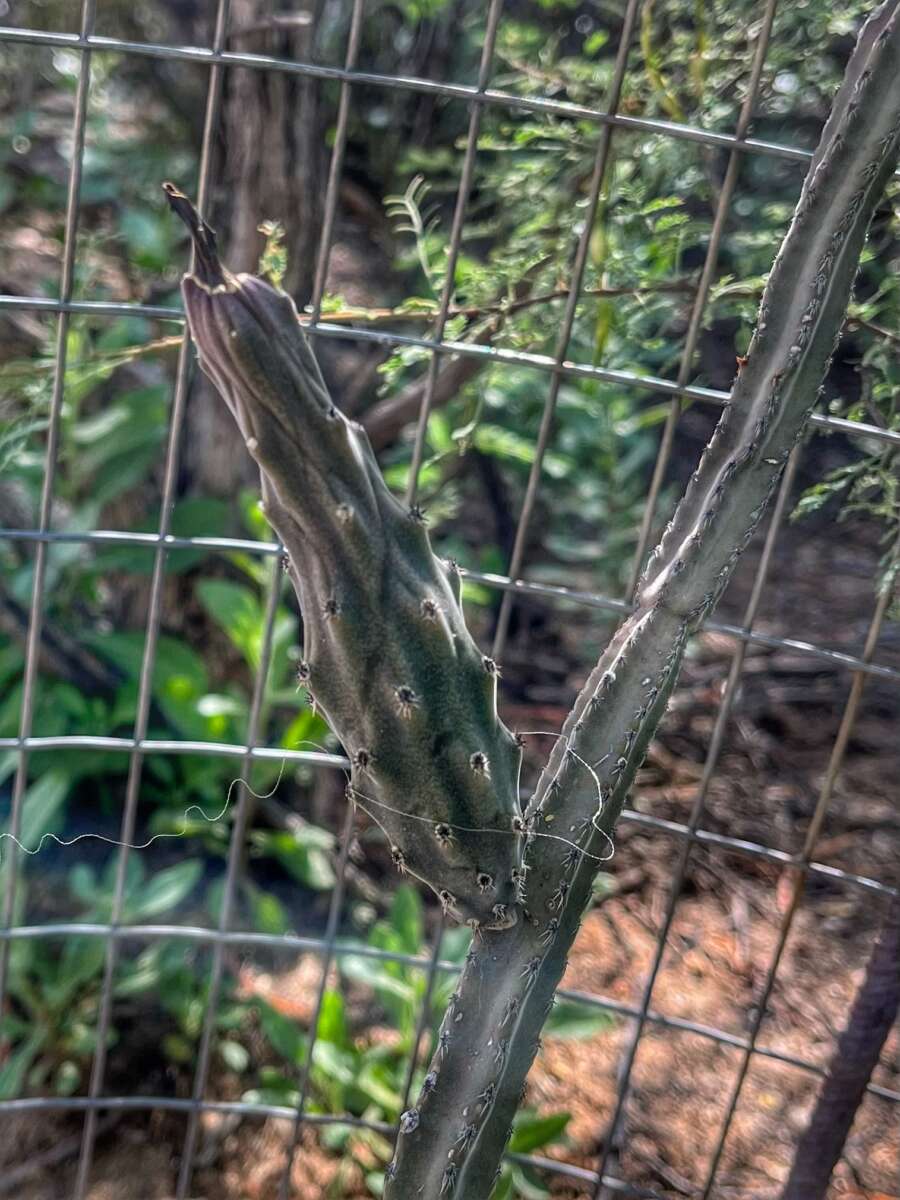
While we wait for Bloom Night, I encourage you to go on a scavenger hunt. You can check out the buds and blooms currently covering the snake cactus (Peniocereus serpentinus) in front of the La Galeria Museum Shop. You can catch the open blossoms at 7 a.m. when the gardens open. Admire the diverse collection of potted night-bloomers under the patio of the Education Center. Enjoy a meditative hike on the Desert View Trail and search for the cylindrical cages that contain the delicate silhouettes of the night-blooming cereus, Queen of the Night.
How time flies! It has been almost four months since you welcomed me as Tohono Chul’s Executive Director. The last time I wrote, I was just two weeks into my role. You have taught me so much.
While our gardens were bursting with beauty this spring, they also are in need of some TLC and a plan for their future. The Sonoran Desert climate can seem harsh for living things, but our plants and animals have evolved over millennia and adapted to this place. However, the last two summers were exceedingly tough and topped-off a 20-year drought. In 2020 we faced an extreme drought, and 2021 was the third wettest on record. A microburst at the end of August 2021 severely damaged over 60 trees and shrubs. Our 49 acres of gardens and grounds are an ecological system that is interdependent and complex. Therefore, planning the garden’s evolution to recover and improve will involve careful inventory, analysis, planning and design.
We are establishing a volunteer/staff team who will soon begin to inventory every tree, cactus, shrub, succulent and perennial gardens in the approximately 6.5 acre “core garden area”—from the entrance to the Education Center. This inventory will map and record the health, age, species, size, and location of every plant. This is an essential first step to determining our future plant collection and gardens. We have found similar plant inventories from 1994/95, so we will be able to compare to our plantings from 28 years ago! This project is expected to take many months and hundreds of hours to execute. We would love your support of this incredibly important project with your time or with a gift!
Community is everything. Without you, Tohono Chul would not meet the Wilson’s vision for people to “come easily for a few hours.” This spring, visitation has been the busiest in Tohono Chul’s history. Building from this success, we are testing new programs that expand experiences in our historically slower months and reaching out to others in Tucson that may not be aware of all Tohono Chul has to offer. This summer’s programming is geared to locals, with:
▸ Chillin at the Chul which extends our weekend evening hours with music, food and libations.
▸ Reviving children’s programming with our Desert Discovery Days and new partnership with Tucson Children’s Museum of Oro Valley on Saturdays with Nature Niños.
▸ If you are an early riser, visit us in the mornings as we are opening one hour early (7am) for garden strolls and the Garden Bistro is offering coffee, cool drinks, and light food in the Spanish Colonial Garden.
Throughout this summer, we will be asking for your feedback so we can modify and tweak our outreach and programs as we move through the next year. Please keep your ideas coming for what you’d like to see here— fall is right around the corner!
I am still pinching myself over the exciting (and humbling) role of being your Executive Director. Each day, I am grateful for your support of the gardens and our team. I hope that I can continue to count on you to give your input, to dream big for our future, and to welcome all into our desert gardens. If you are feeling inspired by our summer initiatives, please come visit and share your feedback! Or stop to say “hi” to our amazing team when you visit next.
Thank you for visiting and for sharing your thoughts about our beautiful desert oasis.
Midafternoon on the Desert View Trail there is an enveloping quiet. Only the wind against the ears and the shuffle of sand underfoot at first. Then the birds’ peaceful calls drift by and the hum of winged insects hovers in the whitethorn trees.
Notice the shards of white quartz that dot the earth, creating shelter for soil crust communities. The whiptails scurry by. Flower buds crown the saguaros, almost ready to open. Ripe bursage seeds wait for furry feet. Chain-fruit cholla taller than me stand like desert bodyguards.
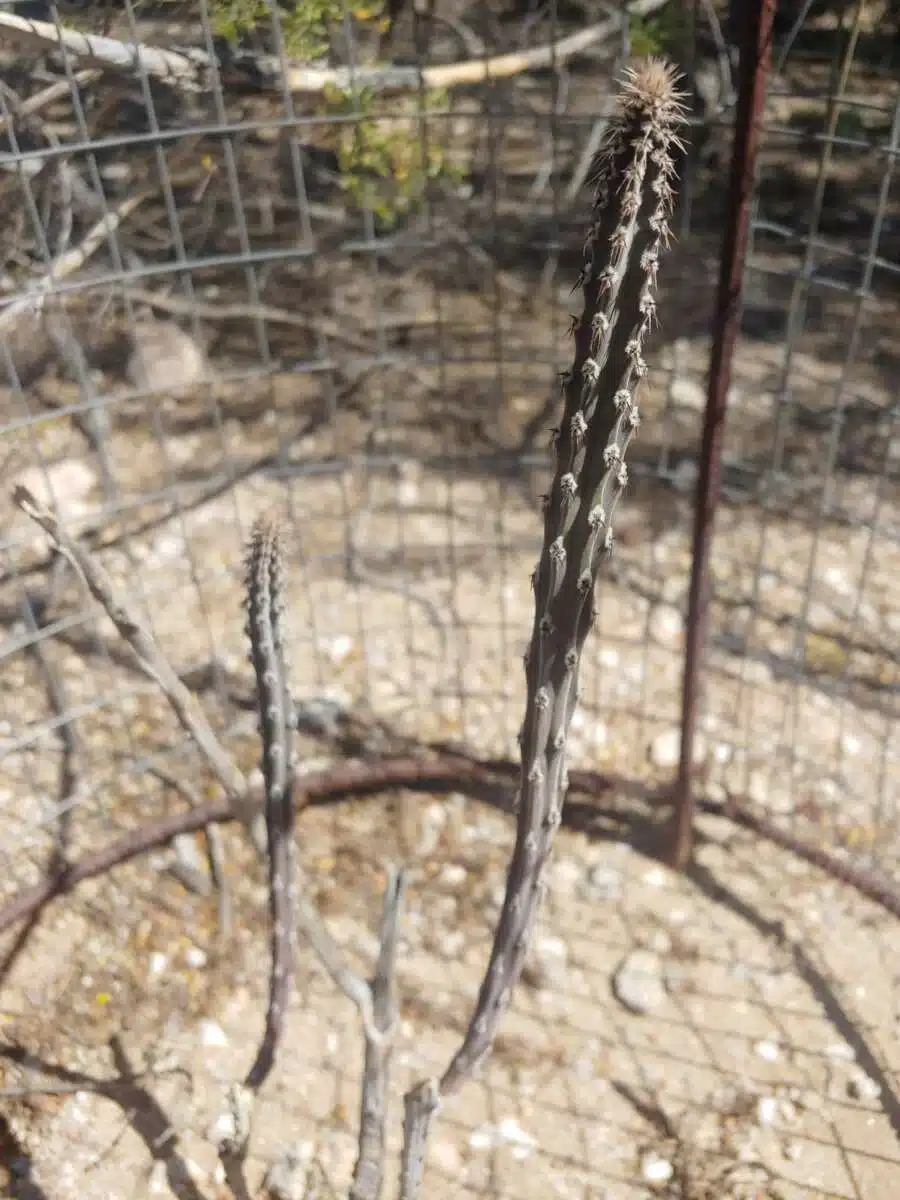
Stems grow from the tips. Concentrated spines and fuzz help protect the area where cell division is occurring on a Peniocereus greggii, the night-blooming cereus.
The Queen blends into the tree’s dark shadows.
Known as the night-blooming cereus, she is frosted with a waxy coating, the purple and green pigments blending into shades of dark gray and red brown to the human eye. Miniature spines that feel like Velcro decorate the twisting stems.
The fuzzy white branch tips and buds are the telltale signs of new growth beginning. The Queen is waking up.
Gardens Supervisor, Chris Kibler has been watching carefully. He’s found 12 plants with flower buds. Two that are ahead of the rest. There are 20 or more tiny buds not more than a pencil eraser in size which may become branches or flowers.
One night a year we celebrate “Bloom Night”, when all the night-blooming cereus cacti flower in unison! This year the event will once again be open to the public. Last year’s Bloom Night fell on Wednesday, June 30. Which day will The Queen choose for Bloom Night this year? We’ll have to wait and see!
Love The Queen? Then check out our Capturing the Queen class!
Coming up on May 21, 2022 Karen Wright, Tohono Chul volunteer, professional photographer, and author of Queen of the Night: A Rare Beauty, will lead a hands-on photography workshop. Learn how you can capture beautiful images of the ephemeral night-blooming cereus flowers!
Saturday | May 21 | 10:00 am – 12:00 pm | Education Center Classroom 1 | $25 members, $30 general public
It’s never too early to start thinking about the illustrious Peniocereus greggii, or Queen of the Night. In preparation for the arrival of our much-anticipated Bloom Night, professional photographer, author, and Tohono Chul volunteer, Karen Wright shares tips and tools for capturing the perfect cereus image. We’ll cover everything from exposure and lens choice to lighting and composition. You’ll get an insider’s view as we take a short walk on the grounds to scout the locations of potential prolific bloomers (please wear closed-toed shoes). Bring your digital camera and light source (flash, flashlight, or phone) to learn how to capture and create magical images!
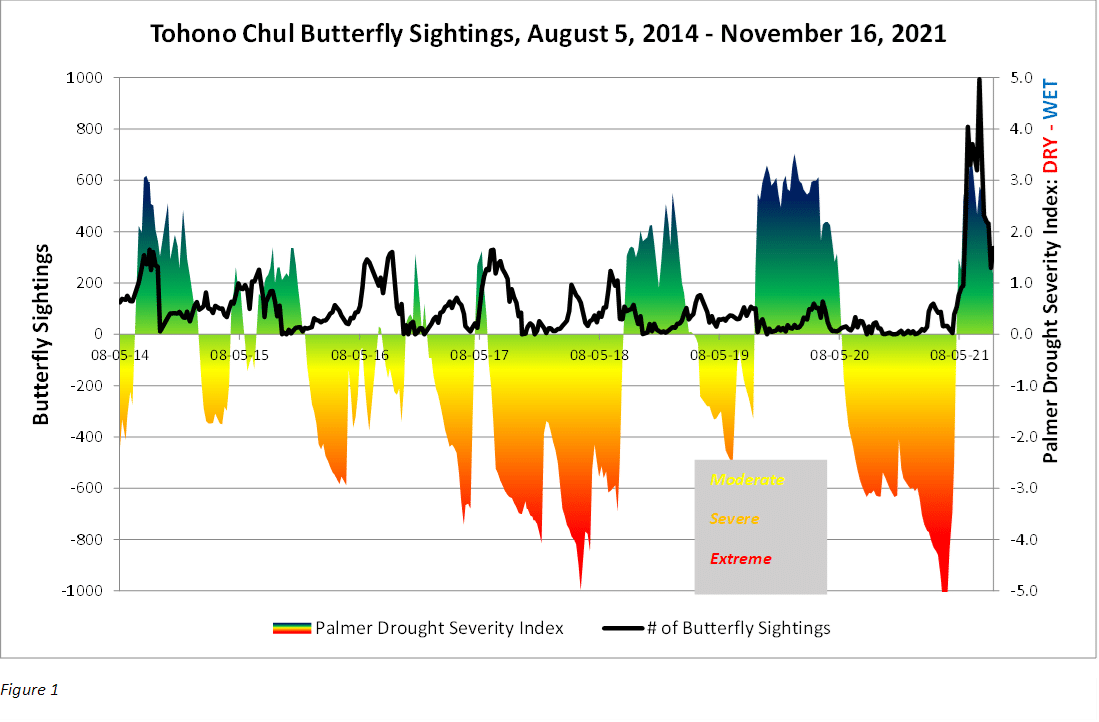
Stephen Spikes, our Interpretive Programs Manager, sat down with Tohono Chul docent and butterfly enthusiast, Andy Hogan to talk about our butterfly census. Butterfly counts in the summer and fall of 2020 yielded the lowest numbers of butterflies since Andy started logging data in 2014. This also coincided with one of our driest and hottest monsoon seasons on record. Dubbed the 2020 “non-soon” because of the measly 1.6 inches of rain compared to our average 6 inches. The 2021 monsoon, on the other hand, was much wetter than usual with over 12 inches of rain. Butterflies returned in higher numbers than Andy had ever counted before. In their conversation, Andy and Stephen explore why this might be the case and what can be done to help our butterfly populations.
STEPHEN
I noticed an explosion in the numbers of butterflies at Tohono Chul this fall. Was that reflected in your weekly counts?
ANDY
Between mid-August and December 2021, I was setting weekly sighting records for number of butterflies spotted. So, there was a fantastic rebound after our poor summer in 2020. Other butterfly counts that are done in this area by NABA (North American Butterfly Association) saw the same thing. They count in the Catalina mountains, the Rincons, in Patagonia, and in Madera Canyon and witnessed massive rebounds in the number of butterflies. It wasn’t just us at Tohono Chul, everyone was seeing the same things.
STEPHEN
How did the butterfly counts start at Tohono Chul?
ANDY
Well, in the past we didn’t have many docents that knew much about butterflies, or how to lead butterfly tours. So, in 2012, we recruited members of SEABA (Southeast Arizona Butterfly Association) to come here and help us develop a butterfly checklist. And then a year later we started Butterfly tours at Tohono Chul. We had a lot of butterflies and thought somebody should count them. That fell to me, and I started counting in 2014.
STEPHEN
Why is it important to count butterflies?
ANDY
They are pretty good indicators of what is going on in the environment. The numbers really respond if we are in a drought or if it becomes very, very hot. When the local ecosystem is stressed, butterfly numbers go down. And then when things return to normal or better, butterfly numbers can really shoot up very quickly. Butterflies are a sensitive ecological signal like the canary in a coal mine.
STEPHEN
You also use e-Butterfly to record data. Can you tell me a little bit more about that?
ANDY
e-Butterfly is a website where you can add your butterfly sightings to an international database. Researchers use the database as a toolkit to answer different questions related to butterflies and how they are making out in the changing environment. I upload all my counts every week after I do the butterfly tour. e-Butterfly makes my data available to anybody. Docents giving tours can look up what I’ve seen in the last week and know what to expect.
STEPHEN
I noticed from your data that butterfly sightings had been going down until this summer. Do you have any idea why?
ANDY
I think it’s global warming. Mike Crimmins, from the cooperative extension, presented on climate at a volunteer meeting last year. He noted that in terms of precipitation we have had worse droughts than the 2020-2021 drought. But the 2020-2021 drought was a lot hotter. We were breaking temperature records all summer in 2020. Higher temperatures cause everything to lose more water through evapotranspiration. Butterflies have a hard time above 104 degrees, especially if their nectar plants are wilting. You can see this in the data if you look at the two periods where the drought index is very low. The 2016-2018 drought is longer than the 2020-2021 drought, but it wasn’t as severe because the temperatures were lower. And so, the butterflies did better. We don’t see as precipitous of a decline in the data. Tohono Chul was an oasis for butterflies because we care for our gardens. In the 2020-2021 drought, the numbers of days above 104 degrees and the number of days between rain was much higher. That made it a lot harder for plants and butterflies. And you can see our butterfly sightings really dropped in the summer and fall of 2020.
STEPHEN
What can people do to help local butterfly populations?
ANDY
One thing is to support programs that are going to limit global warming. That is good for all of us. Another thing is to plant butterfly gardens with native nectar plants and host plants. They can act as an oasis for butterflies when times get tough.
It has been just three short weeks since I started my position as Executive Director of Tohono Chul, and I am buzzing with excitement! There is much to learn, colleagues and members to visit with, and places to explore. Thank you for welcoming me with open arms. I am grateful for everyone’s kindness (and patience!) as I onboard. You have made Tohono Chul the beautiful desert oasis it is, and I cannot thank you enough. Before summer’s heat is upon us, I invite you to visit and experience all the gardens have to offer. Enjoy these highlights of recent and upcoming activities:
Roy Kurtz’ generosity made it possible for you to see the amazingRoy J. Kurtz Collection of American Indian Art in our Main Gallery through April 27. This survey of baskets provides the first look at this large collection of artworks from the Desert Southwest. The collection shines light on the rich traditions of the region’s Indigenous people, whose respect for these lands allows Tohono Chul to be here today.
During a gorgeous February weekend, we hosted the Southern Arizona Clay Artists show, which brought hundreds of visitors to see the gallery quality, functional, and decorative ceramics created by over 25 artists. If you couldn’t make the event, I encourage you to see the other work by local artists that we have available in our Museum Shops on-site.
Behind the scenes, we are preparing for our spring Sundays in the Garden concert series, which will launch on March 6. At this first concert, both Christine Conte, the garden’s Executive Director for the past ten+ years, and I will be sharing the stage for some short remarks about the past and future of Tohono Chul.
And—drumroll please—we are thrilled to be busy potting and organizing for the Spring Plant Sale. Our Members’ Preview begins on March 16 with March 19 and 20 open to the general public.
I’ve been a visitor of Tohono Chul for decades, and, having grown up in the Phoenix area, have always valued exploring the unique Sonoran Desert beauty of our region. But when I walk around the gardens today in the role as Executive Director, I am deeply thankful for your support and humbled by the responsibility that we have—yes, I said that we have—in carrying forth the Wilson’s legacy.
Today, the Wilson’s legacy is more relevant than ever to share with our community, and indeed, the world. Over the last few years, many people have turned to nature for inspiration, solace, stress release, and to gather together in open space. As a premier public garden that merges nature, art and culture, Tohono Chul has a meaningful role in supporting the health and vitality of our community and our region. With your continued support, I see an opportunity to grow our community of stewards, enhance the garden’s experiences and offerings, and continue to shine light on the challenges facing our region’s ecosystem, just like the Wilson’s did in 1982. Thank you for your love and stewardship of this incredible public garden. I cannot wait to grow it with you.