Jo Falls Receives Roger Lidman Distinguished Service Award

James Schaub, Curator of Exhibitions, nominated Jo Falls for the Roger Lidman Distinguished Service Award at the Museum Association of Arizona’s Annual Conference on March 18, 2019. The esteemed award designates an individual who has made an outstanding contribution to an individual museum, the museum profession, the local community, to Arizona, to the Museum Association of Arizona, and to other professional organizations, recognizing a recent milestone or a lengthy career. In addition to this well-deserved award, let’s get to know more about Jo.

Jo Falls is currently the Director of Education and Visitor Services, but has been with Tohono Chul since the beginning in 1986. Originally the Office Manager, Jo was a staff member and since that time, she has worn many hats; working in the Exhibits Department (currently overseeing), Volunteer Services (currently overseeing), and since 1991 she has served as the Director of Education and Visitor Services while simultaneously directing Educational Travel and Public Programs.

Over the years, Jo’s contributions to Tohono Chul have set the table for what happens today and has set the bar for what will happen in the future. Jo is tireless – she has taught and written the curriculum for the Docent Program, a rigorous 18-week course on the Sonoran Desert that turns people with prior lives in finance, politics, education, advertising, engineering, etc. into “Desert Rats.” Jo has worked with, conceived, and tailored programs to grades K-12 and a variety of community outreach projects. She researches and contributes interpretive and didactic text for all Tohono Chul signage and publications; and has helped other institutions all over the region as a guest speaker and grant reviewer. Jo goes out of her way to make herself available to each and every docent and volunteer, and that’s a lot of time considering there are currently almost 400 active Tohono Chul volunteers and docents.

In this day and age of people jumping from job to job – Jo Falls is a rare breed. She has worked as an Education Department of “one” overseeing the Exhibits Department of “two” since 1991 – in that time there have been only three curatorial teams – a testament to her abilities as a nurturing, productive, and dedicated administrator. She respects and believes in the people she works with; values deeply their knowledge, interests, and expertise. Jo is adaptabale and flexible, encouraging and allowing magic to happen – giving the people she works with energy and guidance as well as the freedom and space they need to grow their ideas into projects and programs that benefit Tohono Chul and the communities it serves. Like everything she touches – Jo Falls is exceptional, educational, and inspirational.

Tohono Chul, as an institution, has been moving forward for 34 years – Jo Falls, as part of that institution and as an institution herself, has been continually shaping it, moving it forward in her unique way over her 33 years of service, into the welcoming and wonderful place it is. Simply put – Tohono Chul in Tucson would not be what it is without Jo Falls!

See additional Museum Association of Arizona award winners on their website: azmuseums.org 

Lucy’s Warbler Nestbox Project

We are very lucky to be living in the center of Lucy’s Warblers’ breeding range. These tiny, shy, gray birds are the only cavity-nesting warblers in Arizona and the only ones nesting in low elevation Sonoran Desert, likely because of their fondness for native mesquite trees. With the decline of mesquite bosques, their natural habitat, Tucson Audubon determined to find out what kind of nestbox Lucy’s would prefer and the triangle box with two openings was the clear winner! Best in native mesquites – velvet, honey or screwbean – Lucy’s may also take to an ironwood or palo verde if there are mesquites in the vicinity. Box owners are asked to register their locations with Tucson Audubon and keep them apprised of nesting activity. We’re installing several on the grounds. Won’t you invite a Lucy’s into your yard?

Lucy’s Warbler Nestbox For Sale in the Shops


Read Tucson Audubon’s full publication here.

Tohono Chul Wins an Environmental Excellence Award from Arizona Forward

The Arizona Forward Environmental Excellence Awards program recognizes outstanding contributions to the built and natural environment of communities throughout Arizona and just recently Tohono Chul was added to its list of organizations that honor that key endeavor. Tohono Chul’s Master Plan’s recognition is due to the contributions of Arizona architect John Douglas of John Douglas Architects and reflects a 20-year tenacity to maintain a vision to enhance visitor services, easier accessibility, interpretive signage, lighting, and expanded parking and public restrooms. Although the official award title is for Site Development and Landscape – Landscapes and Preserves, Douglas’ contributions extend far beyond that. In addition to the master plan, Douglas has also designed the Gathering in the Garden Pavilion to be built summer of 2019 that has integrated water harvesting and solar into its construction. This new space is a crowning achievement for Tohono Chul as it furthers their mission to create a place where community can come together and connect with nature.

“No one has done more than John Douglas to ensure that this beloved place retains its unique charm and beauty as it has grown over the years to welcome more visitors. His latest achievement is a new garden pavilion to be built this summer. The pavilion will be as functional as aesthetically pleasing—providing shade and shelter rain or shine.” says Dr. Christine Conte, Tohono Chul Executive Director, who has worked closely with Douglas and his family over the years at Tohono Chul.

The classrooms of the Desert Discovery Education Center, the landscapes of the Desert Living Courtyard, and a new and expanded retail greenhouse are attributed to improving Tohono Chul’s programming. The new Sin Agua Garden and Desert Living Courtyard replaced former parking lots, repurposing bladed and compacted sites with interesting gardens that underscore the benefits of sustainable gardening. Other improvements consist of behind-the-scenes efforts to expand plant propagation areas and upgrade storage for permanent artifact collections along with conservation and preparation areas. Visitor-facing improvements encompass the Saguaro Discovery Trail, enhancements to the Desert View Trail, the addition of shade ramadas, and the opening of the Desert Palm Oasis.

Whether it’s the new Gathering in the Garden Pavilion or the established natural landscapes, Tohono Chul is committed to maintaining an urban oasis for people to gather, to learn, and to connect with nature.

Learn more about Arizona Forward

Bloom Watch #4 – Will It Be This Weekend?

It appears that the Queen accepted the rain with exuberance. She broke stall on Sunday and Monday and is on the move toward bloom. Today most of the buds are in the in the 60 to 80 mm range putting them only 5 to 6 days out. There are a few at 90mm, a few at 50mm, and one at 110mm. Right now it looks like there will be a small split on the bloom with the majority going on the same night. It is possible however, that her plans will be different than mine, as is usually the case.

The P. tepalcatepecanus had two flowers on Saturday night and the P. oaxacensis had one bloom on Sunday. The P. fosterianus has started pushing toward bloom and may happen on the same night as the Queen. I sure hope so anyway. My Queen is on track with her counterparts in the gardens and all of her Court are pushing for the bloom.

It appears that we could together as early as this Friday or as late as Monday, but right now my best guess (which I hate to do knowing how much she likes to frustrate me) is Saturday or Sunday. So get ready to stand by with your boots out and put new batteries in your flashlight. I will let you know the exact day as soon as she lets me know.

Until Next Time – Lee Mason, Director of General Services, Tohono Chul

Bloom Watch #3 – Will Rain Make Her Bloom?

On June 3, Plant #64 let two of her flowers go. This is the same plant that went first last year with two flowers on May 19. The rest of her flowers remain in stall status. It will be interesting to see if they will push off stall, if and when the rain really does come this weekend. If so, the big night may come seven to ten days afterwards. Stay tuned.

The Queen has seen fit to abort ten more buds since last week. I did see some fuzzies yesterday, but don’t really believe they will produce. She may have a different plan as she frequently does, especially if it serves to frustrate me. We’ll see.

I always enjoy receiving pictures from you of your bloomed Queens. Please keep sending them our way! Jesse Byrd from the Pima County Native Plant Nursery has had four bloom in their collection already. They have also lost several buds, but still have more to come.

As for the Queen’s Court, the P. tepalcatepecanus has produced two more buds that will more than likely go in the next few days. The rest of the P. fosterianus and P. oaxacensis are still in a holding pattern. I told you in the last blog that the P. serpentinus in the pot had three buds which then bloomed on June 10. The plant in the ground decided to make a liar out of me and produced four more buds over the weekend.

I’m checking every day now and will let you know as soon as the Queen decides to make her big appearance.

Until Next Time – Lee Mason, Director of General Services, Tohono Chul

Bloom Watch #2 – A Blooming Queen’s Court

Hello Everyone,

The Queen is doing her thing, her way, as she always does. This week she has decided to drop some buds that she determined are not supportable. The majority of what is left are in a medium growth range, while some are in stall. I did notice a few fuzzes that may develop into flowers, as well as lots of new stem growth. A few of the reliable plants are pulling their resources back to the tuber to regenerate. Hopefully they will start again later this summer and be ready for next year. This is a normal occurrence that we see every year on a few plants that have been going strong for several years. My observation is she gets tired and just wants a rest.

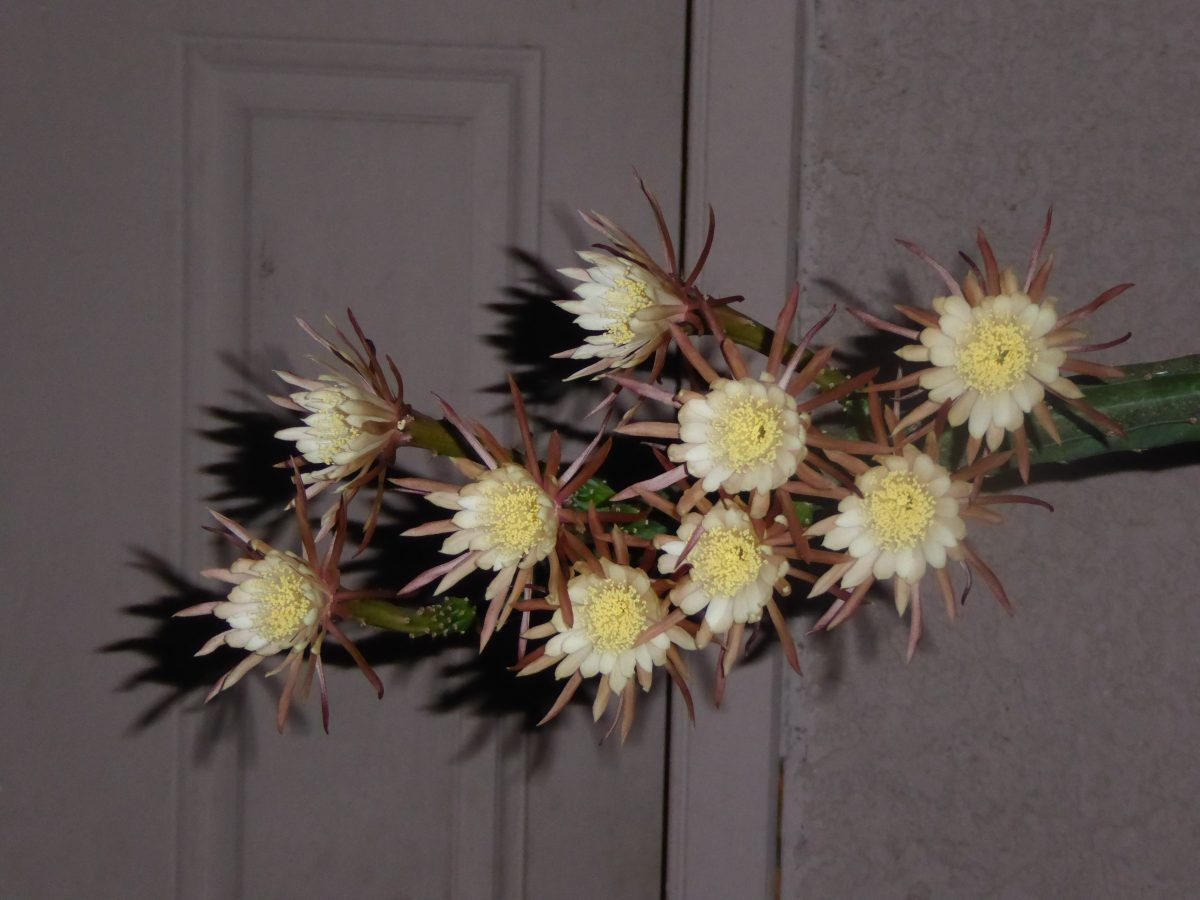
P. tepalcatepecanus

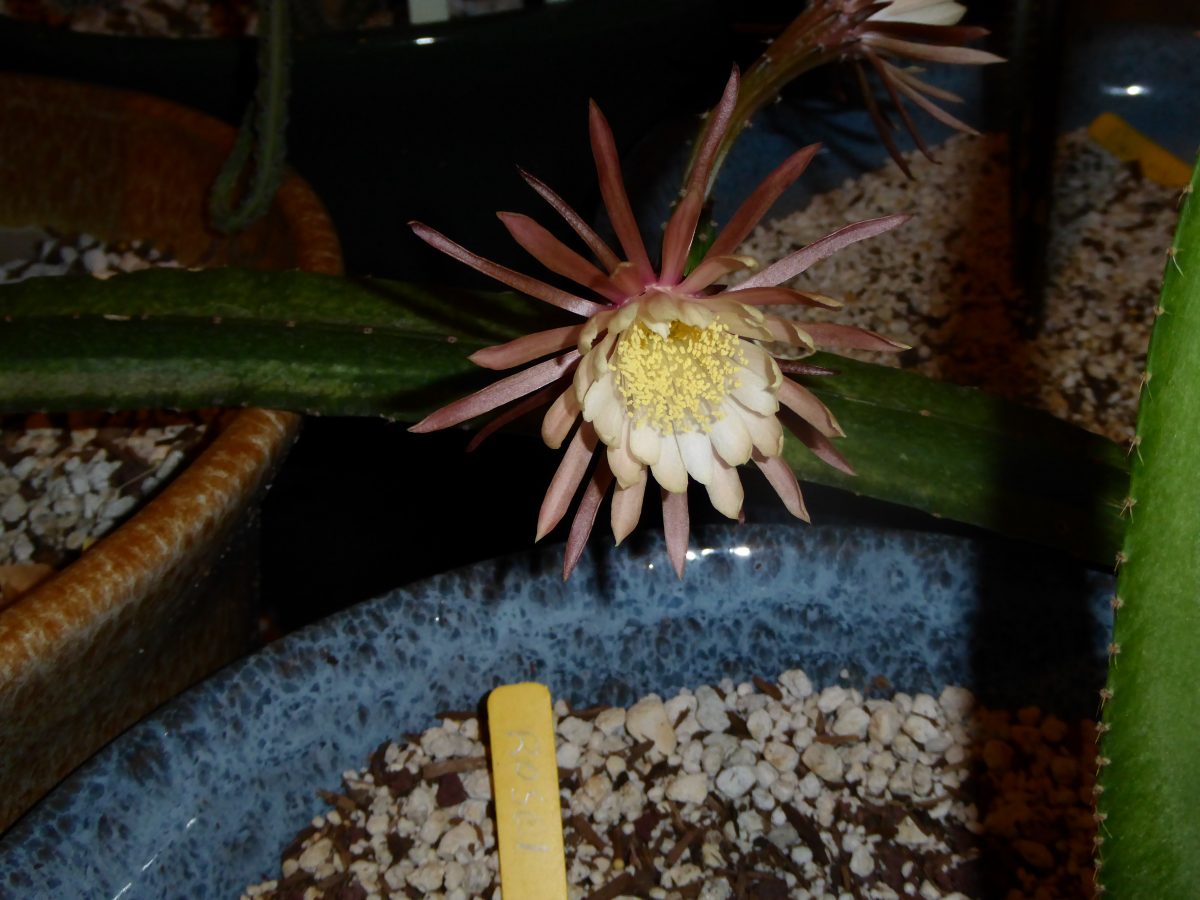
P. oaxacensis


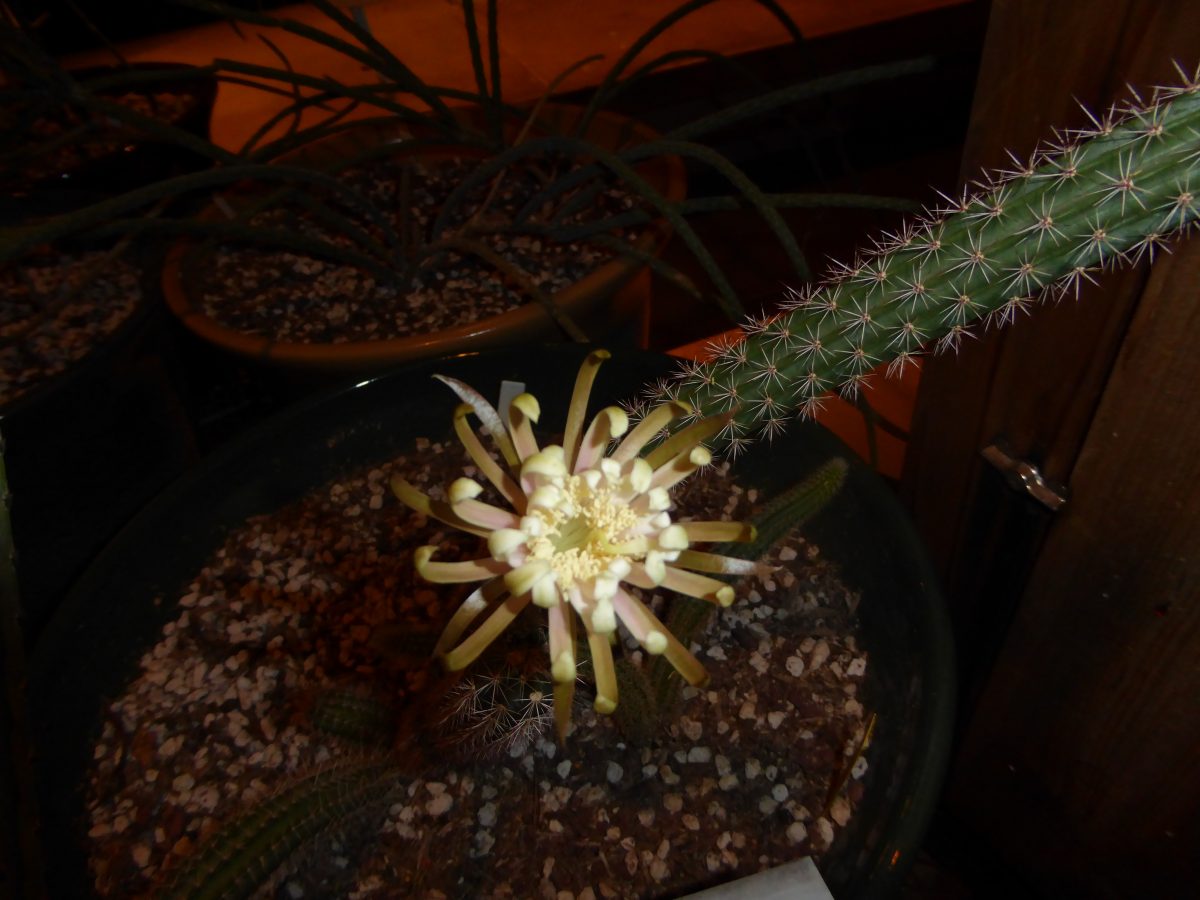
The Queen’s Court had some blooms. The P. tepalcatepecanus had one flower on the May 25 and then decided to abort the rest of the buds. Mine at home is just starting to bud, so maybe the one here at Tohono Chul will try again. The P. fosterianus had one on May 26 and still has more coming. The P. oaxacensis had two flowers on May 27 and has a few buds left. The P. serpentinus on the grounds has stopped producing buds, but the plant in the pot has three that will go in the next few days. The one at my home already had one flower on May 30.


P. fosterianus

That’s it for now, but it is almost time for me to start daily walks to visit the Queen and try to keep up with her moody progress. Talk to you all soon and have a good weekend.


Until Next Time – Lee Mason, Director of General Services, Tohono Chul

Bloom Watch #1 – Her Majesty’s Resilience

Hello Everyone,

Hope you all had a good year. It’s that time again for the Queen and she is showing her resilience. Although it has been dry and warmer than normal, she is producing buds. There are some at stall size, but most are small or just beginning. Right now it looks like it could be a pretty good year provided they hold and go at the same time rather than popping off one or two at a time like they did last year.

We have had some pack rat damage, but the majority of the plants have done alright. It appears that the plants native to the property and those salvaged from the wild are doing the best under the current weather conditions. The plants that were nursery grown and in the ground for less than two years have suffered some, but with a little luck they will come out of it.

The interesting thing so far this year is happening in the Queens court.

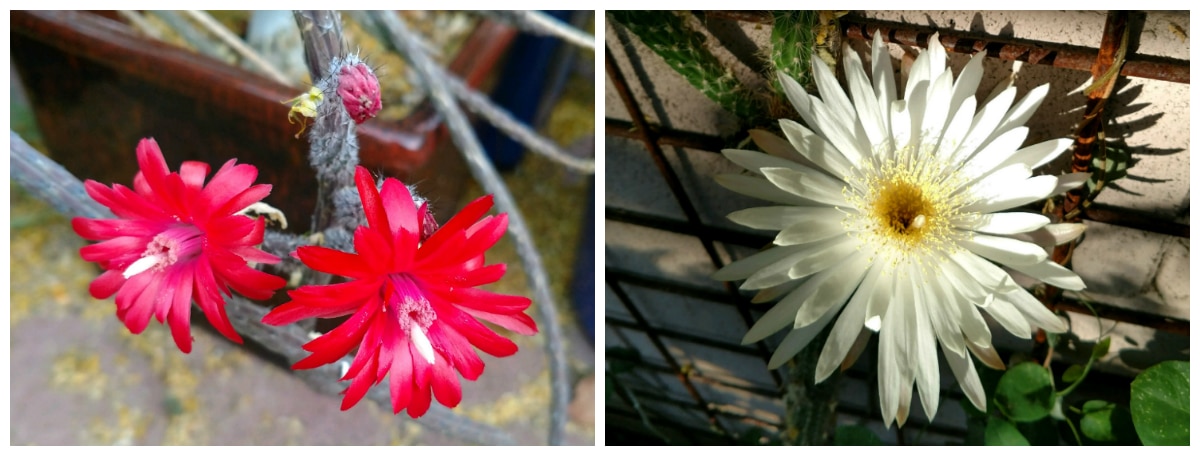
Peniocereus marianus (left), Peniocereus johnstonii (right)

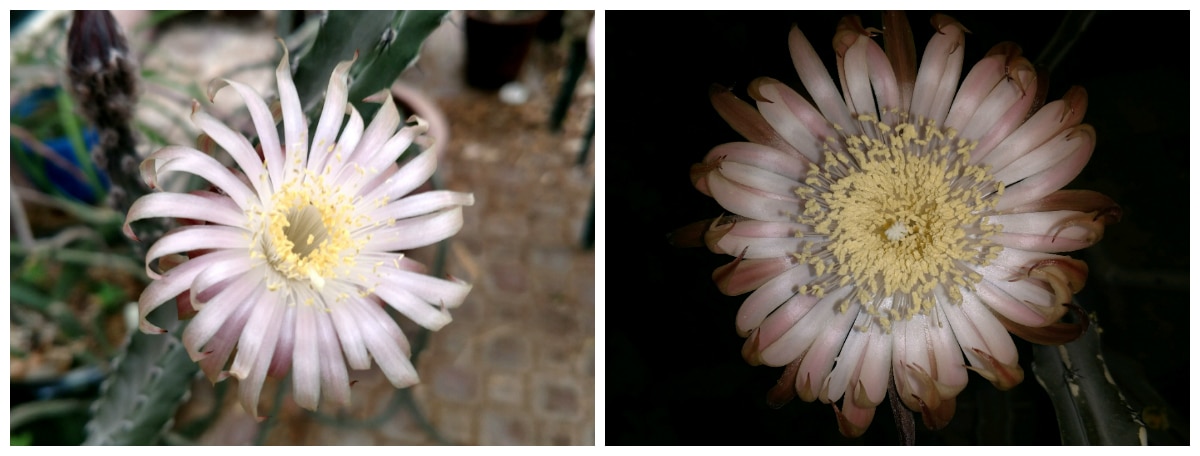
The Peniocereus marianus along with the plants in our greenhouses bloomed early in February, and the plants that were outside bloomed early to mid-March. Mine at home had four flowers on March 5 and three on the March 10. My Peniocereus johnstonii bloomed April 16 – 26 with a total of eighteen flowers. My Peniocereus viperinus had six flowers between April 20 and May 9. The Peniocereus serpentinus has been flowering for the past month, while the Peniocereus fosterianus, oaxacensis and tepalcatepecanus are all budded up and progressing nicely.

Peniocereus viperinus (left), Peniocereus serpentinus (right)

Hope you enjoy the update and the beginning of another year where the Queen will be in charge and I will be trying to get her to communicate her intensions so we can all get together for another wonderful night at Tohono Chul in honor of her annual show. Looking forward to seeing you all this year.

Until Next Time – Lee Mason, Director of General Services, Tohono Chul

Desert Lavender – A Native Plant Knockout

Some people are always looking for low-water-use native plants that attract hummingbirds or butterflies; others search for plants to help with the declining bee populations. So when a water-thrifty native plant covered in bees, butterflies AND hummingbirds, all at the same time, it’s definitely worth talking about.

The fantastic plant in questions is Desert Lavender (Hyptis emoryi). Not a true lavender, Hyptis is in the Lamiaceae or Mint Family, and has a pleasant lavender scent when you brush against the foliage or following a warm, summer rain. Traditionally, it has been used by the Seri as a tea for treating colds. Early Spanish settlers noted its similarity to the lavenders of Spain and France and collected it for its aroma and use to soothe ill patients.

Desert Lavender occurs up to 3000 feet in elevation in Southern California, Nevada, Arizona and New Mexico, and in Baja California and Sonora, Mexico. You can find it growing wild in the foothills surrounding Tucson on dry, rocky slopes, along washes and in canyons where it hangs out with other rugged individuals such as Hopseed, Bush Dalea, Paperflower, Jojoba, Wright’s Bee Bush and of course, the beloved saguaro.

This upright-growing, multi-stemmed shrub can get 8 to 10 feet tall and 6 to 8 feet wide. The grey leaves are covered with fine hairs and are soft to the touch. Spikes of purple flowers develop at the ends of branches anytime throughout the year, but most heavily in the spring.

In your garden, plant Desert Lavender in full sun to encourage dense growth; placing it in well-drained soil is also recommended. It is drought-tolerant once established though, extended drought will cause some leaf drop. Infrequent deep soakings during the warm season will help keep it looking lush and blooming. As late summer and early fall approach you should cut back on the watering to allow the plant to harden off before winter. Temperatures in the low 20’s will cause foliage damage, and in severe winters it may freeze to the ground, but will come back in the spring bushier than before.

Desert Lavender is attractive in most landscapes. Take advantage of the upright form and create an informal hedge, privacy screen, or plant it near a patio or entryway to enjoy the fragrant foliage and watch the hummingbirds, butterflies and bees up close.

This native plant checks all the right boxes. Attractive, low water, low care and highly sought after by many critters. Try Desert Lavender in your yard. You are sure to love the results. Happy planting!

– Leith Young

Create Butterfly Magic in Your Yard

Traveling east of Tucson on I-10 there are a lot of expansive views of mountains and valleys that make up part of the basin and range district of Southern Arizona, Southern New Mexico and Northern Mexico. Although this trip is not necessarily ugly, it’s also not very memorable. There is however, one small stretch just before Willcox called Texas Canyon that tends to perk everyone’s interest. You’ve probably driven through there a hundred times before, but now you may finally have a reason to take the time and stop to explore this area.

The rock formations are amazing and bizarre, but the reason to stop is to check out the plant life that you really can’t see when traveling 75 mph on the interstate. This area is in Desert Grassland/Oak Woodland habitat which hosts some interesting plant combinations. Around the boulders dotted by Mesquite and Emory Oak, is the Pineleaf Milkweed or Asclepias linaria. This is a very popular plant for anyone wanting to attract butterflies and also makes a very attractive landscape plant. It’s a common plant in the nursery trade, but it’s not very common in the wild. What a treat to see!

Pineleaf Milkweed is found on rocky slopes and canyons from 1,500 to 6,000 feet in Southern Arizona and much of Mexico. Its nice, rounded form peaks out at about 3 feet high and wide. Dark green foliage resembles pine needles and is evergreen. White flower clusters appear from March through October, followed by papery, inflated seed pods that turn from pale green to tan at maturity. It is a hardy plant to at least the low 20 ̊s Fahrenheit and quite drought tolerant once established.

Pineleaf Milkweed is a butterfly magnet! Queen and Monarch butterflies love this plant as it is a valuable nectar source and a host plant for their caterpillars. In late summer and fall you can usually see all the life cycles of a butterfly on a single plant. Plant three or more and you will have clouds of Queens fluttering around your yard. It’s a very relaxing sight. If you would like to try Pineleaf Milkweed in your yard, pick a sunny spot with good drainage. Once your plants are established a deep watering every 7 to 10 days will keep them and the butterflies happy. This is a fairly fast growing plant and should only take a few seasons to reach full maturity. Pruning and fertilizing are not necessary for this virtually maintenance free plant.

– Leith Young

Coyote Gourd – A Handsome Groundcover

Three weeks after the onset of the summer rains, in a wash southeast of the Huachuca mountains, the coyote gourds grow. Mexico is less than two miles away. The air is filled with the sounds of birds.

Since the first rains, numerous tuberous perennials (plants of diverse origins that have fleshy storage roots, appearing only during the rainy season, usually summer) have made rapid growth, many are already blooming and some are in fruit. Orange-flowered wild beans (Macroptilium gibbosifolium) grow along the banks of the wash. On the nearby uplands, Bush Morning Glories are beginning to bloom. Their huge trumpet-shaped white flowers with magenta throats open in the evening and close early in the morning. The grasses are lush and myriads of seedlings are popping up everywhere.

Until just before the summer rains begin, the Coyote Gourd sleeps underground as a sausage-shaped tuberous root that makes tentative growth of many fine stems. When rain comes, growth explodes. The largest plants measure forty feet across and spread like giant green spider webs across the sand and grasses, and climb into the shrubs and trees. First come the squash-like, yellow flowers, paradise to pollinators large and small. The baseball-sized fruits hanging from the trees begin as green spheres with silvery green stripes, ripening to yellow, looking like someone has put out the Christmas ornaments early.

Cucurbita digitata grows along washes and in other disturbed areas and its range extends from southeastern California to southern New Mexico and south into Sonora from sea level to about 5,000 feet.

As a member of the genus Curcurbita, Coyote Gourd is closely related to other gourds (C. cylindrata, C. cordata, C. palmata) that range southward into Baja California. Some experts believe that these relatives are so close that they are really one single, highly variable species.  Cucurbita digitata is also related to the domesticated squashes and pumpkins. Unlike its domesticated cousins, coyote gourd is inedible except for its seeds. The bitter, toxic pulp has been used to make soap and dried gourds have traditionally been used as rattles or to make cups and bowls.

The Coyote Gourd plants are quite attractive with their dark green and silver hand-shaped leaves — they appear to wave “Hey y’all” when the wind blows — and make a handsome groundcover or vine in the landscape.